Wet vs Dry Cat Food (2026): Which Is Better for Your Cat?
Most cat owners pick dry or wet food based on habit, price, or whatever was on the shelf the day they brought their cat home. For a healthy adult cat eating a complete diet, that casual choice usually works out fine. But for the kitten switched to adult dry food too early and struggling to digest it. For the senior cat with diagnosed kidney disease still eating the same kibble she’s always had. For the cat with recurring urinary crystals whose owner assumed “dry food is just healthier.” In each case, format is not a minor preference — it changes hydration, dental outcomes, weight management, and how well specific medical conditions are managed. Cats are obligate carnivores with a naturally low thirst drive, which makes the wet-vs-dry decision more consequential for cats than it typically is for dogs. Here’s the outcome-by-outcome breakdown, including what’s genuinely different about feeding kittens versus adult cats.
Quick Answer — Wet vs Dry Cat Food
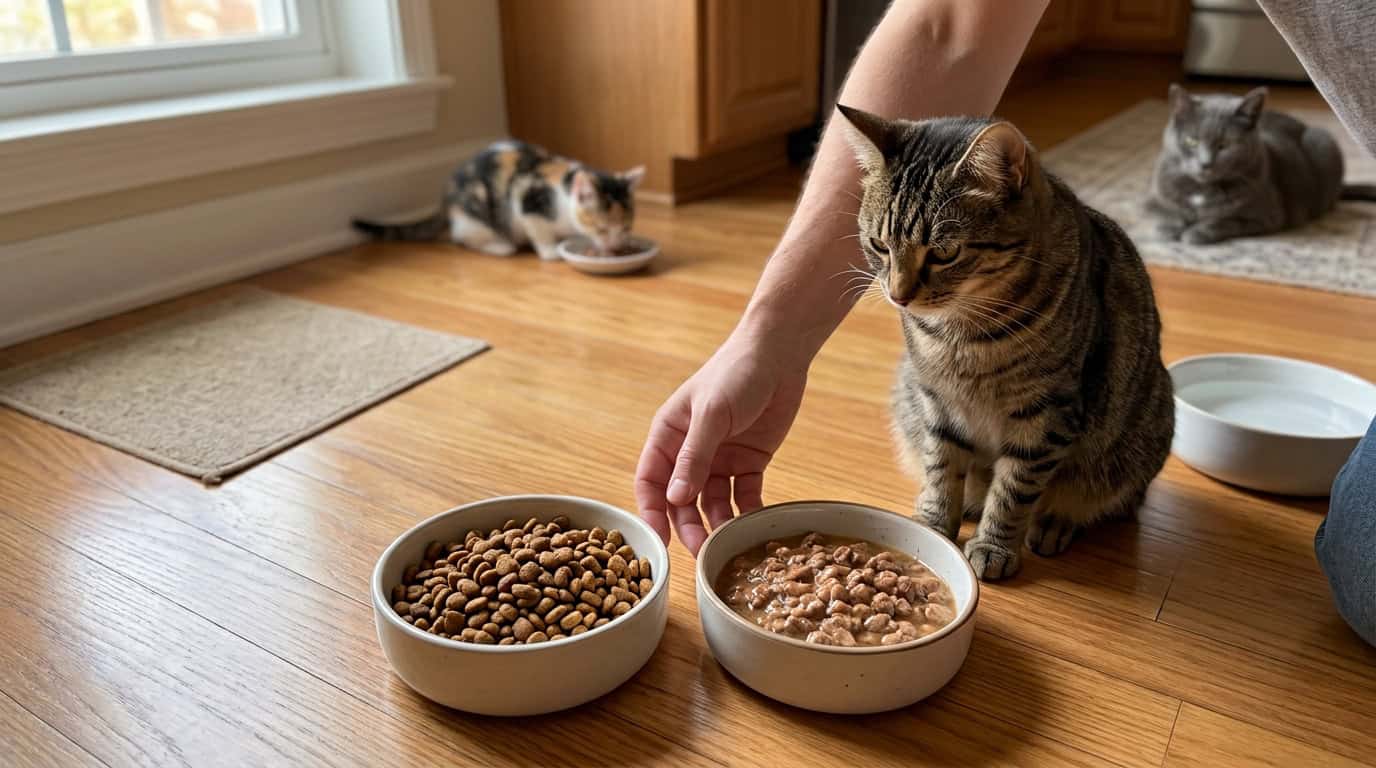
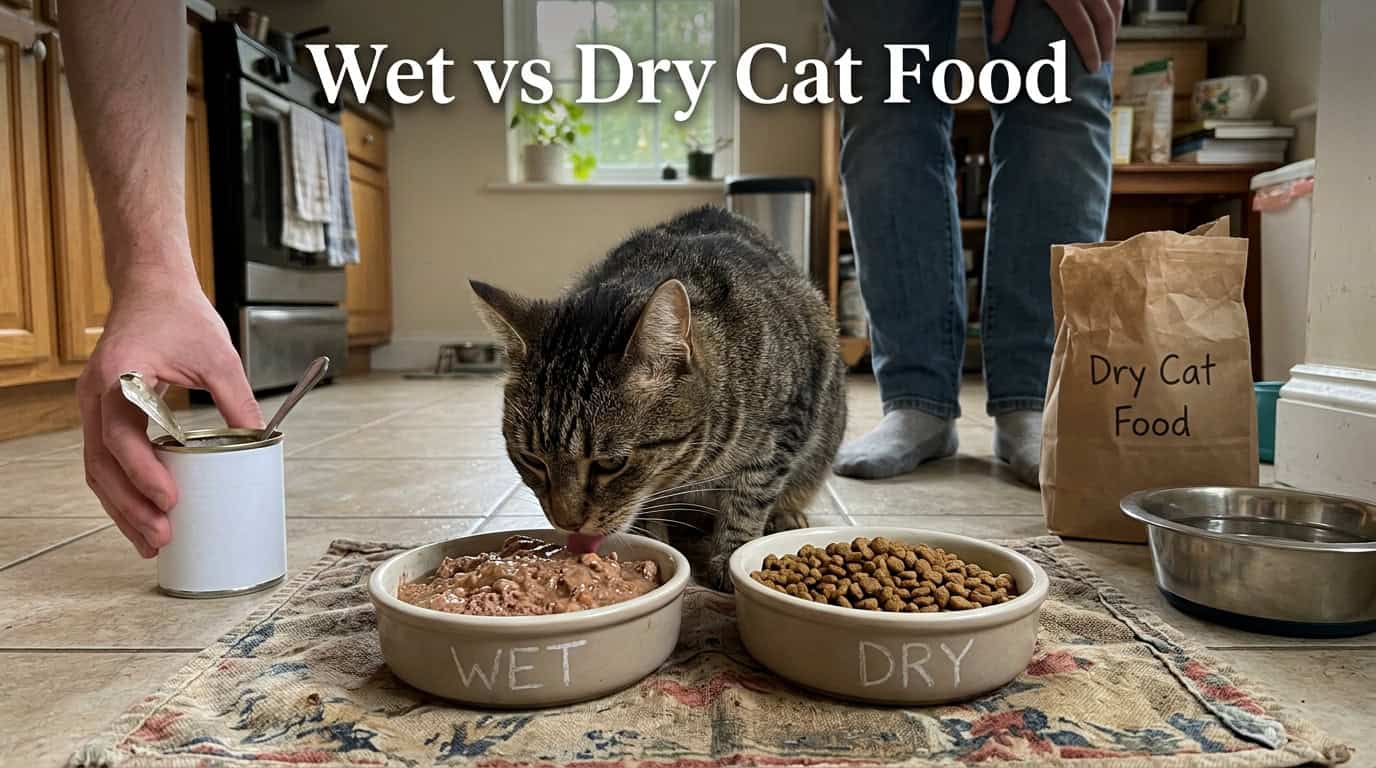
Neither format is universally better. Dry food is cheaper, more convenient, and workable for most healthy adult cats. Wet food is better for hydration, dental comfort in older cats, and cats with kidney, urinary, or appetite challenges — and it’s generally the safer default for kittens. For most healthy adult cats, a high-quality dry or wet food is adequate. For kittens, seniors, and cats with specific health conditions, wet food or a mixed approach is usually the better-supported choice.
- Choose dry if your cat is a healthy adult, cost or convenience matters, or you free-feed multiple cats
- Choose wet if your cat is a kitten under 12 months, a senior, has CKD, urinary crystals, low water intake, or is a picky eater
- Choose mixed if you want hydration and palatability benefits without full wet-only cost — but calculate calories first
Wet vs Dry Cat Food — At a Glance
| Feature | Dry Cat Food (Kibble) | Wet Cat Food (Canned/Pouches) |
|---|---|---|
| Moisture content | 6–10% | 70–85% |
| Calorie density | High (~300–500 kcal/cup) | Lower (~70–100 kcal per 3oz can) |
| Protein-to-carb ratio | Higher carb, moderate protein | Higher protein, very low carb |
| Dental impact | Minimal — unless VOHC-approved | None — can contribute to tartar |
| Shelf life (opened) | 4–6 weeks airtight | 1–2 hrs at room temp, 2–3 days refrigerated |
| Convenience | Excellent — auto-feeder compatible | Lower — needs refrigeration |
| Monthly cost (1 cat) | $ (most budget-friendly) | $$$ (significantly more expensive) |
| Best for | Healthy adults, budget, free-feeding | Kittens, seniors, CKD, urinary issues, picky eaters |
Why Cats Are a Different Case Than Dogs
This comparison looks similar to the dry-vs-wet debate for dogs, but the underlying biology pushes harder toward wet food for cats specifically. Cats are obligate carnivores — they require high levels of animal protein and minimal carbohydrate, and they need dietary taurine, an amino acid found almost exclusively in animal tissue. Dogs can synthesize small amounts of taurine on their own; cats cannot. A taurine deficiency in cats causes irreversible retinal damage and dilated cardiomyopathy, a serious heart condition — which is why every legitimate commercial cat food, wet or dry, is fortified with it, and why homemade or improvised diets are genuinely risky without veterinary formulation.
The second, arguably bigger factor is thirst drive. Cats evolved from desert-dwelling ancestors that met most of their water needs through prey, not standing water. That evolutionary history left modern cats with a comparatively weak thirst response — even with fresh water always available, cats on dry-only diets consistently drink less total water than their bodies would get from a wet-food diet. This single fact is the main reason vets lean more heavily toward recommending wet food for cats than they typically do for dogs. If you want more detail on this specific mechanism, see our guide on why cats don’t drink water.
Three Misconceptions About Cat Food Format
Misconception 1: Dry Food Is Automatically Healthier
Dry food is more convenient and calorie-dense — that’s a different thing from healthier. Nutritional quality comes from formulation, ingredient quality, and AAFCO feeding-trial validation, not from moisture content. A poorly formulated dry food is not better than a well-formulated wet food, and for cats with specific health conditions, wet food is often the clinically superior choice by a wide margin.
Misconception 2: Wet Food Is Just an Expensive Treat
Premium wet foods from WSAVA-aligned brands — Royal Canin, Hill’s, Purina Pro Plan — are complete-and-balanced diets that meet the same AAFCO nutritional standards as their dry equivalents. In veterinary clinical settings, wet food is frequently the therapeutic default, particularly for CKD, urinary disease, and cats recovering from illness or surgery.
Misconception 3: Dry Kibble Cleans Cats’ Teeth
This is the most consequential misconception on this list. Most standard dry kibble shatters on contact before it reaches the gumline, which is exactly where plaque and tartar accumulate. The mechanical cleaning effect of ordinary dry food is minimal and inconsistent. The exception — which most cat feeding guides gloss over — is dry food carrying the Veterinary Oral Health Council (VOHC) Seal of Acceptance. More on that below.
Outcome 1 — Dental Health: The VOHC Distinction
If you’re choosing dry food specifically for your cat’s teeth, format alone isn’t enough. Standard dry kibble provides negligible dental benefit for most cats — it breaks apart before it can mechanically shear plaque at the gumline, where periodontal disease actually starts. Simply feeding dry food will not meaningfully improve dental health on its own.
What does work — and what has actual clinical evidence behind it — is kibble carrying the VOHC Seal of Acceptance.
🦷 VOHC Seal — What It Means and Why It Matters
The Veterinary Oral Health Council awards its seal only to products that demonstrate plaque or tartar reduction in independent, controlled clinical trials — not just products that claim dental benefits on the bag. VOHC-approved feline dental diets, such as Hill’s Prescription Diet t/d, use an oversized kibble matrix engineered not to shatter immediately — the tooth has to penetrate the kibble first, creating a real mechanical scrubbing action before it breaks apart. Standard dry food does not do this. When a vet says “feed dry food for dental health,” they should mean VOHC-approved — not any dry kibble on the shelf.
Wet food provides zero dental benefit and, due to its softer, stickier texture, can contribute to faster tartar buildup. If your cat is on wet food for medical reasons, pair it with daily tooth brushing or VOHC-approved dental treats to compensate.
The honest dental health hierarchy for cats:
- Daily tooth brushing — nothing else comes close
- VOHC-approved dental diet or dental treats
- Water additives with VOHC approval
- Standard dry kibble — minimal, inconsistent benefit
- Wet food — zero dental benefit on its own
Outcome 2 — Feeding Kittens: Where This Gets Different
Kittens are not just small adult cats, and this is the section most generic cat feeding guides handle vaguely. Until roughly 12 months old, a kitten needs a food labeled for “growth” or “all life stages” under AAFCO standards — never an adult maintenance formula, which doesn’t provide the calorie density, protein, or fat a growing kitten needs.
The starch problem most owners never hear about: dry kibble requires starch as a binding agent to hold its shape. A kitten’s digestive system, especially under about 6 months old, is not yet efficient at processing that starch load. This is a genuine physiological limitation, not a texture preference — it’s a big part of why wet food, or dry kibble thoroughly softened with warm water, is the safer default for very young kittens rather than dry-only feeding from the start.
Kittens also have elevated DHA (an omega-3 fatty acid) requirements to support brain and eye development during this rapid-growth window — another reason growth-formula food, not adult food, matters here.
A rough weaning and early feeding timeline:
- 3–5 weeks: water-softened kibble or kitten wet food, introduced gradually alongside nursing
- 6–8 weeks: fully weaned onto kitten wet and/or softened dry food
- 2–12 months: kitten (growth) formula, wet, dry, or mixed, based on the cat’s individual preference and any vet guidance
- 12 months+: gradual transition to an adult maintenance formula
Practically, this means a mixed or wet-forward approach is usually the lower-risk default for kittens, while a pure dry-only diet carries real risk of under-hydration and digestive strain during a period when the kitten’s body is working hardest.
Outcome 3 — Weight Control and Calorie Density
Dry cat food runs roughly 300–500 kcal per cup. Wet food runs closer to 70–100 kcal per 3oz can. That’s a significant gap, and it matters more for cats than it might seem, since a typical adult indoor cat needs only about 200–300 kcal per day — a small margin for error.
Wet food’s high moisture content adds real volume to a meal without adding proportional calories, which supports genuine physical satiety — the stomach’s stretch receptors signal fullness partly based on meal volume, not just calorie count. For overweight cats, wet food or a wet-forward mixed approach is often more effective at reducing calorie intake without leaving the cat acting hungry.
⚠️ Calorie Stacking Warning
The most common mixed-feeding mistake is adding wet food on top of an unchanged dry portion — that’s not a topper, it’s a second meal. If your cat needs 250 kcal/day and you add an 85 kcal wet food portion, the dry portion needs to drop to roughly 165 kcal to keep the daily total the same. Cats have a much smaller calorie budget than dogs, so overfeeding by even a small amount compounds into weight gain faster than owners expect. Calculate the total daily calorie target first, then split it across both foods — never add wet food on top of a full dry portion.
Outcome 4 — Hydration, Kidney Disease, and Urinary Health
As covered above, cats are not efficient self-hydrators. Even with constant fresh water available, cats on dry-only diets consistently take in less total water than cats on wet food — a gap that’s manageable in a healthy cat but clinically significant in a cat with an existing kidney or urinary condition. A 3oz can of wet food adds meaningful moisture that a cat would otherwise have to actively choose to drink to match, which many cats simply don’t do. If low water intake is a concern independent of food format, our guide on whether cats need a water fountain covers the other half of that equation.
🩺 Vet Note — CKD and Wet Food
Chronic kidney disease (CKD) is one of the most common conditions in senior cats, and veterinary renal diets — Hill’s Prescription Diet k/d, Royal Canin Renal, Purina Pro Plan NF — are available almost exclusively in wet format. That’s not a coincidence: wet renal diets simultaneously increase hydration to support kidney blood flow, restrict phosphorus (a key driver of CKD progression), and moderate protein to reduce toxin load, all while staying palatable enough for a cat with a reduced appetite from illness. For a cat with diagnosed CKD, a wet veterinary renal diet is the clinical standard of care, not an optional upgrade. Always follow your vet’s specific formula and timing guidance.
For cats with urinary crystals or recurrent FLUTD (feline lower urinary tract disease) without full CKD, increasing water intake through wet food reduces urine concentration and lowers crystal formation risk. In many cases, switching from dry-only to mixed or wet-only feeding is a reasonable first step before a prescription urinary diet becomes necessary — always in coordination with your vet.
Outcome 5 — Picky Eaters and Senior Cats
Palatability is driven mostly by smell, and wet food has a real aroma advantage over dry kibble — an advantage that becomes more important as cats age. Senior cats experience declining smell sensitivity, so a food that was appealing at age 3 may get a disinterested response at age 12.
- Warm wet food slightly before serving — a few seconds in the microwave (always test the temperature) intensifies aroma noticeably and helps with cats recovering from illness or with reduced appetite
- Rotate protein sources before assuming a cat is simply “picky” — many cats refusing a chicken-based food will eat a fish- or turkey-based one readily
- Don’t mistake dental pain for pickiness in senior cats — a cat with a resorptive lesion or fractured tooth that winces at hard kibble isn’t being fussy, it’s in pain
For senior cats with dental disease or missing teeth, wet food is the welfare-appropriate default regardless of other considerations. Hard kibble causes real pain in a cat with significant dental disease, and pain at mealtimes leads to food avoidance that can compound into malnutrition.
Choosing a Trustworthy Brand — The WSAVA Framework
Rather than chasing marketing terms like “natural” or “holistic,” the World Small Animal Veterinary Association (WSAVA) suggests a more useful test. Ask whether a brand: employs a board-certified veterinary nutritionist, runs actual AAFCO feeding trials rather than formulating purely on paper, owns and controls its own manufacturing plants, and publishes full nutrient analyses on request.
Brands that publicly clear all four criteria consistently include Hill’s Science Diet, Royal Canin, and Purina Pro Plan — which is part of why they show up repeatedly as the clinical default across dental, renal, and kitten-specific categories in this guide. Premium whole-ingredient brands like Wellness and Tiki Cat make genuinely good food with strong ingredient quality, but don’t always publicly document every WSAVA point the way the larger clinical brands do — worth a quick check with the manufacturer directly if that transparency specifically matters to you.
Red flags worth watching for on any label: no AAFCO statement at all, vague “meat” or “poultry” without naming the species, a plant protein leading the ingredient list ahead of any named animal protein, or “for supplemental/intermittent feeding only” language on a product being fed as a full diet.
Reading Past the Label: A Fair Nutritional Comparison
Comparing dry and wet food nutrition directly from the label is misleading because of the huge moisture gap. A dry food showing 32% protein and a wet food showing 9% protein might deliver nearly identical protein per serving once you adjust for moisture — this is called comparing on a dry-matter basis.
- Note the moisture percentage on the guaranteed analysis (dry food: ~6–10%; wet food: ~70–85%)
- Subtract moisture from 100% to get the dry matter percentage (dry food: ~90–94%; wet food: ~15–30%)
- Divide the nutrient percentage by the dry matter percentage, then multiply by 100
- Compare the resulting dry-matter-basis values — this is the real apples-to-apples comparison
Other differences worth knowing: dry food requires preservatives (look for mixed tocopherols rather than BHA/BHT); wet food is sterilized during canning and typically needs none. Some wet foods, particularly fish-based ones, run higher in sodium — relevant for cats with heart conditions. Always confirm both formats carry an AAFCO “complete and balanced” statement backed by feeding trials, for the correct life stage, not just a nutrient-formulation claim.
One more note specific to cats: if you rotate wet food flavors, be cautious about tuna- or other fish-heavy formulas as a primary, everyday diet. Fed occasionally they’re fine, but fish-heavy diets fed exclusively have been linked to thiamine deficiency and mercury accumulation concerns over the long term — worth treating as a rotation flavor rather than the sole protein source.
Cost Comparison — Monthly by Household Size
| Household | Dry Only (est./month) | Wet Only (est./month) | Mixed 75/25 (est./month) |
|---|---|---|---|
| 1 cat | $15–25 | $45–70 | $25–40 |
| 2 cats | $25–45 | $90–140 | $45–70 |
| 3+ cats | $40–65+ | $140–200+ | $70–110 |
Estimates based on mid-to-premium brand pricing. Wet-only feeding across a multi-cat household gets expensive fast — mixed feeding is the practical middle ground for owners who want wet food’s benefits without the full wet-only cost.
How to Switch Formats Safely
- Calculate your cat’s daily calorie target based on ideal body weight and activity level — your vet can give you this number, or use the manufacturer’s feeding guide as a starting point
- Days 1–3: 75% current food / 25% new food — watch stool consistency and appetite
- Days 4–6: 50% current food / 50% new food — loose stools at this stage mean slow down, not stop
- Days 7–9: 25% current food / 75% new food
- Day 10+: 100% new food
- Monitor for 2 weeks after the switch — stool consistency, coat condition, energy, and appetite are all reliable signs the new diet is working
Cats can be more transition-sensitive than dogs, and a cat with a history of food strikes may need an even slower switch than the timeline above. Never switch a prescription or therapeutic diet without your vet’s guidance.
Practical Decision Matrix — Which Format Is Right for Your Cat?
| Cat Profile | Recommended Format | Rationale | Quick Tip |
|---|---|---|---|
| Kitten (under 12 months) | Wet or mixed | Hydration + easier digestion + elevated DHA needs | Use “growth” or “all life stages” label only |
| Healthy adult | Dry, wet, or mixed | All viable if AAFCO-complete | Measure portions — don’t free-feed |
| Senior with CKD | Wet — veterinary renal diet | Hydration + phosphorus control | Requires vet prescription |
| Overweight adult | Wet or mixed | Higher satiety per calorie | Calculate calories first — see warning above |
| Picky eater | Wet or mixed | Aroma-driven palatability | Warm slightly, rotate proteins |
| Severe tartar | Dry — VOHC-approved only | Only certified kibble gives real mechanical benefit | Check for the actual VOHC seal, not just marketing language |
| Low water intake / urinary risk | Wet | Reduces urine concentration | Pair with a cat water fountain |
Recommended Products — Dry, Wet, and Kitten Picks
🐟 Top Dry Cat Food Picks
Best Overall Dry — Purina Pro Plan High Protein with Probiotics

Purina Pro Plan’s high-protein chicken formula is a consistently vet-recommended mainstream dry food, and the added probiotics support digestive health in a way most basic dry formulas don’t address. It’s a strong default for a healthy adult cat without a specific medical condition to manage.

Check current price on Amazon →
Best for Indoor Cats — Royal Canin Feline Health Nutrition Indoor Adult

Royal Canin’s Indoor Adult formula is specifically balanced for the lower activity level and slower metabolism typical of indoor-only cats, with a fiber blend that helps manage hairballs and stool odor — both common indoor-cat complaints. It’s precision-formulated rather than a general-purpose adult food scaled down.

Check current price on Amazon →
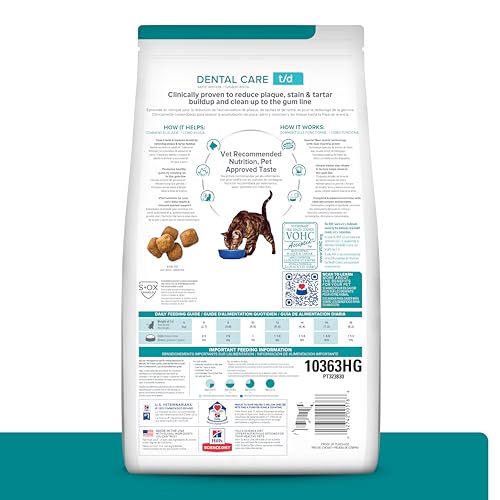
Best Dental (VOHC-Approved) — Hill’s Prescription Diet t/d Dental Care
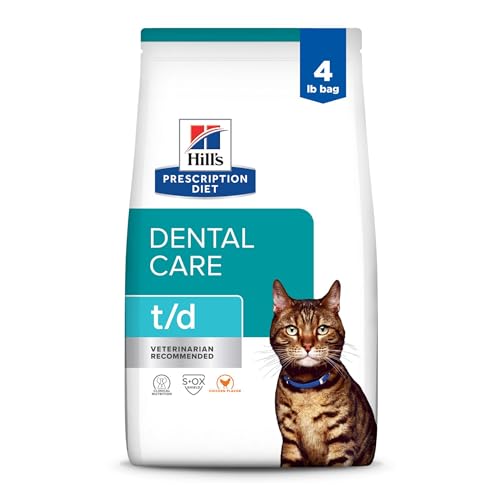
The benchmark VOHC-approved dental diet for cats and the most clinically cited dental kibble in feline dentistry. Its oversized kibble matrix is specifically engineered not to shatter immediately, forcing real tooth-to-kibble contact that mechanically scrubs plaque before the kibble breaks apart. This is the product a vet should mean when they say “feed dry food for your cat’s teeth.” Requires a veterinary prescription.
Check current price on Amazon →
Best Mid-Range — Purina ONE Tender Selects
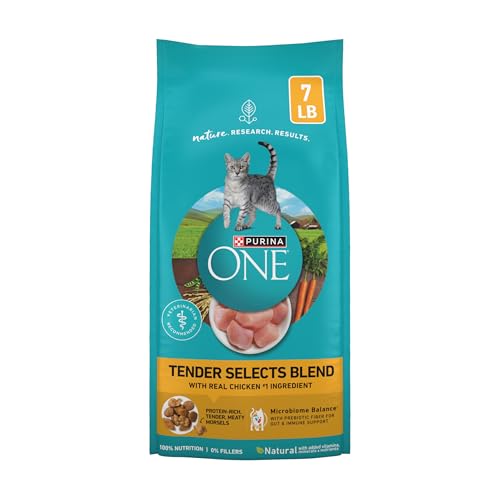
Purina ONE runs AAFCO feeding trials, a standard many mid-tier brands skip, and Tender Selects uses real chicken as the first ingredient with a texture blend of crunchy and tender pieces that tends to work well with cats who are picky about kibble texture specifically. A solid, credible step up from bargain-tier dry food without reaching premium pricing.

Check current price on Amazon →
Best Budget Dry — IAMS Proactive Health Healthy Adult
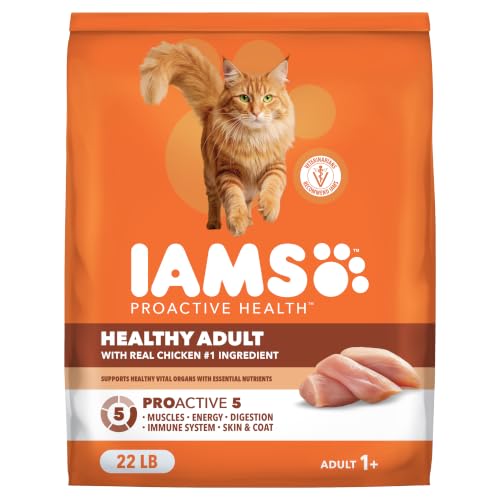
The most credible budget-tier dry cat food for a healthy adult with no specific dietary requirements. IAMS conducts feeding trials and lists chicken as the first ingredient, which is more than many similarly priced competitors offer. Not WSAVA-compliant at the same full standard as Royal Canin or Hill’s, but a legitimate, complete-and-balanced option when premium pricing isn’t sustainable, especially in multi-cat households.
Check current price on Amazon →
Best Premium Grain-Free Dry — Wellness CORE+ Adult Indoor

Wellness CORE+ leads with named animal protein (chicken and turkey meal) ahead of any grain or plant filler, appealing to owners specifically looking for a grain-free, high-protein formula for an indoor cat. It doesn’t publicly document every WSAVA transparency point the way Hill’s or Royal Canin do, but the ingredient sourcing and formulation quality are genuinely strong — worth a direct check with the manufacturer if full manufacturing transparency matters to you specifically.

Check current price on Amazon →
Best High-Protein Whole-Prey-Style — Tiki Cat Born Carnivore

Tiki Cat’s Born Carnivore line leans hard into the obligate-carnivore angle covered earlier in this guide, with chicken and turkey meal as the dominant protein sources and a notably lower carbohydrate percentage than most mainstream dry foods. A strong option for owners specifically trying to minimize carb content in a dry format, though as with Wellness above, it’s worth confirming manufacturing transparency directly with the brand if that’s a priority for you.

Check current price on Amazon →
🥫 Top Wet Cat Food Picks
Best Overall Wet — Hill’s Science Diet Adult Healthy Cuisine
No products found.Hill’s Science Diet’s Healthy Cuisine wet line meets full WSAVA-aligned manufacturing standards, with a texture and moisture profile built for everyday feeding rather than as an occasional treat. Strong default pick for a healthy adult cat where the goal is hydration, palatability, or a mixed-feeding approach.
No products found.Check current price on Amazon →
Best Palatability — Royal Canin Indoor Adult Morsels in Gravy
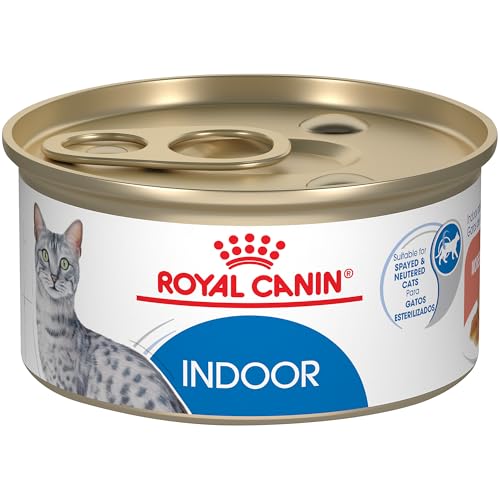
Royal Canin’s gravy-style morsels are formulated specifically for indoor adult cats, and the gravy format tends to win over cats that reject firmer pâté textures. The 3oz single-serve format also makes portion control and freshness easier to manage than a larger can, especially in single-cat households.

Check current price on Amazon →
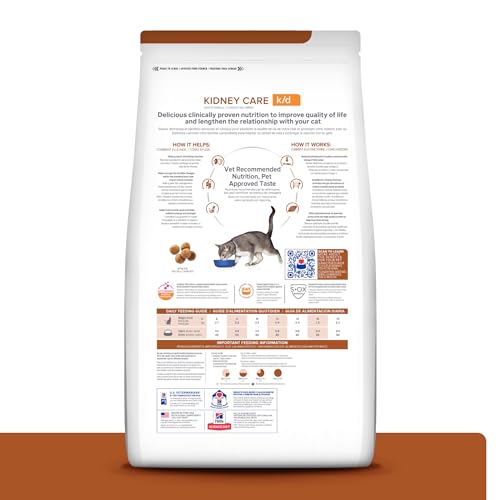
Best for Kidney Disease — Hill’s Prescription Diet k/d Feline

The most clinically validated renal diet in feline veterinary medicine and the default prescription recommendation for cats with diagnosed CKD. Controlled phosphorus, moderated high-quality protein to reduce toxin load, and added omega-3s for kidney blood flow support, in a format palatable enough for cats with a reduced appetite from illness. Requires a veterinary prescription — always follow your vet’s specific guidance on when to start a renal diet and which formula fits your cat’s disease stage.
Check current price on Amazon →
Best Budget Wet — Fancy Feast Classic Pâté

Fancy Feast Classic Pâté carries a full AAFCO complete-and-balanced statement, distinguishing it from some of Fancy Feast’s other lines that are marketed as toppers or complementary feeding only — worth checking the specific can’s label for that statement regardless of which flavor you buy. At this price point, it’s one of the more credible everyday wet food options for cost-conscious, multi-cat households.

Check current price on Amazon →
🍼 Top Kitten Wet Food Picks
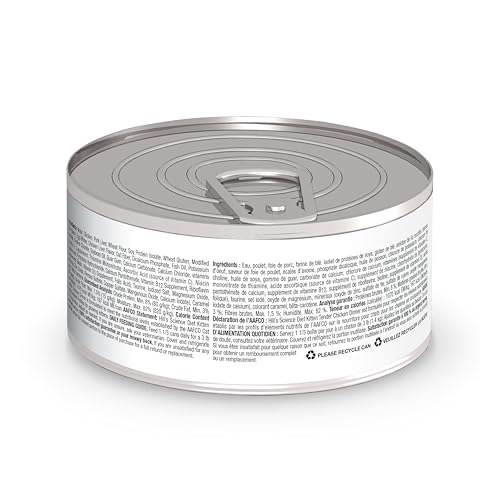
Best Overall Kitten Wet — Hill’s Science Diet Kitten Formula
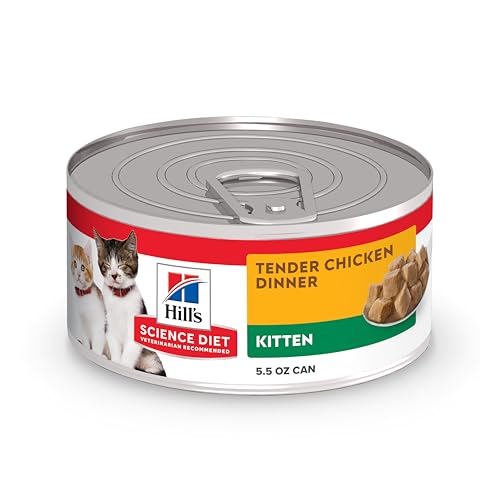
Formulated specifically for growth, with the elevated protein, fat, and DHA levels a kitten needs during rapid development — not an adult formula in a different package. The soft, high-moisture texture also sidesteps the starch-digestion issue covered earlier in this guide, making it a genuinely well-matched default for kittens from weaning through 12 months.
Check current price on Amazon →
Best Texture Option — Royal Canin Kitten Thin Slices in Gravy

The thin-slices-in-gravy format is genuinely easier for very young kittens to eat than a dense pâté, and the gravy adds extra moisture on top of what the wet base already provides. A good option specifically for kittens transitioning off nursing or struggling with a thicker food texture.

Check current price on Amazon →
Best Variety Pack — Purina Pro Plan Development Kitten Wet Food

The Development line’s variety pack format is a practical way to figure out flavor and texture preference early, since kittens can be surprisingly particular from the start. Purina Pro Plan meets full WSAVA-aligned manufacturing standards, and the growth-formula nutrition here matches what’s covered in the kitten feeding section above.

Check current price on Amazon →
Frequently Asked Questions
Is wet or dry food better for cats?
Neither is universally better. Dry food is more convenient and cheaper, and it’s adequate for most healthy adult cats. Wet food is clinically better for kittens, seniors, and cats with kidney disease, urinary issues, low water intake, or dental pain. The right choice depends on your cat’s specific life stage and health profile, not a blanket preference for one format.
Can kittens eat regular adult wet or dry food?
No — kittens need a food labeled for “growth” or “all life stages” until about 12 months old. Adult maintenance formulas don’t provide the calorie density, protein, or DHA a growing kitten needs, and a kitten’s digestive system isn’t yet efficient at processing the starch load in many adult dry foods.
Is wet food better for senior cats?
Often yes, for several reasons: senior cats with declining smell sensitivity respond better to wet food’s stronger aroma, cats with dental disease may find hard kibble painful, and CKD (common in older cats) benefits directly from wet food’s hydration and phosphorus control. Senior cats without these issues can continue on dry food, but wet or mixed feeding is worth considering from around age 10 onward.
Does dry food clean cats’ teeth?
Standard dry kibble provides minimal dental benefit — it shatters before reaching the gumline where plaque forms. The exception is VOHC-approved dental diets like Hill’s Prescription Diet t/d, engineered specifically to mechanically shear plaque during chewing. For real dental health improvement, daily brushing plus a VOHC-approved product is the evidence-based approach, not standard kibble alone.
Is wet food better for cats with kidney disease?
Yes, particularly veterinary renal wet diets. Cats with CKD benefit from the added hydration, controlled phosphorus that slows disease progression, and moderated protein that reduces toxin load. Hill’s Prescription Diet k/d and Royal Canin Renal Support are both available in wet format and are the clinical standards for feline CKD management. Always follow your vet’s specific recommendation.
How do I switch my cat from dry to wet food safely?
Transition over 7–10 days: 75% old food / 25% new food for days 1–3, 50/50 for days 4–6, 25% old / 75% new for days 7–9, then 100% new food from day 10. Watch stool consistency throughout, and slow down rather than stop if you see loose stools. Cats can be more transition-sensitive than dogs, so extend the timeline if your cat has a history of food strikes.
Can I mix wet and dry food for my cat?
Yes — but calculate your cat’s total daily calorie target first, then split that number across both foods. Never add wet food on top of a full dry portion; that’s a second meal, not a topper. Cats have a small calorie budget, so overfeeding by even a modest amount adds up to weight gain faster than owners often expect.
Is grain-free food necessary for cats?
Not inherently. As obligate carnivores, cats don’t need grain, but a well-formulated grain-inclusive food isn’t automatically worse than a grain-free one — what matters more is the overall protein quality and whether the food carries a valid AAFCO complete-and-balanced statement. Grain-free is a reasonable preference, not a medical requirement, for most healthy cats.
Final Verdict — The Right Choice by Cat Profile
| Cat Profile | Best Format | Top Pick |
|---|---|---|
| Kitten (under 12 months) | Wet or mixed | Hill’s Science Diet Kitten Formula |
| Healthy adult, no specific needs | Dry, wet, or mixed | Purina Pro Plan High Protein with Probiotics |
| Dental disease / tartar focus | Dry — VOHC only | Hill’s Prescription Diet t/d Dental Care |
| Budget-conscious owner | Dry or wet | IAMS Proactive Health / Fancy Feast Classic Pâté |
| Picky eater or senior cat | Wet or mixed | Royal Canin Indoor Adult Morsels in Gravy |
| CKD / kidney disease | Wet — veterinary diet | Hill’s Prescription Diet k/d Feline |
| Premium / grain-free preference | Dry or wet | Wellness CORE+ / Tiki Cat Born Carnivore |
For related feeding and hydration guidance, see our why cats don’t drink water guide and best cat water fountains comparison — both pair directly with the hydration points covered here.
Affiliate Disclosure: GearForPet.com participates in affiliate programs. We may earn a small commission if you purchase through our links at no extra cost to you. Read our full disclosure.