Best Cat Grooming Brushes for Shedding (2026): The Right Tool for Short, Long & Sensitive Coats
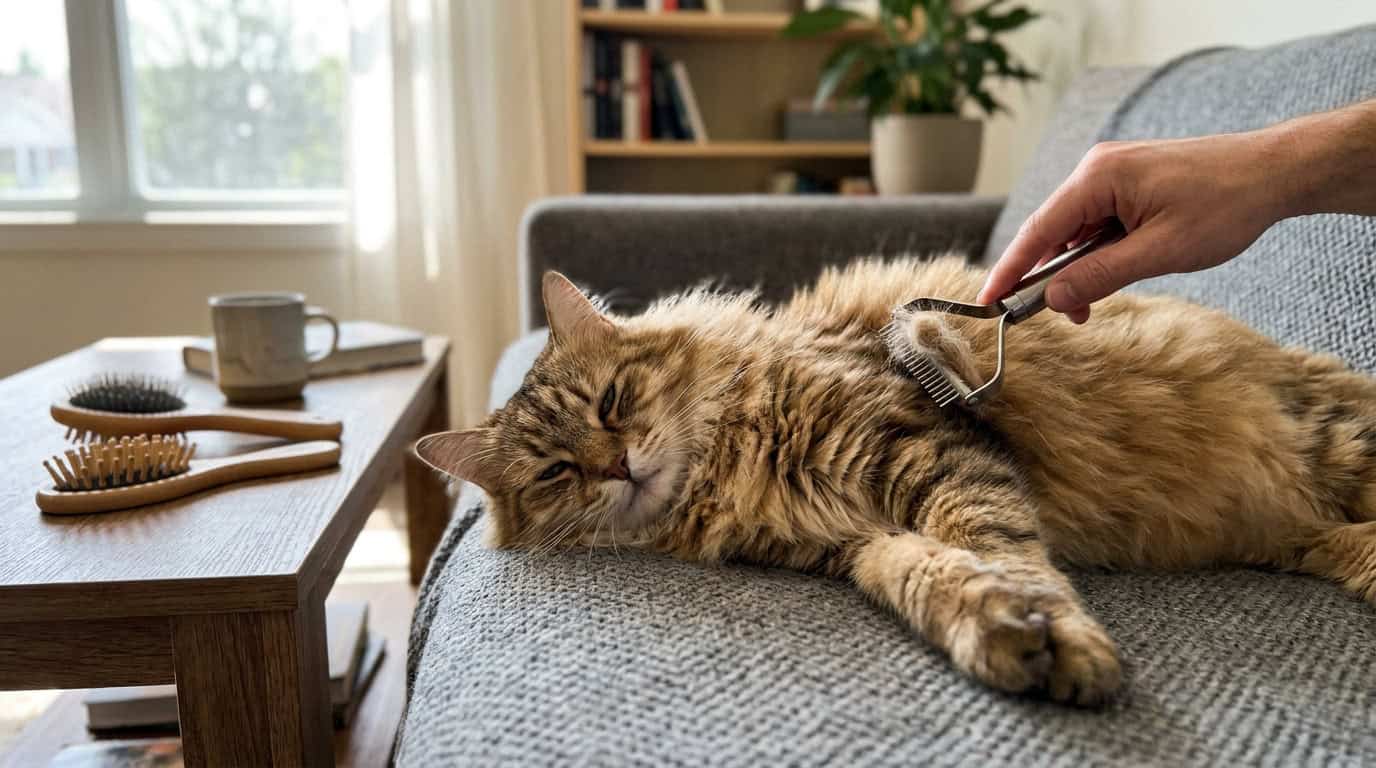
Most cat brushes fail for a boring reason: the tool doesn’t match the coat. A rubber brush that works well on a short-haired tabby can slide right over the dense fur of a Maine Coon. A slicker that fills up with fluff can still leave tangles hiding near the skin. And a bladed deshedding tool used too often can do more harm than good. The best brush for shedding is the one that reaches the coat your cat actually has, and that your cat will tolerate. This guide matches seven tools to coat type, temperament and job, and is honest about what each one can’t do.
Quick Answer: Which Brush for Which Cat?
There is no single best brush. Pick by coat and temperament, then add a comb to check your work.
- Short-haired, brush-averse cat: start with a rubber brush or grooming glove, which feel more like petting.
- Short or medium coat, cooperative cat: a slicker brush removes loose fur efficiently.
- Long or dense coat: use a pin-and-bristle brush or gentle slicker, then a metal comb to confirm the fur is clear down to the skin.
- Heavy seasonal shedding: a bladed deshedding tool can help, but only occasionally and with a light hand.
Cat Brush Types Compared
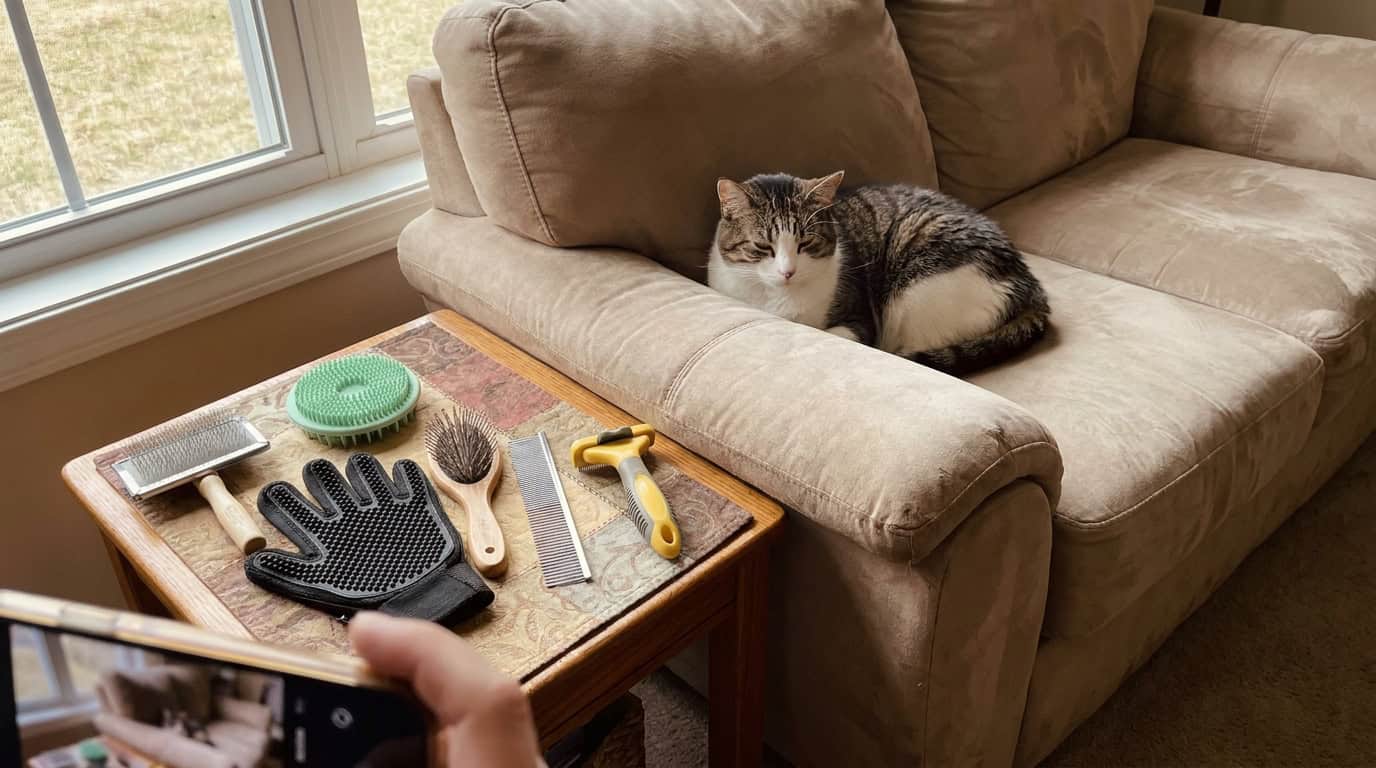
| Tool | Best For | Main Limitation |
|---|---|---|
| Slicker brush | Removing loose fur from short to medium coats | Fine pins can catch on tangles and irritate skin if pressed hard |
| Rubber brush | Short coats, cats that dislike brushes | Doesn’t reach dense undercoat or tangles |
| Grooming glove | Cats that only tolerate petting | Limited reach on thick long coats |
| Pin and bristle brush | Long coats, everyday tangle prevention | Won’t remove tight mats |
| Metal comb | Checking for tangles near the skin | Not a fast way to remove bulk shedding |
| Bladed deshedding tool | Occasional heavy seasonal shedding | Overuse can thin or damage the coat |
How We Chose These Picks
We have not hands-on tested these products on a panel of cats. These picks come from comparing product listings, manufacturer descriptions and coat-type grooming guidance. We looked for: a clear job for each tool, a design that suits the coat it’s aimed at, ease of cleaning, and honest limitations. Every product below links to its Amazon listing, so check current size, color and price there before buying.
The 7 Best Cat Brushes and Grooming Tools for Shedding
1. Safari Self-Cleaning Slicker Brush for Cats – Best Everyday Slicker

The Safari slicker uses stainless steel pins and a retracting mechanism: press a button and the collected hair falls away, so you’re not picking fur out of the pins by hand. That single feature makes regular brushing less of a chore, and a brush that’s easy to clean is one you’ll actually use. The listing describes it as suitable for all coat types and everyday use.

Use light, short strokes in the direction of hair growth. A slicker is best for lifting loose surface and mid-coat fur; it’s not a mat remover, and pressing hard on thin-skinned cats can cause irritation.

Not the right fit if: your cat has a very dense, long coat or active mats. Pair it with a comb or choose a pin-and-bristle brush.
Pros: Button-retract cleaning, comfortable grip, works across coat types, simple to use.
Cons: Fine pins need a gentle hand. May not reach tangles deep in a thick long coat.
Check current price on Amazon →
2. Hartz Groomer’s Best Small Slicker Brush – Best Budget Slicker
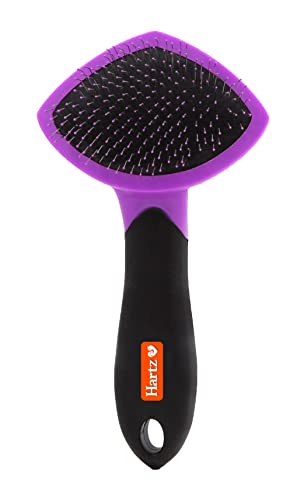
Hartz sells this as a slicker for cats and small dogs, developed with groomers, with fine stainless steel tips that have a protective coating so they grab loose hair gently. It’s the low-cost way to find out whether your cat tolerates a slicker at all before you spend more.

The compact head suits cats and small breeds, and it’s easy to use around legs, chest and the base of the tail where larger brushes are awkward.

Not the right fit if: you have a large or long-haired cat, since the small head means more passes to cover the same area.
Pros: Low price, groomer-developed design, protective-coated tips, small head for tight spots.
Cons: Small head is slow on big cats. Not built for heavy seasonal shedding.
Check current price on Amazon →
3. KONG Cat ZoomGroom – Best for Short-Haired, Brush-Averse Cats
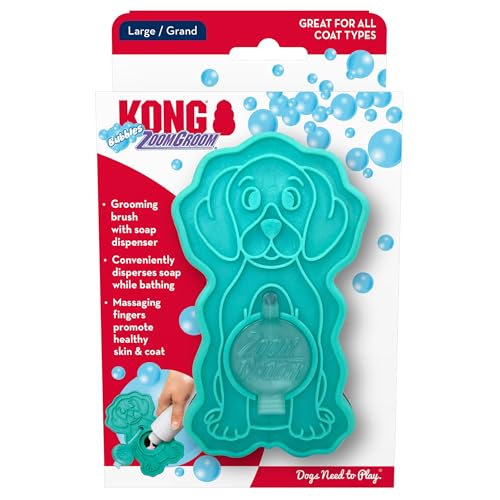
The ZoomGroom is a soft, flexible rubber grooming and massage brush. It’s a good first tool for cats who don’t like bristles or pins, because the rubber works like a firm stroke rather than a comb. The listing says it can be used for brushing, massaging and bathing, and that regular use helps reduce hairballs, which makes sense since loose fur removed with a brush is fur your cat doesn’t swallow while self-grooming.

Work in small circles and then long strokes. Many cats treat it like a massage, which makes it useful for building tolerance before moving on to a slicker or comb.

Not the right fit if: your cat has a long, thick or heavily matted coat. Rubber picks up surface fur but won’t reach tangles or dense undercoat.
Pros: Gentle, easy to clean, doubles as a massage tool, good for nervous cats.
Cons: Limited reach on longer coats. Not a detangler.
Check current price on Amazon →
4. HandsOn Pet Grooming Gloves – Best for Cats Who Only Tolerate Petting
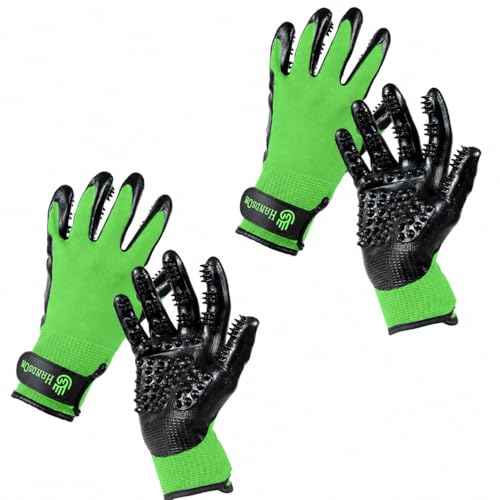
HandsOn gloves are five-finger gloves you wear while petting, so grooming feels like stroking rather than brushing. They’re sold for shedding, bathing and massage across cats, dogs and horses. For a cat who bolts at the sight of a brush, a glove is often the easiest way to start.

Choose the size by your hand, not your cat. This listing is the grey, large version, so check the size and color options on Amazon before ordering.
Not the right fit if: your cat has a long, dense coat. Gloves handle loose surface fur well but won’t detangle or clear the undercoat.
Pros: Feels like petting, both hands free to hold a nervous cat, doubles as a bath aid.
Cons: Sizing depends on your hand. Limited reach on thick coats.
Check current price on Amazon →
5. GoPets Double-Sided Pin & Bristle Brush – Best for Long-Haired Cats
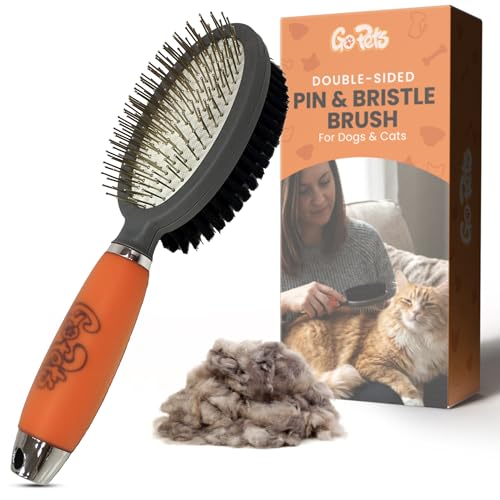
This two-sided brush pairs a pin side for detangling with a bristle side for removing loose fur and smoothing the coat. For a long-haired cat, that combination covers the routine job of keeping tangles from forming, and finishing the coat after you’ve worked through it.

Start with the pin side on small sections, working gently from the ends of the fur toward the skin. Then use the bristle side to lift loose hair and smooth the coat.

Not the right fit if: your cat already has tight mats. A brush works best as prevention; existing mats need careful separating or a groomer.
Pros: Two tools in one, suited to long coats, ergonomic handle.
Cons: Doesn’t remove tight mats. You’ll need to learn which side to use when.
Check current price on Amazon →
6. Safari Cat Shedding Comb – Best Comb for Checking Your Work

A comb is the honest test of any brushing session. The Safari cat shedding comb has wide-spaced metal teeth designed to remove loose hair on both short and long coats. Run it through after brushing: if it glides to the skin without snagging, the coat is clear. If it catches, there are tangles the brush missed.

Use it especially behind the ears, under the legs, along the belly and at the base of the tail, where mats form first.

Not the right fit if: you want a single tool that removes a lot of fur quickly. A comb is for checking and fine work, not bulk shedding.
Pros: Simple, durable metal teeth, reveals hidden tangles, works on short and long coats.
Cons: Slower than a brush for bulk removal. Needs a gentle hand around tangles.
Check current price on Amazon →
7. FURminator deShedding Tool for Cats – Best for Heavy Seasonal Shedding
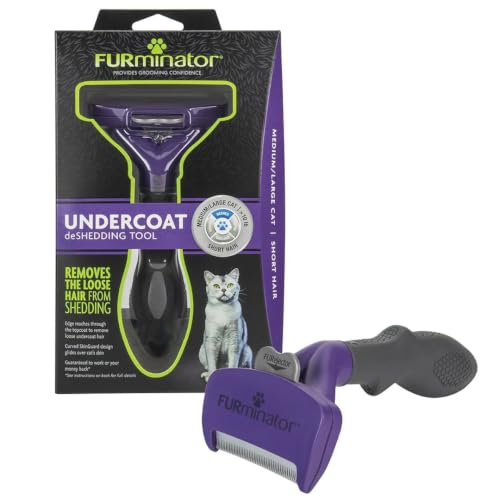
FURminator makes cat deShedding tools for both short and long coats, aimed at medium to large cats over 10 lbs. The listing recommends weekly use and describes an ergonomic handle and easy clean-up. It’s the tool to reach for when your cat is dropping fur heavily and a regular brush isn’t keeping up.

Buy the version that matches your cat’s coat: short hair, medium/large cat or long hair, medium/large cat. Remove any mats first, use light pressure, and stop if you see thinning fur or irritated skin.

Not the right fit if: your cat weighs under 10 lbs, has sensitive or irritated skin, or has mats. Don’t use a bladed tool on a coat that’s tangled or a skin that’s sore.
Pros: Targets heavy seasonal shedding, separate short-hair and long-hair versions, easy to clear.
Cons: Easy to overuse. Sized for medium and large cats only.
Check current price on Amazon →
How to Brush a Short-Haired Cat
Short coats shed year-round and usually need the least equipment. Start with a rubber brush or glove, stroking in the direction of hair growth for a minute or two. Follow with a slicker for stubborn loose fur, then run a comb through to confirm the coat is clear. Keep sessions short and end before your cat gets fed up, ideally with a treat.
How to Brush a Long-Haired Cat
Long coats hide problems. The top layer can look fluffy and clear while tangles form near the skin. Work in small sections with a pin-and-bristle brush, starting at the ends of the fur and moving toward the skin. Then use a comb to check each section down to the skin, especially behind the ears, under the legs, along the belly and at the base of the tail. Long-haired cats generally benefit from more frequent brushing than short-haired cats, so a short daily habit tends to work better than a long weekly session.
Deshedding Tools: When to Use Them (and When Not To)
A bladed deshedding tool pulls out loose undercoat, which is helpful during heavy seasonal shedding. The risk is over-brushing: repeatedly working the same patch can thin the coat and irritate skin. Use it occasionally, with light pressure, and never on mats, sore skin or a coat that’s wet or tangled. If your cat is small (under 10 lbs) or sensitive, start with a rubber brush, glove or gentle slicker instead.
What About Mats?
Small, loose tangles can sometimes be worked apart gently with your fingers and a comb, starting from the outer edge. Tight or extensive mats are different: they can pull painfully on the skin, and the skin underneath can be hard to see. Don’t cut mats out with scissors, since a cat’s skin is thin and easily nicked. Ask a groomer experienced with cats or your veterinary team for help.
If Your Cat Hates Being Brushed
- Start with a glove or rubber brush, on the places your cat already likes being touched, such as the cheeks and back.
- Keep the first sessions very short, even 30 seconds, and end on a good note with a treat.
- Brush when your cat is relaxed, such as after a meal, not when they’re wound up.
- Don’t restrain your cat. If they’re struggling or swatting, stop and try again later.
- Introduce one new tool at a time so your cat can associate each with a good experience.
When Shedding Is a Health Issue
Normal shedding is loose fur across the body, more in spring and fall. See your veterinarian if you notice bald patches, scabs, redness, constant itching or scratching, a coat that suddenly looks greasy, dull or unkempt (particularly in a senior cat), or a marked change in how much your cat is grooming. Brushing can’t fix a skin or health problem, and a brush is not a substitute for a vet visit.
Keeping Fur Under Control at Home
Brushing removes fur at the source, so less ends up on furniture and floors. For what still escapes, a good vacuum for pet hair handles the floors and upholstery, and one of our best air purifiers for pet owners helps with the airborne dander. If you’re working through the rest of your cat kit, see our guide to what indoor cats actually need. Diet also affects coat condition, which we cover in our wet vs dry cat food guide.
Frequently Asked Questions
What is the best brush for a cat that sheds a lot?
For most cats, a slicker brush plus a comb covers regular shedding. For heavy seasonal shedding on a medium or large cat, an occasional bladed deshedding tool can help, but use it lightly and only when the coat is free of mats.
How often should I brush my cat?
Short-haired cats commonly do well with brushing once or twice a week, while long-haired cats generally need more frequent sessions, often daily, to prevent tangles. Follow your cat’s tolerance; short, calm sessions are better than long stressful ones.
Are deshedding tools safe for cats?
Used occasionally and gently on a mat-free coat, they can be. Overuse can thin the coat and irritate the skin, so avoid them on sensitive, sore or matted skin and on small cats the tool isn’t sized for.
Is a slicker brush or a comb better?
They do different jobs. A slicker removes loose fur efficiently; a comb tells you whether the coat is actually clear down to the skin. Long-haired cats benefit from using both.
What if my cat won’t let me brush them?
Start with a glove or rubber brush, keep sessions very short, and pair them with treats. If your cat is very stressed, or has mats they won’t let you touch, ask a groomer or your vet for help.
Will brushing stop shedding completely?
No. Shedding is normal, but regular brushing removes loose fur before it lands on your furniture, and may reduce the fur your cat swallows while grooming, which can help with hairballs.
Final Verdict: The Right Tool by Cat Type
| Cat Profile | Best Tool | Top Pick |
|---|---|---|
| Short coat, brush-averse | Rubber brush | KONG Cat ZoomGroom |
| Only tolerates petting | Grooming glove | HandsOn Pet Grooming Gloves |
| Everyday shedding, cooperative cat | Slicker brush | Safari Self-Cleaning Slicker |
| Budget-conscious | Slicker brush | Hartz Groomer’s Best Small Slicker |
| Long or dense coat | Pin-and-bristle brush | GoPets Double-Sided Brush |
| Checking for tangles | Metal comb | Safari Cat Shedding Comb |
| Heavy seasonal shedding (10+ lbs) | Deshedding tool | FURminator deShedding Tool |
Affiliate Disclosure: GearForPet.com participates in affiliate programs. We may earn a small commission if you purchase through our links at no extra cost to you. Read our full disclosure.