Why Cats Don’t Drink Water: 7 Reasons & Fixes
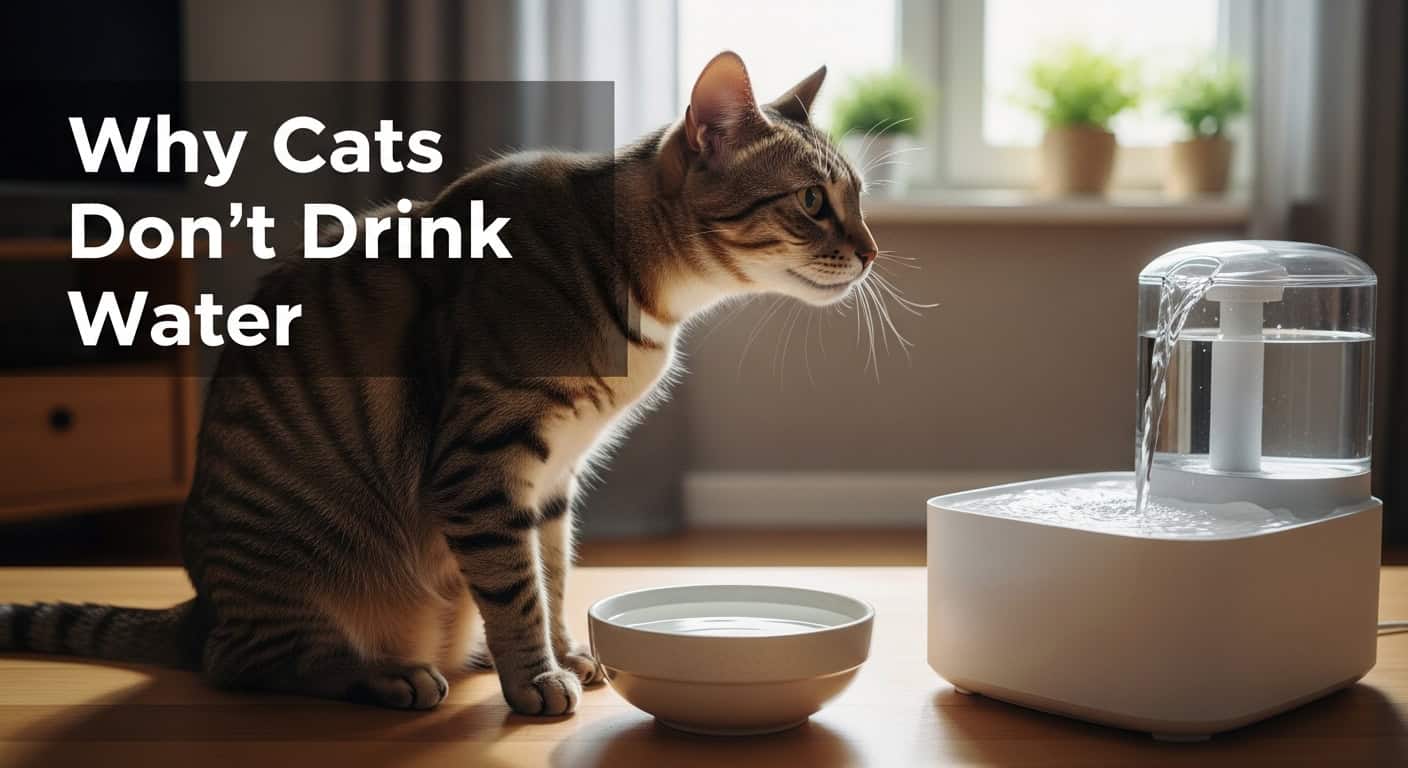
Your cat has a full water bowl. You change it every day. And they still won’t drink from it — or worse, they drink from the sink faucet right in front of you. This isn’t stubbornness. It’s biology. Cats evolved in desert environments where still water was more likely to be contaminated than moving water, and that instinct is still running in the background of every domestic cat alive today. This guide explains exactly why it happens — and what actually changes it.
Why Won’t My Cat Drink Water?
Cats avoid still water by instinct, often skip the bowl when it’s placed near food, and may be getting more moisture than you realise from wet food. In most cases the problem is behavioral, not medical — but a small number of causes require a vet visit. The seven reasons below cover both categories so you can identify which situation you are actually dealing with.
- Bowl is placed next to the food
- Still water triggers an avoidance instinct
- Whisker fatigue from a narrow or deep bowl
- The bowl isn’t clean enough to pass a cat’s nose test
- They’re already getting moisture from wet food
- Stress or a recent environmental change
- An underlying medical issue (dental pain, kidney disease, hyperthyroidism)
First: Is Your Cat Actually Dehydrated?
Before you change anything, do these two checks. Most owners skip this step and end up solving the wrong problem.
The skin tent test: gently pinch a small fold of skin at the back of your cat’s neck and release it. In a well-hydrated cat it snaps back immediately. If it stays tented or returns slowly, your cat is dehydrated and needs a vet visit — not a new bowl.
The gum check: press a finger gently against your cat’s gums and release. The colour should return to pink within two seconds. Dry, tacky, or pale gums are a dehydration signal that needs veterinary attention same day.
If both tests come back normal, your cat is almost certainly fine and the issue is behavioral. Read on. If either test concerns you, call your vet before trying any of the fixes below.
The 7 Real Reasons Cats Don’t Drink Water
1. The Bowl Is Next to the Food

This is the single most common setup mistake and it affects the majority of cat households. In the wild, cats eat prey away from water sources — a dead animal near a water source signals contamination. That association is hardwired. When you place the water bowl directly next to the food bowl, you are triggering the exact instinct that tells your cat that water is unsafe to drink.
The fix: move the water bowl to a completely different location — ideally a different room, or at minimum 1–2 metres away from the food. Most owners who do this report their cat starts drinking within 24–48 hours without any other change. It is the easiest fix on this list and the one most guides bury at point seven.
2. Still Water Triggers an Avoidance Instinct
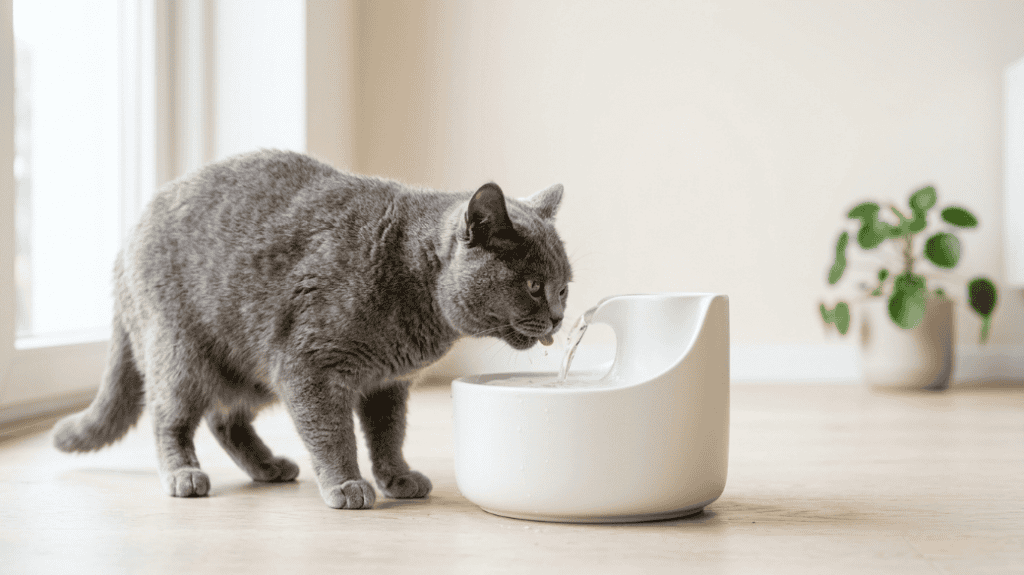
Cats are hardwired to prefer moving water over still water. In nature, moving water is fresher and less likely to carry bacteria or parasites. Still water pooled near a carcass or in a stagnant depression is the dangerous kind. Your cat’s brain has not updated this assessment to account for the fact that you change their bowl daily — the stillness alone is enough to trigger low-level avoidance.
This is why cats drink from running taps, bat at water with their paw before drinking, or push their bowl across the floor. They are not being difficult. They are trying to create movement in the water before they trust it.
The fix: a water fountain solves this at the source. Moving water eliminates the avoidance instinct entirely. This is not a marketing claim — it is the behavioral reason why cats consistently drink more from fountains than from still bowls. If your cat drinks from the sink but ignores the bowl, a fountain is almost certainly the answer.

For cats that are new to fountains, the Catit LED Flower Fountain is the right starting point — low cost, proven design, low risk if your cat turns out to prefer something else. If you have already tried a budget fountain and your cat stopped using it after a few weeks, the issue was almost always cleaning friction or poor placement rather than disinterest in moving water. The PETLIBRO Dockstream 2 Cordless Fountain solves both problems with a cordless design that places anywhere and cleans without wrestling a cable out from behind a cabinet.
See the Catit LED Flower Fountain on Amazon | See the PETLIBRO Dockstream 2 on Amazon
3. Whisker Fatigue From the Wrong Bowl Shape
A cat’s whiskers are extremely sensitive sensory organs, not decorative features. When a bowl is narrow or deep enough that the whiskers brush against the sides while drinking, the repeated stimulation becomes genuinely uncomfortable — not mildly annoying, but a real aversion signal. Cats experiencing whisker fatigue will often approach the bowl, drink a small amount, back away, then return repeatedly without drinking normally. Some will push food or water onto the floor rather than put their face fully into the bowl.
The fix: switch to a wide, shallow bowl with a diameter large enough that the whiskers never touch the sides during normal drinking. This is also why many cats prefer drinking from a glass or wide saucer — the geometry suits them, not the material. Flat-faced breeds like Persians and Exotic Shorthairs are particularly prone to whisker fatigue and need an especially wide, shallow water surface.

4. The Bowl Isn’t Clean Enough
Cats can detect bacterial residue, chlorine, and biofilm at concentrations far below what a human nose registers. A bowl that looks clean to you may still carry a smell layer that tells your cat it is not. Plastic bowls are the worst offenders because they develop microscopic scratches over time that trap bacteria even after washing. Stainless steel and ceramic bowls stay cleaner longer and are easier to sanitise properly.
The fix: wash the water bowl daily with hot water and dish soap — not weekly, and not just a rinse. If you are using a plastic bowl, replace it with stainless steel or ceramic. Many owners who switch report an immediate increase in their cat’s water intake with no other change.
5. They Are Already Getting Moisture From Food
This is the reason most guides miss, and it matters enormously before you diagnose a problem. Wet cat food contains 70–80% moisture. Dry kibble contains roughly 10%. A cat eating wet food twice a day is consuming a meaningful volume of water through their diet and may have genuinely low demand for additional bowl water. This is not abnormal — it is exactly how cats stayed hydrated in the wild, through prey tissue moisture rather than standing water.
What this means practically: if your cat eats predominantly wet food, drinks occasionally from the bowl, passes the skin tent and gum tests, and is otherwise healthy — there is no problem to fix. A cat on dry kibble with the same low bowl intake is a different situation entirely, because that cat has no alternative moisture source and is almost certainly chronically under-hydrated.
The fix for dry-food cats: add a small amount of warm water or low-sodium chicken broth to the kibble to increase moisture intake at meals. Pair this with a fountain to increase drinking throughout the day. If you are transitioning from dry to wet food, expect your cat’s bowl water consumption to drop noticeably — that is normal and expected.
6. Stress or a Recent Environmental Change
Cats are acutely sensitive to changes in their environment, and a reduction in eating or drinking is one of the earliest behavioral signals of stress. Moving to a new home, introducing a new pet, rearranging furniture, a change in the owner’s schedule, or even moving the water bowl to a new location can all suppress drinking behavior temporarily. This effect is usually short-term — days to a couple of weeks — but it needs to be on your radar if a previously normal drinker suddenly stops.
The fix: identify what changed recently and, where possible, restore familiar environmental cues. Keep the water bowl in its established location during periods of change. If a new pet is in the home, make sure the water bowl is in a location the new animal cannot block or guard — resource guarding of water is a real and often invisible stressor for cats in multi-pet households.
7. An Underlying Medical Issue
A small but important subset of cats that appear to “not drink water” are actually experiencing a medical condition that suppresses thirst or makes drinking painful. Dental disease is the most common and most overlooked — a cat with an infected tooth or gum inflammation avoids drinking because contact with water causes pain. Kidney disease, hyperthyroidism, and diabetes can all alter drinking behavior in different directions: some conditions cause increased thirst and urination, others cause suppressed intake.
The red flags that mean vet visit, not a new bowl:
- Reduced drinking accompanied by vomiting, weight loss, or lethargy
- Dry or pale gums (gum check above)
- Skin tent test fails
- Noticeably reduced litter box visits over several days
- Sudden increase in drinking combined with increased urination — this is a symptom, not a positive sign
- Any cat over 7 years old showing a change in drinking habits without an obvious environmental cause
Senior cats in particular need annual bloodwork that includes kidney function markers. Chronic kidney disease is the leading cause of death in older cats and is almost always manageable if caught early — and hydration is central to that management.
How Much Water Should a Cat Actually Drink?
A rough guideline: cats need approximately 50–60ml of water per kilogram of body weight per day. A 4kg cat needs roughly 200–240ml daily. On a wet food diet, a large portion of that comes from food moisture. On a dry food diet, almost none of it does — which means the bowl becomes the entire water supply and consistent intake matters much more.
Do not measure this precisely and stress about hitting a number. Use it as a rough sanity check. A cat that passes the hydration tests, is eating normally, and has healthy litter box output is almost certainly drinking enough regardless of how much you see them at the bowl.
Edge Cases Worth Knowing
Flat-faced breeds (Persians, Exotic Shorthairs, British Shorthairs): whisker fatigue is more pronounced, and the facial anatomy makes standard bowl shapes uncomfortable. These cats need the widest, shallowest bowl available and often do best with a fountain designed with a wide, low-flow outlet rather than a tall cascading one.
Senior cats (7 years and older): kidney function naturally declines with age, and hydration becomes more medically significant. Senior cats should have water available in multiple locations and be monitored more actively for changes in drinking and litter box habits. A fountain is a higher priority for a senior cat than for a young adult cat.
Cats transitioning from dry to wet food: expect bowl water intake to drop, sometimes dramatically, during and after the transition. This is not a problem — it reflects the shift in where moisture is coming from. Do not mistake this for a new drinking problem.
The Fastest Fixes in Order of Impact
If you want to act today, do these in order before spending anything:
- Move the water bowl away from the food bowl — different room if possible. Do this first. It costs nothing and often solves the problem entirely.
- Wash the bowl daily with hot water and soap — replace plastic with stainless steel or ceramic if you haven’t already.
- Try a wide, shallow bowl — if your current bowl is narrow or deep, whisker fatigue may be the issue.
- Add water to wet food — a few teaspoons of warm water mixed into wet food increases moisture intake at no cost.
- Try a fountain — if your cat seeks running water but ignores the bowl, moving water is the fix. Start with the Catit if you want to test the concept cheaply. Upgrade to the PETLIBRO cordless if cleaning friction has caused you to abandon a fountain before.
Check the Catit LED Flower Fountain on Amazon | Check the PETLIBRO Dockstream 2 on Amazon
FAQ
How much water should a cat drink per day?
A general guideline is 50–60ml per kilogram of body weight daily. A 4kg cat needs roughly 200–240ml per day. Cats on wet food get a large portion of this through their meals and will naturally drink less from a bowl than cats on dry kibble. Focus on hydration signs rather than measuring exact intake.
Is it okay if my cat only drinks from the faucet?
Yes — if they are actually drinking enough and passing hydration checks, where the water comes from does not matter medically. The preference for running water is a normal instinct. If it’s inconvenient to leave taps running, a fountain replicates the same moving-water signal and most tap-preferring cats transition to one quickly.
Can dry food cause kidney disease in cats?
The link between dry food and kidney disease is debated among vets, but chronic mild dehydration — which is common in cats eating only dry kibble without adequate water intake — is considered a contributing factor to kidney stress over time. Increasing moisture intake, whether through wet food, added water, or a fountain, is the practical recommendation most vets make regardless of the underlying mechanism.
How do I know if my cat is dehydrated?
Do the skin tent test (pinch the scruff — should snap back immediately) and the gum check (press gums, colour returns within two seconds, gums should be moist and pink). Sunken eyes, lethargy, and reduced litter box output are additional signs. Any combination of these warrants a vet visit, not a home remedy.
Will a water fountain actually make my cat drink more?
For cats that avoid still water or seek running water from taps, yes — consistently. The moving water removes the avoidance instinct that makes many cats ignore still bowls. For cats already drinking normally from a bowl, the difference is smaller. If your cat ignores their bowl but drinks from the sink, a fountain is very likely to change their behaviour.
Why does my cat put their paw in the water before drinking?
This is a water-testing behaviour rooted in the same instinct as the preference for moving water. The paw creates surface movement, which signals the water is fresher and safer by their evolutionary standard. It is also used by cats that have poor depth perception due to whisker fatigue — touching the surface helps them gauge the water level without putting their face close to the bowl sides.
Final Recommendation
For the majority of cats that appear not to drink enough, the cause is one of three things: bowl placement next to food, still water avoidance, or the fact that they are already hydrated through wet food. None of those require a vet visit — they require a different bowl position, a cleaner bowl, or a fountain.
If your cat seeks running water from taps, the fountain recommendation is straightforward: start with the Catit LED Flower Fountain to confirm the behaviour change, then upgrade to the PETLIBRO Dockstream 2 if cleaning maintenance has been the barrier to consistent fountain use in the past. Both are covered in detail in our guide to the best cat water fountains.
If your cat shows any of the medical red flags listed above — failed hydration tests, weight loss, lethargy, pale gums, or is a senior cat with a sudden change in drinking habits — none of the above applies. That cat needs a vet, not a product recommendation.
- 💰 Best Budget: Catit LED Flower Fountain on Amazon
- 🏆 Best Overall: PETLIBRO Dockstream 2 Cordless Fountain on Amazon
Affiliate Disclosure: GearForPet.com participates in affiliate programs. We may earn a small commission if you purchase through our links at no extra cost to you. Read our full disclosure.