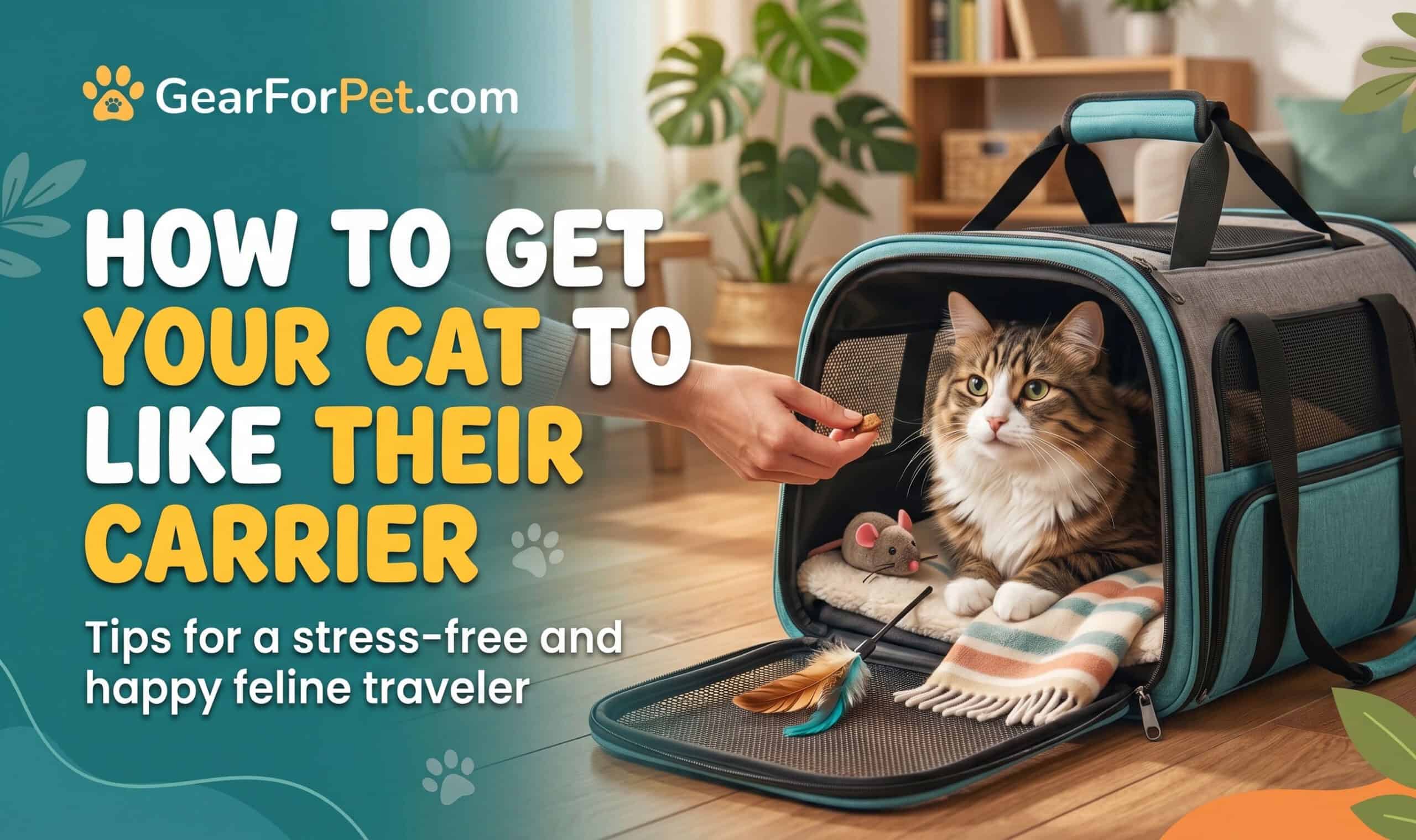
How to Get Your Cat to Like Their Carrier: The Step-by-Step Method That Actually Works
Most cats that hate their carrier learned to hate it. The carrier only appears on vet visit days, the cat is stuffed inside, something unpleasant happens, and the carrier disappears again until next time. Repeated enough times, the carrier becomes a completely reliable predictor of stress — and your cat responds to its appearance accordingly. The good news: learned associations can be unlearned. This guide covers the exact method that feline behaviour specialists use to change a carrier-phobic cat into one that enters voluntarily. It works on cats that have hated carriers for years. It takes 4–6 weeks done properly, not 4–6 days.
Why Your Cat Hates Their Carrier (And Why It Is Not Their Personality)
Carrier avoidance is almost always a conditioned response, not a fixed personality trait. The cat is not “difficult” or “impossible to travel with” — they have simply learned that a specific object predicts an unpleasant experience. This is a normal, rational learning response. It means the association can be changed by changing what the carrier predicts.
The three things that maintain carrier avoidance and must be addressed for the protocol to work:
- The carrier only appears before travel. As long as this is true, every appearance of the carrier is a valid stress cue. The carrier must become a permanent fixture in your home before any other step will work.
- The carrier interior is unfamiliar and unpleasant. Cold plastic, no familiar scent, no comfortable surface. A cat will not voluntarily enter a space that offers nothing positive.
- Entry is forced. Pushing, coaxing, or tipping a cat into a carrier on travel day reinforces the association between the carrier and a loss of control. Voluntary entry is the goal — it is not just nicer, it produces genuinely different physiological and behavioural outcomes.
What You Need Before You Start
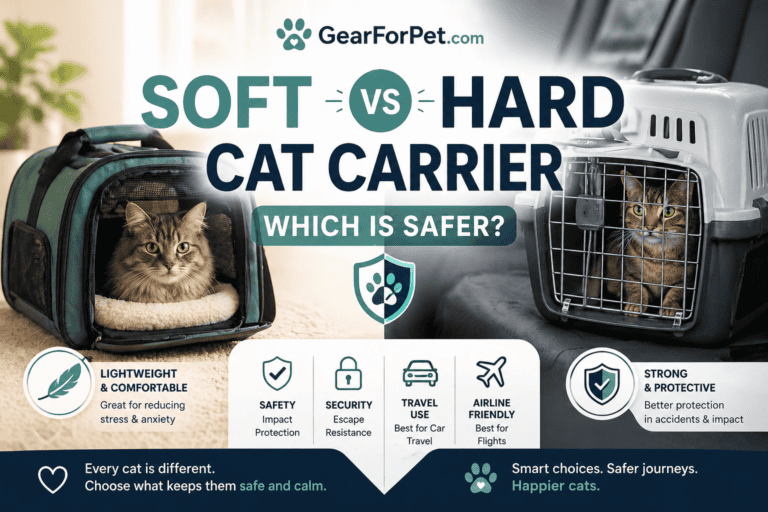
- The right carrier. A soft-sided carrier with a removable, washable liner and ideally a top-loading option. A hard plastic carrier with a fixed base is significantly harder to work with for this protocol because cats will not choose to sleep in it between sessions. The Sleepypod Air and Sleepypod Mobile are the most effective carriers for this method because their plush interiors are genuinely comfortable as everyday beds. Any soft carrier with a removable liner will work — see our best cat carriers guide for verified options.
- High-value treats. Not your cat’s regular food. Something they only get during these sessions — small pieces of cooked chicken, freeze-dried meat treats, or whatever produces the strongest reliable response in your individual cat.
- A familiar blanket or worn clothing. Something that smells like your home, your cat, or you. This goes inside the carrier from day one.
- Patience with the timeline. The protocol below takes 4–6 weeks for most cats. Cats with severe long-term carrier aversion may take 8 weeks. Rushing the timeline is the most common reason the method fails.
The Step-by-Step Protocol
Step 1: Permanent Placement (Days 1–14)
Place the carrier in your cat’s regular living space — the room they spend the most time in — and leave it there permanently. Remove the door if it has one. Place the familiar blanket inside. Do nothing else.
Do not: encourage your cat to approach it, place your cat near it, move it, or put it away between uses. The carrier must become part of the furniture — something that is always there and predicts nothing.
What to expect: most cats will investigate the carrier within 24–48 hours of placement, even if they have previously shown strong avoidance. Some will sniff it and walk away. Some will walk a wide circle around it for several days. Both responses are normal. You are not trying to produce any particular response in Step 1 — you are solely allowing the novelty and threat association to fade through repeated non-eventful exposure.
When to move to Step 2: when your cat passes the carrier without any visible stress response — no avoidance, no flattened ears, no tail low. This typically takes 5–10 days. Do not rush it.
Step 2: Positive Association Outside the Carrier (Days 7–21)
Begin feeding your high-value treats near the carrier — one metre away initially, then 50 cm, then right at the entrance, over multiple sessions across several days. The goal is to build a reliable association between the carrier’s presence and something your cat actively wants.
Session length: 2–3 minutes maximum. Always end the session while your cat is still calm and engaged — before any sign of hesitation or stress. A short session that ends positively is far more effective than a long session that ends with your cat retreating.
Progression rule: only move the treat placement closer when your cat approaches the current distance with zero hesitation for three consecutive sessions. If your cat hesitates at 50 cm, stay at 50 cm. Do not interpret reluctance as stubbornness — it means you moved too fast.
Feeding meals near the carrier: once treats are being taken at the carrier entrance, you can begin placing your cat’s regular meal bowl just inside the carrier entrance. Feeding is a stronger positive association than treats alone for many cats. Do not push the bowl further inside until your cat is eating at the entrance without any hesitation.
Step 3: Voluntary Entry (Days 14–28)
Once your cat is taking treats just inside the carrier entrance, begin tossing treats further inside so that your cat must step fully in to retrieve them. Do not lure them in and then close the door — the door stays open. Your cat must be able to exit immediately and freely at any point.
Resting voluntarily: the milestone for this step is your cat choosing to sit or lie inside the carrier without any treat luring. This happens naturally once the carrier interior has become a familiar, scented, comfortable space. Many cats reach this point between days 14 and 21 if the earlier steps have been done without rushing. Some take longer. When your cat rests in the carrier voluntarily, the hardest part of the protocol is complete.
What helps voluntary resting: place a piece of your worn clothing inside the carrier in addition to the familiar blanket. Your scent specifically is a documented calming cue for cats with human-bond attachment. Feeding the occasional meal fully inside the carrier once voluntary entry is established reinforces the association further.
Step 4: Door Closure (Days 21–35)
Once your cat is entering voluntarily, begin closing the door for very brief periods — 10 seconds initially — while remaining visible and calm. Open it before your cat shows any sign of wanting to exit. Treat through the mesh immediately after closing.
Duration progression: 10 seconds → 30 seconds → 1 minute → 3 minutes → 5 minutes → 10 minutes. Each duration should be repeated across multiple sessions until your cat is completely settled before progressing. A cat that is sitting calmly and accepting treats at 3 minutes is ready for 5 minutes. A cat that is vocalising, pawing the door, or panting at 3 minutes needs more time at 3 minutes, not progression.
Never leave a distressed cat in a closed carrier. If your cat reaches the stress threshold at any point — vocalising, panting, dilated pupils, excessive drooling — open the door calmly and end the session. Do not attempt to soothe or reward the stressed response. Simply open the door, allow your cat to exit freely, and run a shorter session tomorrow.
Step 5: Carrying and Movement (Days 28–42)
Once your cat is settled with a 10-minute door closure, begin carrying the carrier short distances around your home with your cat inside — five steps, then put it down and open the door. Then ten steps. Then from room to room. The goal is to introduce the physical sensation of movement and carrying in a safe, familiar context before any real travel occurs.
Car introduction: once home carrying is tolerated without stress, progress to the car. Carrier in the car, engine off, for 5 minutes. Then engine on, idling, for 5 minutes. Then a 5-minute drive around the block. Then a 15-minute drive. This graduated car exposure is the step most owners skip entirely — jumping directly from home sessions to a 40-minute vet trip — and it is the step that most determines whether the protocol produces a genuinely calm travel cat or just a less-stressed-at-home cat.
Supporting Strategies That Accelerate the Protocol
Feliway Classic Spray
Spray Feliway Classic inside the carrier at least 30 minutes before any session involving door closure or carrying — not immediately before, as the alcohol carrier in the spray causes brief aversion before it dries. Allow it to fully dry first. Feliway mimics the feline facial pheromone that cats deposit when they rub their face on familiar objects — it signals “this is a safe, known space” in a language cats respond to directly. It does not sedate or suppress behaviour; it reduces the baseline anxiety level in the specific environment where it is applied.
Scent Swapping
If you have multiple cats and one is more confident with the carrier than another, allow the more confident cat to investigate and rest in the carrier first. Their scent inside the carrier signals to the anxious cat that the space is safe for a member of their social group. This is particularly effective in bonded pairs where one cat is generally more exploratory than the other.
Covering During Transit
Once the protocol is complete and you are travelling, drape a light towel or blanket over the carrier during transit. This reduces visual stimulation from unfamiliar environments — passing traffic, waiting room activity, airport terminals — without compromising airflow through the mesh panels. Many cats that are settled in the carrier at home become re-stressed by visual overstimulation during the journey itself. Covering is the simplest intervention and one of the most consistently effective.
When the Protocol Is Not Enough
Some cats have anxiety that does not respond adequately to environmental management alone — particularly cats that have had traumatic experiences or have generalised anxiety rather than specific carrier conditioning. If your cat shows no improvement after 6 weeks of consistent protocol work, speak to your vet about gabapentin as a pre-travel anxiolytic. It is well-tolerated, does not cause respiratory depression, and is now routinely used in veterinary practice for travel-anxious cats. It is a complement to the protocol, not a replacement — the goal is always to build the cat’s genuine tolerance rather than to medicate every journey indefinitely.
Carrier Choice Makes a Difference
The protocol above works with any carrier, but it works faster and more reliably with the right one. The features that matter most for this method:
- Comfortable interior your cat will choose to sleep in — plush lining, familiar temperature, adequate space. The Sleepypod designs are the most effective for this specific reason.
- Removable, washable liner — allows you to cycle familiar-scented bedding in and out easily.
- Top-loading option — for the occasional unavoidable vet visit before the protocol is complete, top-loading reduces the entry resistance that front-loading triggers.
- Mesh ventilation on multiple sides — prevents heat buildup during door-closure sessions and allows treat delivery through the mesh without opening the door.
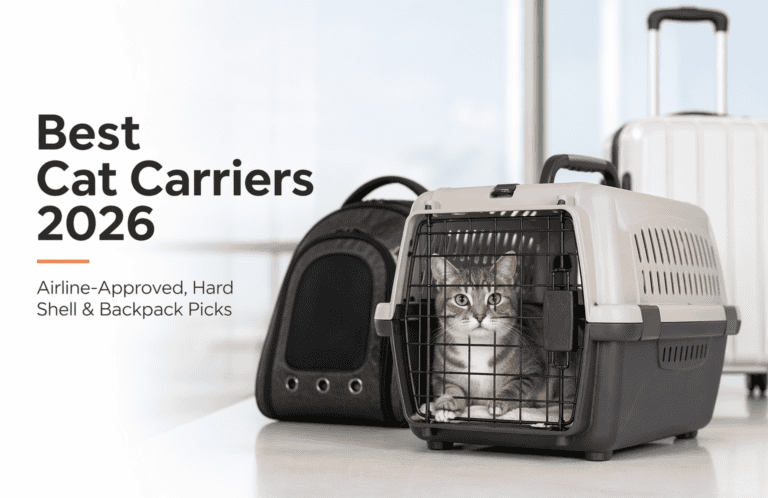
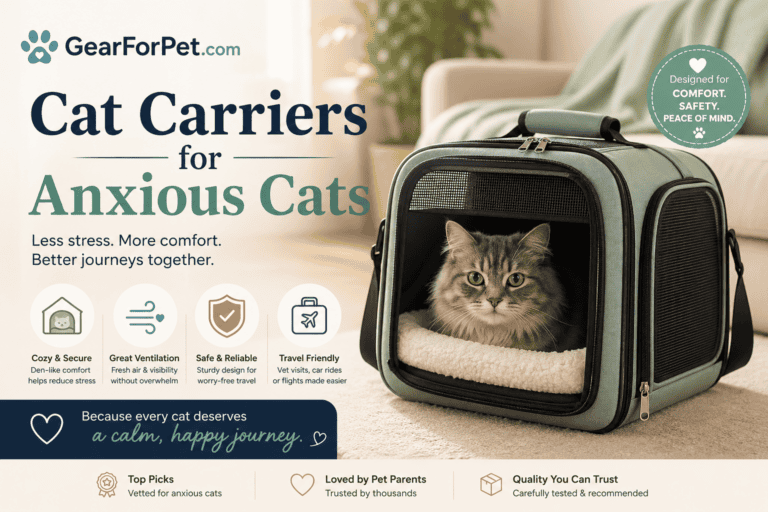
For full carrier recommendations across use cases and budgets, see our best cat carriers 2026 guide. For cats with significant existing anxiety, see best cat carriers for anxious cats for carrier-specific and protocol-specific guidance combined.
FAQ
How long does it take to get a cat used to a carrier?
4–6 weeks for most cats following the graduated protocol above. Cats with severe long-term carrier avoidance may take 8 weeks. The timeline cannot be meaningfully compressed — the association change requires repeated exposure at each stage before the cat’s nervous system updates its prediction. Rushing the protocol produces a cat that tolerates the carrier slightly better, not one that is genuinely comfortable with it.
My cat is fine at home but panics the moment I pick the carrier up. What do I do?
Your cat has learned that you picking up the carrier predicts travel. The fix is to pick up and move the carrier regularly at home as part of normal activity — carrying it from room to room, setting it down, and going about your day without anything travel-related following. Once the carrier-picking-up action stops reliably predicting travel, the panic response extinguishes. This typically takes 2–3 weeks of daily casual carrier movement.
Should I feed my cat in their carrier every day?
Once your cat is entering the carrier voluntarily, feeding one meal per day inside it is one of the fastest ways to build a positive association. Eating is a strong natural reinforcer — stronger than treats alone for many cats — and a cat that regularly eats inside a space develops a genuinely positive prediction about that space. You do not need to do this indefinitely — once the association is established and your cat rests in the carrier voluntarily, occasional treats inside are sufficient to maintain it.
Can I use this method on a kitten?
Yes, and the results are faster and more thorough than with adult cats. Kittens have a socialisation window (roughly 2–7 weeks of age) during which carrier introduction is most effective, but positive carrier association can be built at any age up to adulthood with good results. A kitten introduced to a carrier as a normal piece of home furniture in their first weeks in your home will typically show no carrier aversion as an adult. Start with permanent placement and treat sessions from day one in your home.
What if I need to travel before the protocol is complete?
Use a top-loading carrier if possible — it reduces entry resistance significantly compared to front-loading. Spray Feliway inside 30 minutes before and allow to dry. Place familiar bedding inside. Cover the carrier during transit to reduce visual stimulation. Keep the journey as short as possible. Speak to your vet about a single dose of gabapentin for the specific trip if your cat’s anxiety is severe. Then return to the protocol and continue where you left off — one unavoidable trip does not reset the progress, though it may slow it slightly.
Summary: The Protocol at a Glance
- Permanent placement — carrier out always, door off, familiar blanket inside. Wait until no stress response on approach. (Days 1–14)
- Positive association outside — high-value treats at increasing proximity. Never rush progression. (Days 7–21)
- Voluntary entry — treats tossed inside, door open, cat exits freely. Wait for voluntary resting. (Days 14–28)
- Door closure — 10 seconds → 30 seconds → 1 min → 3 min → 5 min → 10 min. Progress only when fully settled. (Days 21–35)
- Movement and car — carrying at home → car stationary → car idling → 5-min drive → 15-min drive. (Days 28–42)
For carrier recommendations that make this protocol easier to run, see our best cat carriers 2026 guide. For cats with existing severe anxiety, see best cat carriers for anxious cats. For a direct comparison of carrier types, see soft vs hard cat carrier: which is actually safer.
Affiliate Disclosure: GearForPet.com participates in affiliate programs. We may earn a small commission if you purchase through our links at no extra cost to you. Read our full disclosure.