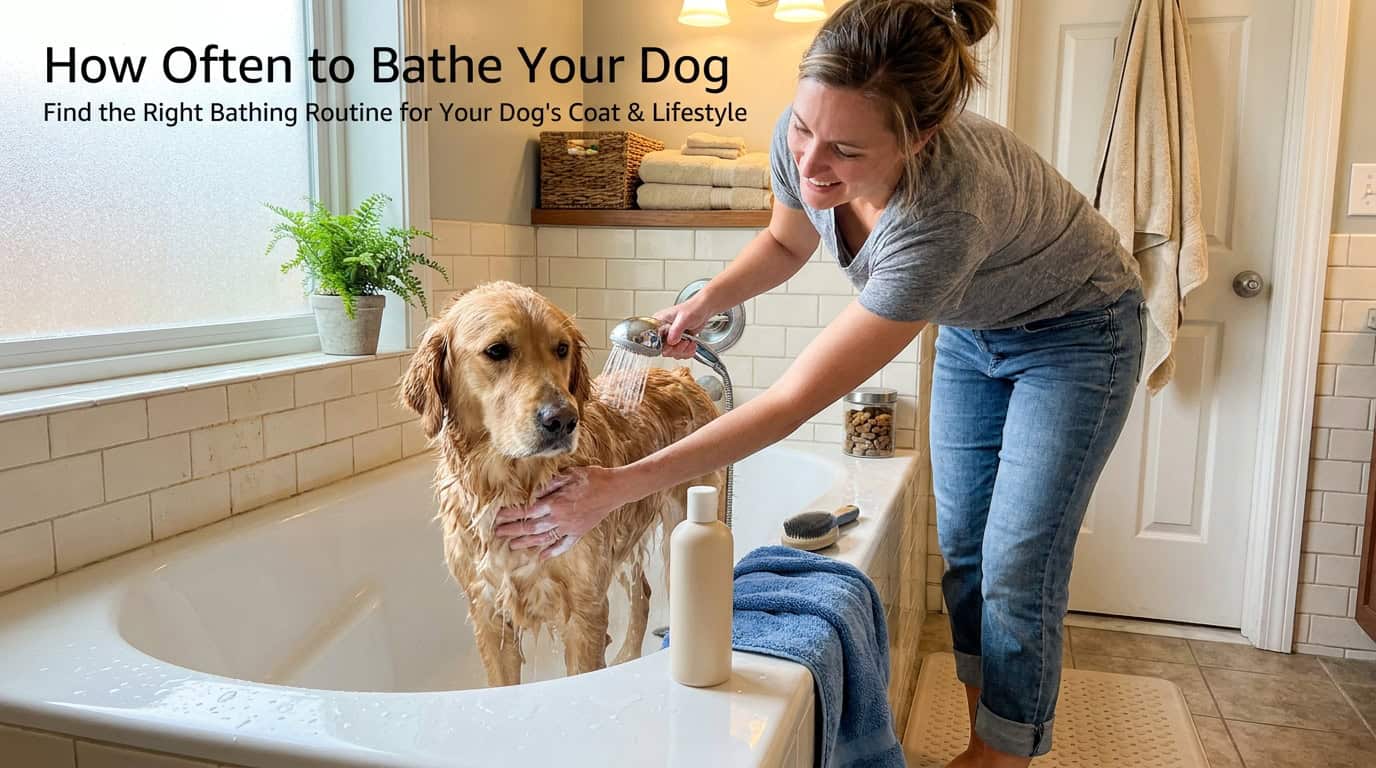
How Often Should You Bathe a Dog?
There’s no single correct number of baths per month, and anyone who gives you one flat answer is skipping the parts that actually matter — coat type, activity level, and skin health. What’s true across almost every dog, though, is that the more common mistake isn’t bathing too little. It’s bathing too often, which strips away the natural oils that keep skin and coat healthy in the first place.
This guide breaks down bathing frequency by coat type and lifestyle, explains why overbathing causes more problems than most owners realize, and gives you a clear way to build a schedule that actually fits your specific dog.
Quick Answer – How Often to Bathe Your Dog
Most dogs do well with a bath every 4 to 6 weeks. That baseline shifts significantly depending on coat type, activity level, and skin condition — some dogs can go two to three months between baths, while active or oily-coated dogs may need washing every one to two weeks. The right frequency is the one that keeps your dog clean without leaving skin dry, flaky, or irritated.
Bathing Frequency by Coat Type
Coat type is the single biggest factor in how often a dog should be bathed, because different coats trap dirt, oil, and moisture differently.
| Coat Type | Bath Frequency | Notes |
|---|---|---|
| Smooth/short (Beagle, Boxer, Labrador) | Every 4-6 weeks | Low maintenance, natural oils distribute easily |
| Medium length (Golden Retriever, Border Collie) | Every 4-6 weeks | Regular brushing between baths reduces buildup |
| Long/silky (Afghan Hound, Yorkshire Terrier) | Every 3-4 weeks | Prone to tangling; brush before every bath to prevent matting |
| Double-coated (Husky, German Shepherd) | Every 6-8 weeks, more during shedding season | Overbathing can disrupt the insulating undercoat |
| Wavy/curly (Poodle, Doodle breeds) | Every 3-4 weeks | Traps dirt and moisture easily, higher matting risk |
| Hairless or naturally oily skin (Chinese Crested, Basset Hound) | Weekly to every 2 weeks | Skin produces more oil without fur to absorb it |
How Lifestyle Changes the Schedule
Coat type sets the baseline, but your dog’s actual daily life often overrides it. An active, outdoor dog that swims regularly, rolls in mud, or spends most of the day outside will need more frequent baths than the coat-type table suggests on its own. A low-activity, mostly indoor dog can often stretch toward the longer end of their coat type’s range without issue.
Seasonal shifts matter too. Double-coated breeds shed heavily during spring and fall coat blow, and more frequent brushing plus the occasional extra bath can help manage the loose fur. Muddy winter walks or a dog that loves lake swims in summer are both legitimate reasons to bathe more often than the baseline, regardless of coat type.
Why Overbathing Is Actually the Bigger Risk
Dog skin relies on a thin layer of natural oils to stay hydrated and to maintain a healthy barrier against irritants and bacteria. Every bath, even a gentle one, strips away some of that oil layer. Bathe too frequently and the skin doesn’t have time to replenish those oils between washes, which can lead to dryness, flaking, itching, and in some cases a coat that actually looks duller and feels rougher than before.
This is the opposite of what most owners assume — the instinct is often “if my dog smells or looks dirty, wash more,” when the actual fix in many overbathing cases is to wash less and let the skin recover.
Signs you may be bathing your dog too often:
- Dry, flaky skin or visible dandruff
- Coat feels rough, brittle, or looks duller than usual
- Increased scratching without any other obvious cause
- Skin appears red or irritated shortly after bathing
- Coat takes noticeably longer to regain its normal shine after each wash
Signs Your Dog Actually Needs a Bath
On the other end, there are clear physical signs that it’s genuinely time for a wash rather than a guess based on the calendar.
- A noticeable “doggy” odor that doesn’t go away after airing out
- Coat feels greasy or looks visibly oily to the touch
- Visible dirt, mud, or debris embedded in the fur
- Excessive scratching caused by dirt or allergen buildup on the skin
- Skin or coat feels sticky or matted from accumulated oil and debris
How Often Should You Bathe a Puppy?
Puppies generally need less frequent bathing than adult dogs, both because their skin is more sensitive and because there’s usually less need until they’re old enough to get genuinely dirty from outdoor play. Once a month is a reasonable starting point for most puppies, adjusting up only if they get visibly dirty or start to smell. Avoid bathing very young puppies before they’re fully vaccinated if there’s any risk of exposure at a public grooming facility, and always use a gentle, puppy-specific shampoo rather than adult formulas.
Bathing Dogs with Skin Conditions or Allergies
Dogs with diagnosed skin conditions — allergies, dermatitis, yeast or bacterial overgrowth — often follow a completely different bathing schedule prescribed by a veterinarian, sometimes involving medicated shampoo used two to three times per week for a short, intensive period before tapering down to a maintenance schedule. These protocols are designed around the specific condition and shouldn’t be improvised without guidance, since the wrong frequency or shampoo can worsen the underlying issue. If your dog has ongoing skin problems, a vet-directed bathing plan should always take priority over general coat-type guidelines.
What If You’re Bathing for Your Own Allergies, Not the Dog’s Hygiene?
This is a legitimate and different use case that most bathing guides skip entirely. If a household member is allergic to dog dander rather than dirt or odor, more frequent bathing — sometimes weekly — using a dander-reducing shampoo can meaningfully reduce airborne allergens. In this scenario, the schedule is built around managing the human’s symptoms rather than the dog’s actual hygiene needs, and it’s worth choosing a shampoo specifically formulated to be gentle enough for that frequency without drying out the skin.
Between-Bath Maintenance That Reduces Bath Frequency
Regular brushing is the single most effective way to extend the time between baths, since it removes loose fur, distributes natural oils evenly through the coat, and catches dirt before it works its way down to the skin. Wiping paws after walks, spot-cleaning visibly dirty areas with a damp cloth, and using a dry shampoo or grooming wipe between full baths can all keep a dog looking and smelling clean without a full wash. A cleaner coat between baths also means less fur and dirt transferring onto bedding, which matters if you’re trying to keep a dog bed fresh between washes.
Common Mistakes When Bathing a Dog
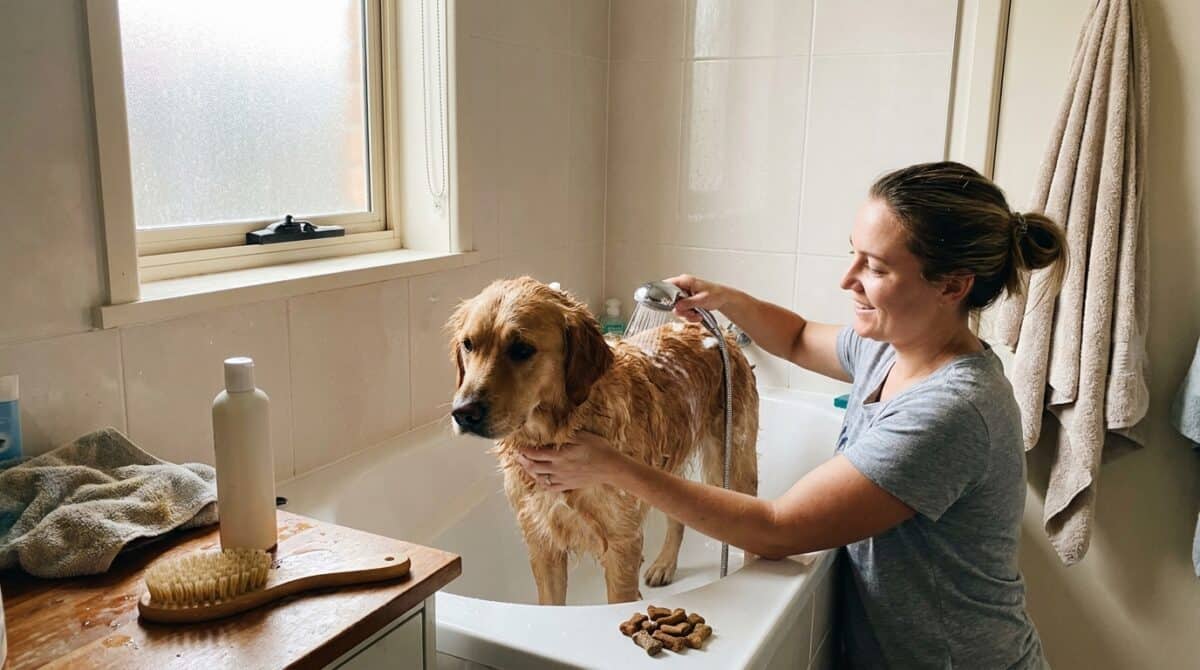
Using human shampoo is one of the most frequent mistakes, since human formulas are pH-balanced for human skin and can dry out or irritate a dog’s skin, which has a different pH balance entirely. Skipping a brush-through before bathing is another common issue, especially for long or curly coats, since wet fur mats far more easily than dry fur and a pre-bath tangle becomes a much bigger problem once soaked. Water temperature matters too — water that’s too hot can dry out skin just as much as overbathing does, so lukewarm water is the safer choice. Finally, rigidly sticking to a fixed calendar schedule regardless of how the dog’s skin and coat actually look is a mistake in either direction; the visible signs covered above should always take priority over an arbitrary number.
Frequently Asked Questions
How often should you bathe a dog?
Most dogs do well with a bath every 4 to 6 weeks, though the ideal frequency depends heavily on coat type, activity level, and any existing skin conditions.
Can you bathe a dog too often?
Yes. Bathing too frequently strips natural oils from the skin faster than they can be replenished, which can lead to dryness, flaking, and irritation.
How often should puppies be bathed?
Once a month is a reasonable starting point for most puppies, adjusting only if they get visibly dirty or start to smell between scheduled baths.
Is it bad to bathe a dog every week?
For most dogs, weekly bathing is more frequent than necessary and can lead to dry skin over time, unless a vet has specifically recommended that frequency for a skin condition or a household member’s allergies.
What shampoo should I use?
Always use a dog-specific shampoo rather than human shampoo, since dog skin has a different pH balance. Dogs with skin conditions may need a medicated shampoo prescribed by a veterinarian.
How do I keep my dog clean between baths?
Regular brushing, wiping paws after walks, spot-cleaning dirty areas with a damp cloth, and using grooming wipes or dry shampoo can all extend the time between full baths.
Final Takeaway — Building Your Dog’s Bath Schedule
Start with your dog’s coat type as a baseline, then adjust up or down based on activity level, season, and what you actually see and smell on their skin and coat day to day. If you notice signs of dryness or irritation, stretch the schedule out and lean more on brushing and spot-cleaning between baths. If your dog has an ongoing skin condition, a veterinarian’s bathing plan should always override general guidance like this one — this guide is meant to build a solid baseline, not replace a diagnosis.
Affiliate Disclosure: GearForPet.com participates in affiliate programs. We may earn a small commission if you purchase through our links at no extra cost to you. Read our full disclosure.