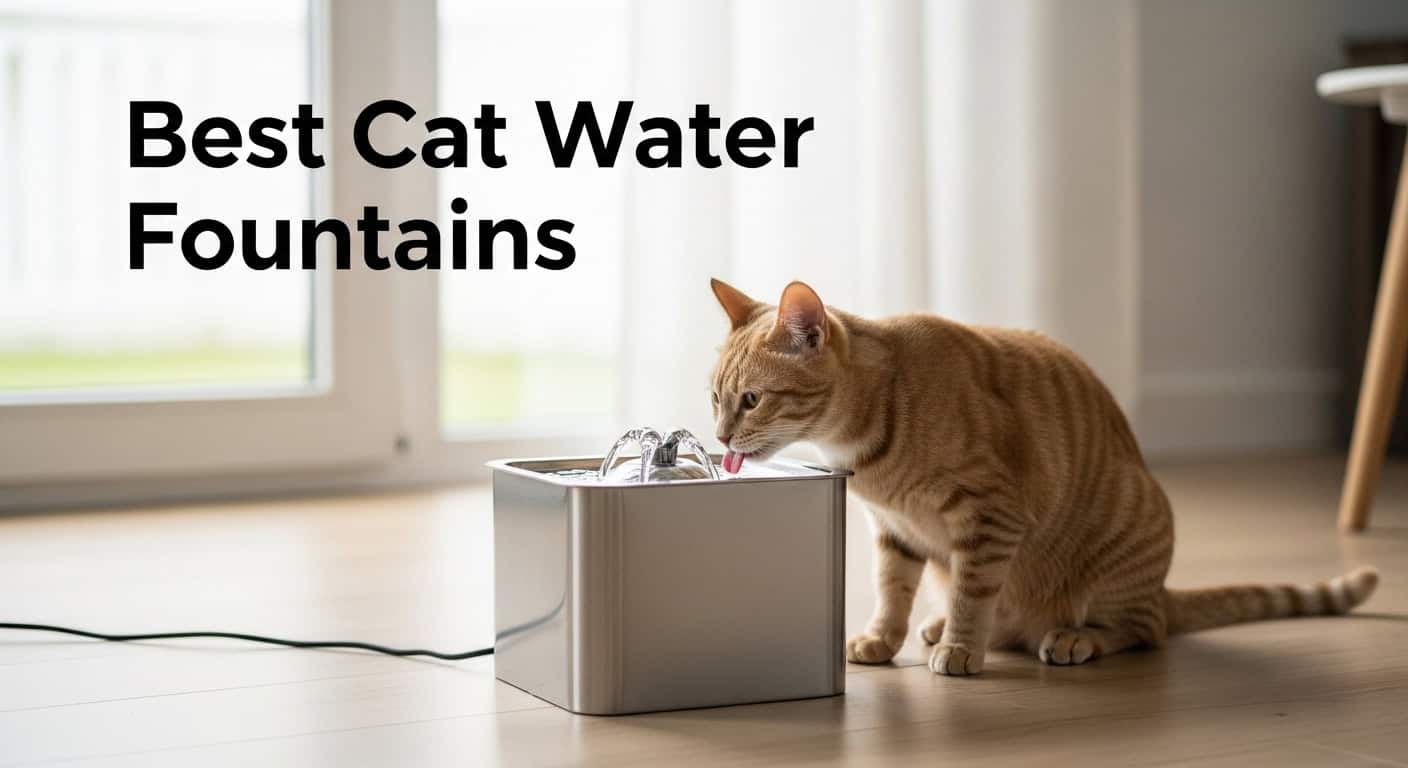
Best Cat Water Fountains 2026: Silent, Easy-Clean Picks
Most cat water fountains fail the same way: too loud to keep in a bedroom, too fiddly to clean consistently, or placed in a spot your cat doesn’t trust. The fountain ends up in a cabinet after three weeks and your cat goes back to ignoring the bowl. This guide covers the six fountains that actually get used long-term — ranked by noise level, cleaning effort, and whether cats consistently choose them over still water.
Quick Comparison: Best Cat Water Fountains 2026
| Product | Best For | Material | Noise Level | Capacity | Price Tier | Link |
|---|---|---|---|---|---|---|
| PETLIBRO Dockstream 2 Cordless | 🏆 Best Overall | Stainless steel | Very quiet | 3L | Premium (~$50) | Check current price on Amazon |
| Catit LED Flower Fountain | 💰 Best Budget | Plastic | Moderate | 3L | Budget (~$20) | See latest reviews on Amazon |
| Pioneer Pet Raindrop Stainless | 🥇 Best Stainless Budget | Stainless steel | Quiet | 60oz | Mid (~$35) | Compare current prices on Amazon |
| PetSafe Drinkwell Creekside | 🐾 Best for Multi-Cat | Ceramic | Very quiet | 60oz | Mid (~$45) | Check sizing and price on Amazon |
| Petkit Eversweet Solo 2 | 📱 Best Smart Fountain | BPA-free plastic | Very quiet | 2L | Mid (~$40) | View current deal on Amazon |
| PETLIBRO Capsule 3 Stainless | 😴 Best for Bedrooms | Stainless steel | Near-silent | 2.5L | Mid (~$45) | See current pricing on Amazon |
What Makes a Cat Water Fountain Worth Buying?
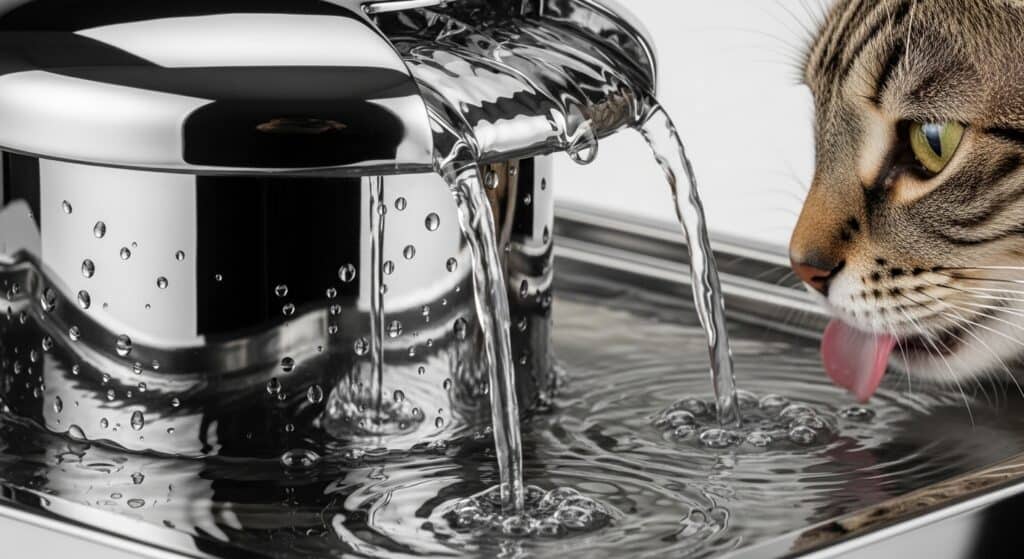
The category has a real abandonment problem. Owners buy fountains with good intentions, the cat uses it for a week, the pump gets noisy or the filter crispy, cleaning becomes a weekly wrestling match, and the whole thing quietly disappears from the kitchen floor. The fountain that gets used long-term is not necessarily the one with the most features — it is the one that removes every reason to stop using it.
The three factors that determine whether a fountain gets used or abandoned:
- Noise — a pump loud enough to hear from across the room trains owners to unplug it, and cats to avoid it
- Cleaning friction — fountains that require disassembling eight parts weekly get cleaned less and less until they stop being cleaned at all
- Placement flexibility — a corded fountain anchored to the nearest wall outlet often ends up next to the food bowl, which is the one location cats instinctively distrust for water
Material matters too. Plastic develops microscopic scratches that harbour bacteria even after washing — cats detect this before you do, which is one reason plastic fountain reviews frequently include “my cat stopped using it after a few months.” Stainless steel and ceramic stay genuinely cleaner over time and are the better long-term investment for most households.
Best Overall: PETLIBRO Dockstream 2 Cordless Cat Water Fountain

The Dockstream 2 solves the three abandonment causes simultaneously. The cordless design runs on a rechargeable battery dock, which means you can place it anywhere in the home rather than within cable-reach of a wall outlet. The stainless steel construction cleans properly without biofilm buildup. And the pump is quiet enough to run in a bedroom without registering as background noise.

What most reviews miss about this fountain: the cordless format is not just a convenience feature — it is a placement feature. Corded fountains end up next to the food bowl because that is where the outlet is. Cats have a hardwired instinct to treat water near food as potentially contaminated. Moving the fountain away from the food area — which the Dockstream 2 makes trivial — is one of the most reliable ways to increase actual drinking. Multiple owners who switched from corded budget fountains to the Dockstream 2 report their cat’s drinking improved noticeably within days, and almost all attribute the change to the new placement rather than the fountain itself.

Honest trade-off: the battery requires recharging every 1–3 weeks depending on flow setting. It is a minor inconvenience that most owners build into their routine quickly, but it is worth knowing before you buy. The app monitoring is a nice extra — it tracks water intake over time — but it is not the reason to buy this fountain.
Who it’s for: owners who want a long-term fountain solution and have already established that their cat responds to moving water; multi-cat homes; anyone who has abandoned a corded fountain due to placement or cleaning friction. Who should skip it: owners testing whether their cat will use a fountain at all. The premium price is not worth the experiment — start with the Catit below, confirm the behaviour change, then upgrade. Accessory tip: stock replacement filters at purchase. The Dockstream 2 takes triple-layer filters — replace every 2–4 weeks. Performance drops when the filter is overdue and cats notice the water quality before you do.
Best Budget Fountain: Catit LED Flower Fountain
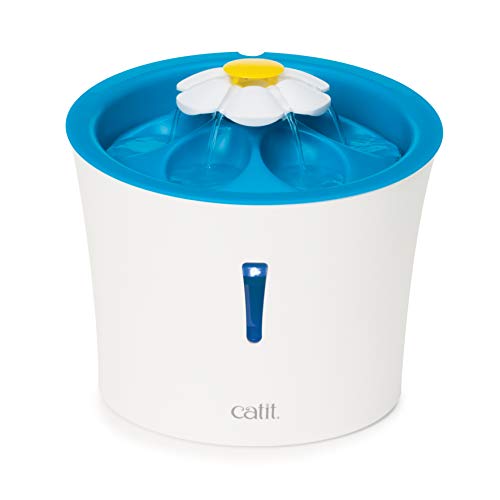
The Catit LED Flower Fountain has been in this category long enough to have a genuine track record, which is more than most budget options can claim. The three-flow design — gentle flower, bubbler, and stream — gives you the option to find which flow style your individual cat prefers, and many cats that ignore one setting will drink consistently from another. At this price, it is the right choice for confirming whether your cat will actually use a fountain before spending more.

The honest limitation: it is plastic, which means biofilm buildup over time regardless of how diligently you clean it. Most owners get 6–12 months of consistent use before noticing a decline in their cat’s interest — and that decline is almost always the plastic, not the concept. If your cat uses this fountain reliably for three months, that is your confirmation to upgrade to a stainless or ceramic option. Think of it as a proof-of-concept purchase, not a permanent solution.

Noise note: the pump is audible at close range. It will not wake you from sleep but it is noticeable if placed in a bedroom. Kitchen, hallway, or living area placement works best.
Who it’s for: first-time fountain buyers; owners unsure whether their cat will use a fountain; households where budget is the priority. Who should skip it: anyone who has already confirmed their cat uses moving water and wants a long-term solution. The plastic construction means you will replace it — buy stainless from the start. Upgrade path: if your cat uses this consistently, the Pioneer Pet Raindrop or PETLIBRO Dockstream 2 are the natural next step depending on whether placement flexibility or material is the priority.
Best Budget Stainless Steel Fountain: Pioneer Pet Raindrop
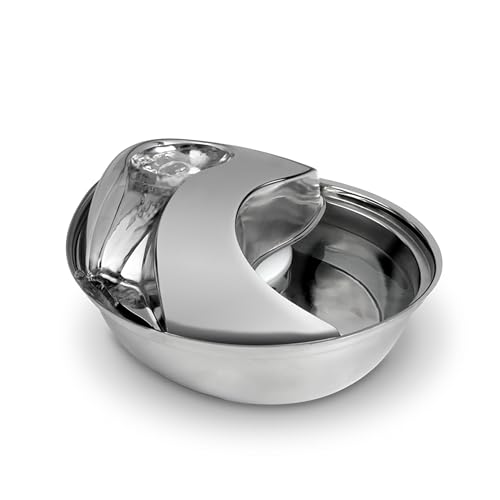
If you want stainless steel without the premium price, the Pioneer Pet Raindrop is the most straightforward answer. It has been in the market for years, has a genuine review history from long-term owners, and the stainless steel construction means it stays genuinely clean rather than just looking clean. The raindrop flow design keeps a thin stream of water moving continuously — enough to trigger the drinking instinct without the aggressive bubbling that puts some cats off.
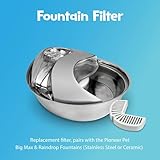
What owners consistently praise over time: unlike plastic fountains where long-term review sentiment often drops as biofilm issues emerge, the Pioneer Pet Raindrop holds positive reviews from owners who have used it for one to two years. That long-tail satisfaction pattern is a more meaningful signal than a high rating at launch.

Honest trade-off: it is corded and the capacity is smaller than some competitors at 60oz. For a single cat household it is ample. For two or more cats, you will be refilling more frequently than with a 3L option.
Who it’s for: single-cat households that want stainless steel durability at a mid-range price; owners who have confirmed their cat prefers moving water and want a long-term solution without the premium cordless cost. Who should skip it: multi-cat homes needing higher capacity; owners who want placement flexibility away from outlets.
Compare current prices on Amazon
Best for Multi-Cat Homes: PetSafe Drinkwell Creekside Ceramic Fountain

Ceramic is the material most vets and long-term cat owners recommend for water bowls and fountains because it is genuinely non-porous — it does not develop the microscopic scratches that trap bacteria in plastic, and it does not have the brushed finish cavities that can harbour biofilm in lower-grade stainless. The PetSafe Drinkwell Creekside is the most accessible ceramic fountain currently available, and the wide drinking area makes it practical for multi-cat homes where cats may drink simultaneously or prefer not to share a narrow flow point.

The real reason to choose ceramic over stainless: for cats with suspected plastic sensitivity — those who drink less over time from plastic bowls or show chin acne, which can be caused by bacterial contact from plastic surfaces — ceramic is the cleanest long-term option available. It is heavier and slightly more fragile than stainless, but the hygiene case for it is strong for sensitive or allergy-prone cats.

Who it’s for: multi-cat households; cats with suspected plastic sensitivity or chin acne; owners who prioritise hygiene and long-term cleanliness over convenience features. Who should skip it: owners who want cordless flexibility or app monitoring; households where a heavy ceramic unit is impractical to move for cleaning.
Check sizing and price on Amazon
Best Smart Fountain: Petkit Eversweet Solo 2
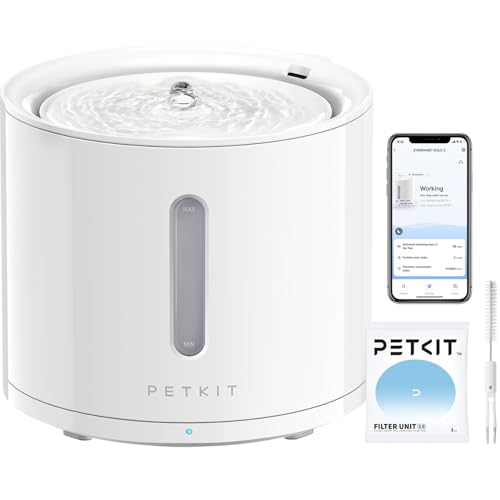
The Petkit Eversweet Solo 2 is the right pick if you want app connectivity and water intake monitoring without the full premium cost of the PETLIBRO Dockstream 2. It tracks water consumption over time, sends filter replacement reminders, and uses a dual-filtration system that extends filter life beyond most single-filter competitors. The pump is among the quietest in the plastic category — owners consistently report it as inaudible at normal room distance.

Who should actually buy this vs the PETLIBRO: if water intake monitoring is genuinely useful to you — for example, a cat recovering from a urinary issue or kidney diagnosis where hydration tracking is medically relevant — the Petkit’s app tracking justifies the cost. If you just want a reliable quiet fountain, the Pioneer Pet Raindrop or PETLIBRO Capsule 3 offer cleaner, lower-maintenance solutions without the app dependency.

Honest trade-off: it is BPA-free plastic rather than stainless or ceramic. Long-term users report it stays cleaner than standard plastic, but it does not match the hygiene longevity of metal or ceramic options. The 2L capacity is on the smaller side — fine for a single cat, slightly underpowered for two.
Who it’s for: owners managing a cat’s health condition where hydration monitoring is relevant; tech-forward households who want data on their cat’s water intake. Who should skip it: owners who just want a clean, reliable fountain with no app dependency.
Best for Bedrooms: PETLIBRO Capsule 3 Stainless Steel Fountain
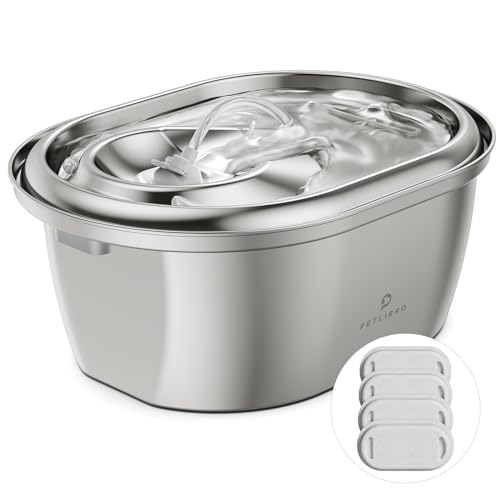
If your cat’s water station is in or near your bedroom and pump noise is the reason you have unplugged every fountain you have ever tried, the PETLIBRO Capsule 3 is the specific answer. The pump is designed around near-silent operation and the stainless steel bowl means it stays clean without the bacterial buildup that makes plastic fountains gradually less appealing to cats. The capsule shape keeps the footprint compact enough for a nightstand or bathroom counter placement.

The noise problem explained: most cat fountain pumps are not loud when new. They get loud when the impeller wears, when limescale builds on the pump housing, or when the water level drops below the pump intake and it starts drawing air. The Capsule 3’s pump design is more resistant to these degradation causes than standard submersible pumps, which is why long-term owners report consistent quiet operation rather than a fountain that starts quiet and gets progressively louder.

Who it’s for: light sleepers; cats that prefer to drink near the bedroom; anyone who has unplugged a fountain because of pump noise. Who should skip it: multi-cat homes needing high capacity; owners who want cordless placement flexibility.
What to Look for in a Cat Water Fountain
Material: Plastic vs Stainless Steel vs Ceramic
This is the single most important decision and most buying guides underplay it. Plastic is the cheapest and most common material in the category but it has a fundamental hygiene problem: it develops microscopic surface scratches over time that trap bacteria and biofilm even after thorough cleaning. Cats detect this through smell and taste, which is why plastic fountain reviews frequently include complaints about cats losing interest after a few months.
Stainless steel stays genuinely clean longer, resists bacterial adhesion, and is the best all-round choice for most households. Ceramic is the most hygienic material available but is heavier, more fragile, and harder to find in quality fountain designs. If you are buying a fountain to be used indefinitely, buy stainless or ceramic from the start.
Noise Level
Fountain noise comes from two sources: the pump motor and the water flow itself. Submersible pumps placed at the base of a full water column are generally quieter than external pumps. Fountains with adjustable flow rate let you reduce the noise by reducing the flow — useful for bedroom placement. If the fountain will be in a bedroom or quiet room, specifically look for models with owner reviews that mention consistent quiet operation over months of use, not just when new.
Capacity
For a single cat: 1.5–2L is adequate, though 2.5–3L reduces refill frequency significantly. For two cats: 2.5–3L minimum. For three or more cats: 3L+ or consider running two fountains in different locations, which many multi-cat owners find more practical than hunting for a high-capacity single unit.
Filter Availability and Cost
A fountain with discontinued or expensive replacement filters is a fountain with a short lifespan. Before buying any fountain, confirm that replacement filters are readily available and check the cost. Filters should be replaced every 2–4 weeks — that is a recurring cost you need to factor into the real price of ownership. Some fountains use proprietary filters at premium prices; others use widely available generic filters. This is worth five minutes of research before purchasing.
Ease of Cleaning
Count the number of parts before you buy. A fountain with eight components to disassemble, clean, and reassemble weekly will get cleaned less and less over time. The best fountains for long-term use have simple disassembly, wide enough openings to clean without specialist brushes, and parts that are dishwasher-safe. Weekly full cleaning is the minimum — monthly deep cleaning with a vinegar soak for limescale is recommended for all fountains.
Common Fountain Mistakes That Cause Abandonment
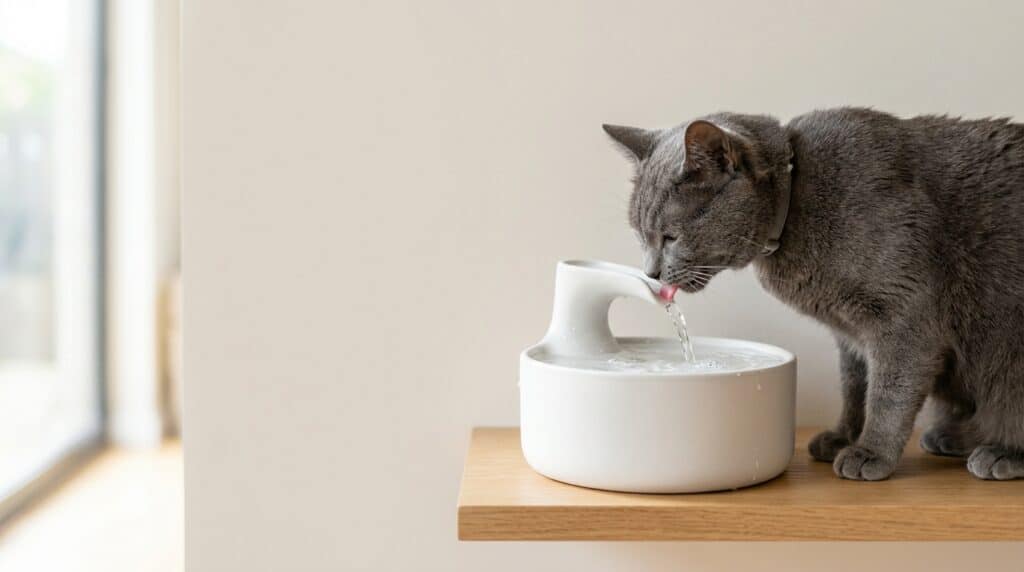
Placing the fountain next to the food bowl. This is the most common setup mistake and one of the top reasons cats ignore a new fountain entirely. Cats instinctively separate water from food — in the wild, water near a carcass signals contamination. Place the fountain in a completely different location to the food. Different room if possible; minimum 1–2 metres away.
Removing the old bowl immediately. Cats do not transition overnight. Leave the existing water bowl in place for the first 1–2 weeks while the fountain runs nearby. Once the cat is consistently using the fountain, remove the bowl. Pulling the bowl on day one removes the safety net and increases the chance of a stressed cat refusing the new option.
Letting the filter go overdue. An overdue filter does not just reduce filtration efficiency — it actively releases trapped particles back into the water. Cats detect this before you do and reduce their drinking accordingly. Build filter replacement into your monthly routine the same way you schedule litter cleaning. Set a phone reminder if needed.
Assuming the first fountain you try is the definitive test. Flow style, bowl shape, placement, and material all affect whether a specific cat accepts a specific fountain. A cat that ignores a tall cascading plastic fountain may drink consistently from a wide shallow stainless bowl with a gentle bubbler. If your cat rejected a fountain, it tells you something about that fountain — not about whether fountains work for your cat.
Edge Cases
Flat-faced breeds (Persians, Exotic Shorthairs, British Shorthairs): the cascade flow style that suits most cats is awkward for flat-faced breeds because leaning down into a falling stream puts uncomfortable pressure on their facial structure. These cats do better with a wide, low-flow bubbler design or a fountain with an adjustable flow setting they can dial down to a gentle surface movement rather than a falling stream.
Senior cats: hydration becomes more medically significant as cats age, particularly as kidney function declines. Senior cats benefit from having water available in multiple locations rather than a single fountain, and from monitoring any changes in drinking habits carefully. An increase in drinking in a senior cat — not a decrease — is often the first visible sign of kidney disease or hyperthyroidism and warrants a vet visit.
Cats with chin acne: feline chin acne is strongly associated with plastic bowls and plastic fountains. If your cat has recurring chin acne, switching to a ceramic or stainless fountain and replacing any plastic food bowls is the first environmental intervention most vets recommend before any medical treatment.
FAQ
How often should I clean a cat water fountain?
Full disassembly and wash with hot soapy water every week, minimum. Monthly deep clean with a white vinegar soak to remove limescale from the pump and bowl. Filter replacement every 2–4 weeks depending on the manufacturer’s guidance and your water hardness. If you see visible slime, discolouration, or your cat’s drinking drops suddenly, clean immediately regardless of schedule.
Is stainless steel or ceramic better for a cat fountain?
Both are significantly better than plastic for long-term hygiene. Ceramic is the most non-porous and hygienic material available — ideal for cats with chin acne or plastic sensitivity — but it is heavier and more fragile. Stainless steel is the better all-round choice for most households: durable, genuinely clean, widely available across price tiers, and far easier to find in quality fountain designs than ceramic.
My cat used the fountain for two weeks then stopped. Why?
The most common causes in order: filter is overdue and releasing trapped particles back into the water; the fountain has been moved closer to the food bowl; limescale on the pump is causing noise that wasn’t there when new; biofilm on a plastic bowl that cleaning is not fully removing. Check these four things before concluding your cat dislikes fountains as a category.
Do cat water fountains actually make cats drink more?
For cats that show avoidance of still water — ignoring the bowl, seeking sink water, batting at the bowl surface before drinking — yes, consistently. Cats have a hardwired preference for moving water because in the wild it signals freshness and safety. A fountain removes the avoidance trigger that still water creates. For cats already drinking normally from a bowl, the improvement in intake is smaller but hygiene benefits from stainless or ceramic still apply.
How do I get my cat to use a new water fountain?
Place the fountain away from the food bowl — different room if possible. Leave the existing water bowl in place for the first 1–2 weeks. Do not force interaction with the fountain. Most cats will investigate within 24–72 hours and begin drinking from it within a week if the placement and flow style suit them. If your cat ignores it completely after two weeks, try adjusting the flow setting or moving it to a different location before concluding it has failed.
Are cordless cat fountains worth the extra cost?
For most owners, yes — but specifically because of what the cordless design enables rather than the technology itself. Placement flexibility means the fountain goes where your cat trusts water, not where the outlet dictates. Owners who switched from corded to cordless fountains most commonly report the improvement came from being able to move the fountain away from the food area. If your outlet placement already allows ideal fountain positioning, the cordless premium is less critical.
Final Verdict
For most cat owners buying their first fountain or upgrading from one that got abandoned: the PETLIBRO Dockstream 2 is the clearest overall recommendation. It removes the three causes of fountain abandonment — placement constraints, cleaning friction, and noise — in a single product. If the price is the barrier and you want to confirm your cat will use moving water before spending more, start with the Catit LED Flower Fountain and treat it as a proof-of-concept purchase.
For specific situations: stainless steel at a lower price point goes to the Pioneer Pet Raindrop; multi-cat homes and cats with plastic sensitivity are best served by the PetSafe Drinkwell Creekside Ceramic; bedroom placement goes to the PETLIBRO Capsule 3; health-monitoring households get the most from the Petkit Eversweet Solo 2.
The best fountain is the one that stays on the floor, stays clean, and stays quiet enough that neither you nor your cat has a reason to stop using it. 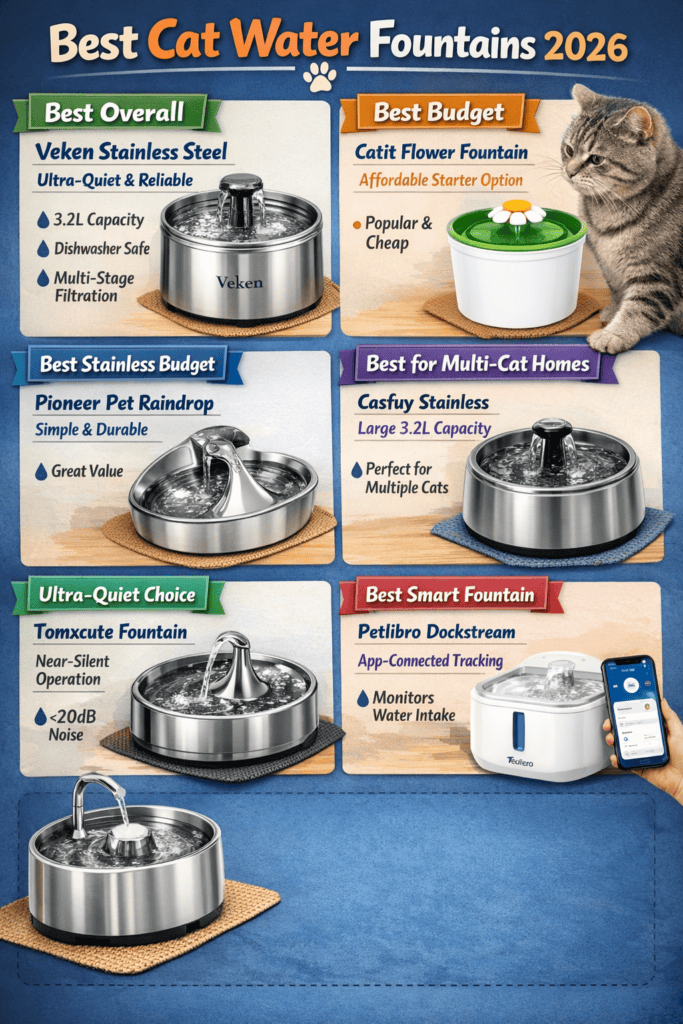
- 🏆 Best Overall: PETLIBRO Dockstream 2 Cordless on Amazon
- 💰 Best Budget: Catit LED Flower Fountain on Amazon
- 🥇 Best Budget Stainless: Pioneer Pet Raindrop on Amazon
- 🐾 Best for Multi-Cat: PetSafe Drinkwell Creekside Ceramic on Amazon
- 📱 Best Smart Fountain: Petkit Eversweet Solo 2 on Amazon
- 😴 Best for Bedrooms: PETLIBRO Capsule 3 on Amazon
Affiliate Disclosure: GearForPet.com participates in affiliate programs. We may earn a small commission if you purchase through our links at no extra cost to you. Read our full disclosure.