

Royal Canin vs Hill’s Science Diet (2026): Which Is Actually Better for Your Dog?
Walk into almost any veterinary clinic in the United States and you will find bags of both Royal Canin and Hill’s Science Diet on the shelf. Both brands get recommended at annual wellness exams. Both show up in the prescription diet cabinet. Both carry premium price tags. And yet the two brands are built quite differently — with different strengths, different weaknesses, and different dogs they genuinely serve best. If your vet has recommended one and you are wondering whether the other might be a better fit, or if you are simply trying to decide between them for the first time, this comparison gives you the honest answer that most brand-comparison articles skip: neither brand is universally better — but for your specific dog, one almost certainly is.
Quick Answer — Royal Canin vs Hill’s Science Diet
Both brands are among the most rigorously formulated dog foods available and both meet WSAVA guidelines — the gold standard for science-backed pet nutrition. The honest difference: Royal Canin leads on breed-specific precision, digestibility, and palatability. Hill’s leads on prescription diet clinical validation, particularly for kidney disease, urinary conditions, and weight management. For a healthy adult dog with no diagnosed condition, either brand is an excellent choice.
- Choose Royal Canin if your dog has breed-specific needs, digestive sensitivity, or is a picky eater
- Choose Hill’s if your dog has a diagnosed condition requiring a prescription diet, particularly CKD, urinary stones, or weight-related disease
- Always follow your vet’s specific recommendation for dogs on therapeutic diets
Brand Overview – Side by Side
| Feature | Royal Canin | Hill’s Science Diet |
|---|---|---|
| Founded | 1968 — France | 1939 — USA |
| Parent company | Mars Petcare | Colgate-Palmolive |
| WSAVA compliant | ✅ Yes | ✅ Yes |
| AAFCO feeding trials | ✅ Yes | ✅ Yes |
| Full-time veterinary nutritionists | ✅ Yes | ✅ Yes |
| Breed-specific formulas | ✅ Extensive — 40+ breeds | ❌ Not available |
| Prescription / vet diet line | ✅ Royal Canin Veterinary Diet | ✅ Hill’s Prescription Diet |
| Published nutrition research | ✅ Yes | ✅ Yes — extensive clinical trial data |
| Price tier | Premium | Premium |
| Retail availability | Vet clinics, Chewy, Amazon | Vet clinics, Chewy, Amazon, PetSmart |
WSAVA Compliance – Why It Matters More Than the Ingredients Label
The World Small Animal Veterinary Association (WSAVA) publishes nutritional guidelines that most veterinary nutritionists use as the practical standard for evaluating pet food quality. The guidelines assess the manufacturer — not just the product label — across four criteria that genuinely separate science-backed brands from marketing-driven ones.

The four WSAVA criteria are:
- Full-time qualified veterinary nutritionists on staff — not consultants hired per product launch
- AAFCO feeding trials conducted — actual animals fed the product, not just nutrient calculations on paper
- Dedicated quality control and manufacturing oversight — including contaminant testing and batch consistency
- Published nutritional research — peer-reviewed studies, not just marketing white papers
Both Royal Canin and Hill’s Science Diet meet all four criteria. This is not true of most pet food brands — including many that charge comparable or higher prices and carry impressive-sounding “natural” or “holistic” marketing language. WSAVA compliance is the single most reliable filter for quality in the premium dog food segment, and both brands pass it. This matters more than any individual ingredient comparison.
Ingredients and Formulation — What Is Actually Different
Both brands use ingredient profiles that reflect their nutritional philosophy rather than their marketing. The honest comparison is more nuanced than “Brand A uses better ingredients than Brand B.”
Protein Sources
Royal Canin uses chicken by-product meal as a primary protein source in most mainstream formulas — a nutritionally dense ingredient that some owners find unappealing by name but which delivers highly digestible protein. Hill’s uses chicken as a first ingredient in many of its Science Diet lines, which reads better on the label but does not necessarily mean more bioavailable protein per gram. Both brands achieve strong protein digestibility scores in feeding trials. Neither brand’s mainstream protein sourcing is a meaningful differentiator at the performance level — the difference is largely cosmetic at the label level.
Carbohydrate Sources
Both brands use corn, rice, and wheat in various formulas. The “corn is a filler” argument has been consistently disproven by veterinary nutritionists — corn is a digestible carbohydrate source with a reasonable amino acid profile and is not the cause of allergies in the vast majority of dogs. Neither brand’s carbohydrate profile is a quality concern for dogs without diagnosed grain sensitivities.
First Five Ingredients — Example Comparison
| Position | Royal Canin Medium Adult | Hill’s Science Diet Adult Medium |
|---|---|---|
| 1 | Chicken by-product meal | Chicken |
| 2 | Brewers rice | Whole grain wheat |
| 3 | Brown rice | Whole grain corn |
| 4 | Chicken fat | Chicken meal |
| 5 | Natural flavors | Corn gluten meal |
Neither profile is objectively superior. Royal Canin’s use of chicken by-product meal as the first ingredient means the protein is already in its most concentrated, digestible form. Hill’s use of whole chicken first reads better to the human eye but contains significantly more moisture weight, meaning actual protein concentration post-processing is comparable. Read the guaranteed analysis — not just the ingredient order — for an accurate picture.
Preservatives and Additives
Both brands use mixed tocopherols (natural vitamin E) as preservatives rather than synthetic BHA or BHT. Both add omega-3 and omega-6 fatty acids for coat and skin support. Neither brand uses artificial colours in their mainstream lines. At this level of formulation, both are performing to the same standard.
Breed-Specific Formulas — Royal Canin’s Strongest Differentiator
This is the clearest product gap between the two brands. Royal Canin produces over 40 breed-specific and breed-group-specific formulas. Hill’s does not offer breed-specific formulas at all. For owners whose dogs belong to breeds with documented nutritional, structural, or health-specific needs, this gap is significant.
- Kibble shape — brachycephalic breeds (French Bulldogs, Bulldogs) get flat, heart-shaped kibble designed to be picked up with a shortened muzzle; Dachshunds get elongated kibble; Labradors get oversized kibble that forces slower eating
- Cardiac support — Cavalier King Charles Spaniel formula includes taurine and L-carnitine at levels appropriate for the breed’s documented cardiac disease predisposition
- Coat formulas — double-coated Northern breeds get elevated omega-3 and zinc for heavy coat maintenance
- Digestive formulas — German Shepherd formula includes highly digestible proteins and targeted fibre blends for the breed’s documented GI sensitivity
- Joint support — large and giant breed formulas include glucosamine and chondroitin at clinically relevant levels
Prescription Diet Lines — The Most Important Section for Sick Dogs
If your dog has a diagnosed health condition, this section matters more than every other comparison in this article combined.
Hill’s Prescription Diet — Strengths
- k/d (Kidney) — the most clinically validated renal diet in veterinary medicine. Multiple published studies demonstrate improved survival time and quality of life in CKD dogs fed k/d vs standard diets.
- c/d (Urinary) — the most prescribed urinary formula for calcium oxalate and struvite stones. Clinically proven to reduce recurrence rates.
- w/d (Weight / Diabetes) — high-fibre, calorie-controlled formula with strong clinical data for weight management and glycaemic control.
- z/d (Allergies) — hydrolyzed protein formula for confirmed food allergies.
- i/d (Digestive) — highly digestible, low-residue formula for IBD, colitis, and post-surgical recovery.
Royal Canin Veterinary Diet — Strengths
- Hydrolyzed Protein (HP) — superior hydrolysate particle size for complex allergy cases. Widely regarded as the best hydrolyzed protein option in the veterinary diet segment.
- Gastrointestinal (GI) — excellent palatability advantage over Hill’s i/d, important for anorexic or recovering dogs.
- Renal Support — strong CKD formula preferred by some vets for dogs that refuse Hill’s k/d due to palatability.
- Urinary SO — competitive urinary formula, particularly useful for simultaneous struvite and oxalate stone management.
Always follow your vet’s specific recommendation for therapeutic diets. Both brands are used at the highest level of veterinary medicine — the choice between them for a diagnosed condition should be based on your dog’s bloodwork, disease stage, and palatability response.
Palatability and Digestibility — A Real Difference
Royal Canin consistently outperforms Hill’s on palatability across verified owner reports and clinical feeding settings. For picky eaters, senior dogs with reduced appetite, and dogs recovering from illness, palatability is a welfare consideration, not a preference. Dogs that refuse other premium brands, including Hill’s, often eat Royal Canin without hesitation. Hill’s digestibility is strong, but palatability feedback from owners of picky dogs is notably more mixed.

Price Comparison — Monthly Cost by Dog Size
| Dog Size | Royal Canin (est./month) | Hill’s Science Diet (est./month) |
|---|---|---|
| Small (under 20 lbs) | $35–55 | $30–50 |
| Medium (20–50 lbs) | $55–85 | $50–80 |
| Large (50–80 lbs) | $85–130 | $80–120 |
Prices vary by formula, bag size, and retailer. Check current pricing on Amazon before purchasing.
Who Should Choose Royal Canin
- Breed-specific needs — if Royal Canin makes a formula for your breed, it is the most precise option available
- Picky eaters — consistent palatability advantage
- Digestive sensitivity — strong GI and Digestive Care lines
- Complex food allergies — Royal Canin HP is one of the best hydrolyzed protein diets available
- Dogs recovering from illness — palatability advantage is most critical here
- Multi-pet households with cats — Royal Canin’s cat line is exceptionally strong
Who Should Choose Hill’s Science Diet
- Dogs with diagnosed CKD — Hill’s k/d has the deepest clinical validation of any renal diet
- Dogs with urinary stones — Hill’s c/d is the most prescribed urinary formula
- Overweight or diabetic dogs — Hill’s w/d has strong clinical data
- Healthy adults with no breed-specific needs — Hill’s is slightly less expensive per month and nutritionally equivalent
- Owners who want the most published clinical nutrition research
Recommended Products — With Current Amazon Pricing
🏆 Royal Canin Picks
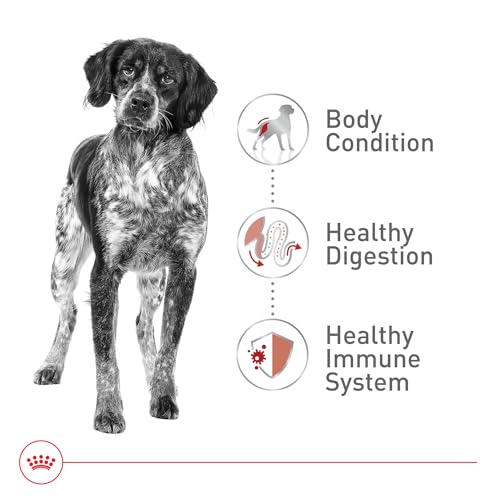
Best Overall — Royal Canin Size Health Nutrition Medium Adult

The default Royal Canin pick for medium-breed adult dogs (23–55 lbs). Highly digestible chicken by-product meal protein, balanced omega-3 and omega-6 for coat health, and a kibble size specifically designed for medium-breed jaw anatomy. Excellent palatability. The starting point recommendation for any healthy adult medium dog without breed-specific formula availability.
Check current price on Amazon →
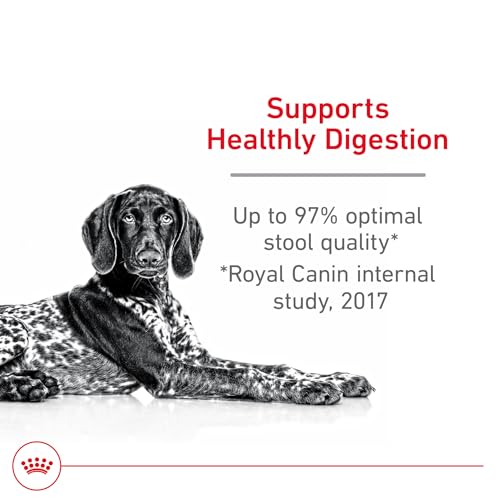
Best for Digestive Sensitivity — Royal Canin Digestive Care

Formulated for adult dogs with recurring loose stools, gas, or irregular digestion. Highly digestible proteins, targeted prebiotic fibre blend, and an EPA/DHA profile for intestinal wall support. The non-prescription option for dogs with digestive sensitivity that does not require a full veterinary GI diet. Palatability is notably better than most digestive-support formulas at this tier.
Check current price on Amazon →
Best Prescription Option — Royal Canin Veterinary Diet Hydrolyzed Protein
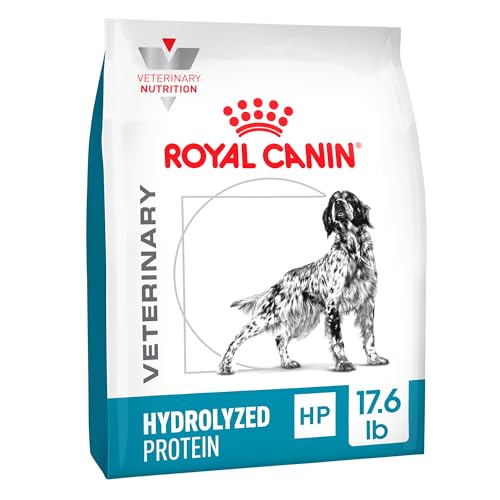
The strongest hydrolyzed protein option for dogs with confirmed food allergies or inflammatory bowel disease triggered by protein antigens. Soy protein hydrolysate broken down to a particle size below the threshold of most immune reactions. Requires a veterinary prescription. The go-to allergy elimination diet option at the veterinary level — used both for diagnosis and long-term management.
Check current price on Amazon →
🏆 Hill’s Science Diet Picks
Best Overall — Hill’s Science Diet Perfect Weight
No products found.Hill’s strongest mainstream adult formula for dogs at or above ideal body weight. Natural fibre blend for satiety, L-carnitine for fat metabolism, and clinically tested — Hill’s reports 70% of dogs reached ideal weight within 10 weeks in feeding trials. A strong option for adult dogs that are 5–15% above their target weight without requiring a full prescription weight-management diet.
No products found.Check current price on Amazon →
Best Prescription Option — Hill’s Prescription Diet k/d Kidney Care
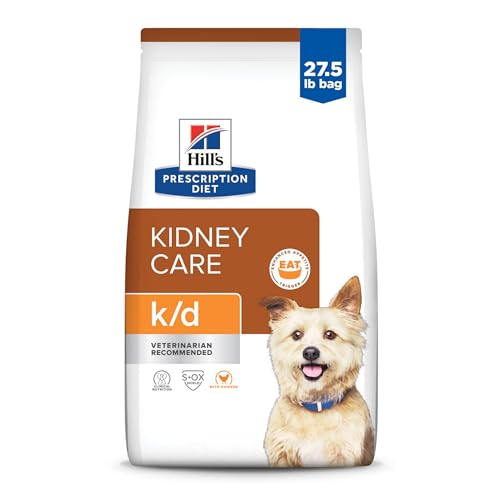
The most clinically validated renal diet in veterinary medicine. Controlled phosphorus and sodium, high-quality restricted protein to reduce uremic toxin production, and omega-3 fatty acids for renal blood flow. Multiple published studies demonstrate improved survival time in CKD dogs on k/d vs standard diets. Requires a veterinary prescription. The default recommendation for Stage 2–4 canine CKD — always follow your vet’s guidance on when to initiate renal diet feeding.

Check current price on Amazon →
Best Budget Entry — Hill’s Science Diet Adult Light
No products found.Hill’s most accessible weight-management formula at a lower price point than Perfect Weight. Reduced calorie density with adequate protein maintenance, natural fibre for satiety, and AAFCO feeding trial validation. The entry point for owners who want Hill’s quality and clinical credibility without the premium price of the Perfect Weight or prescription lines.
No products found.Check current price on Amazon →
Frequently Asked Questions
Is Royal Canin or Hill’s Science Diet better for dogs?
Neither is universally better — both meet WSAVA guidelines and both are among the most rigorously formulated dog foods available. Royal Canin is stronger for breed-specific nutrition and palatability. Hill’s is stronger for prescription therapeutic diets, particularly CKD, urinary conditions, and weight management. For a healthy adult dog with no specific health conditions, either brand is an excellent choice.
Do vets recommend Royal Canin or Hill’s?
Vets recommend both, for different reasons and different dogs. Hill’s tends to be more commonly recommended for specific disease management due to the depth of its clinical trial data. Royal Canin tends to be recommended for breed-specific feeding, digestive sensitivity, and picky eaters. Many vets stock and recommend both brands depending on the patient.
Is Royal Canin worth the extra cost over Hill’s?
For breed-specific formula dogs — yes. For picky eaters or dogs with digestive sensitivity — probably yes. For healthy adult dogs without specific needs — the $5–15 per month difference does not represent a meaningful quality difference, and Hill’s is the better value in that scenario.
Which brand is better for dogs with kidney disease?
Hill’s Prescription Diet k/d has the most published clinical data of any renal diet and is the most commonly prescribed CKD food in the United States. Royal Canin Renal Support is a strong alternative with better palatability for dogs that refuse k/d. Always follow your vet’s specific recommendation — the choice should be based on your dog’s bloodwork, disease stage, and palatability response.
Does Royal Canin use better ingredients than Hill’s?
Not in any meaningful clinical sense. Royal Canin’s use of chicken by-product meal rather than whole chicken as a primary protein reads differently on a label but delivers comparable bioavailable protein. Both brands use ingredient profiles that are nutritionally optimised, not ingredient-list optimised. WSAVA compliance is a more reliable quality indicator than ingredient-list reading for either brand.
Can I switch from Royal Canin to Hill’s Science Diet?
Yes — transition gradually over 7–10 days. Start at 25% new / 75% old for days 1–3, 50/50 for days 4–6, 75% new / 25% old for days 7–9, and 100% new from day 10. Monitor stool consistency throughout. Do not switch therapeutic diet lines without your vet’s guidance.
Final Verdict — Which Brand Is Right for Your Dog?
| Dog Profile | Recommended Brand | Reason |
|---|---|---|
| Healthy adult, no specific needs | Either — Hill’s slightly better value | Both meet WSAVA; Hill’s costs marginally less per month |
| Breed-specific formula available | Royal Canin | Only brand with true breed-specific engineering |
| Picky eater | Royal Canin | Consistent palatability advantage |
| Digestive sensitivity | Royal Canin | Strong digestibility and GI formula palatability |
| CKD / kidney disease | Hill’s k/d | Most clinically validated renal diet available |
| Urinary stones | Hill’s c/d | Most prescribed urinary formula in veterinary medicine |
| Complex food allergies | Royal Canin HP | Superior hydrolysate particle size |
| Weight management | Hill’s Perfect Weight or w/d | Strong clinical trial data for weight outcomes |
For more dog food comparisons in this series, see Purina Pro Plan vs Hill’s Science Diet and the full Dry vs Wet Dog Food guide.
Affiliate Disclosure: GearForPet.com participates in affiliate programs. We may earn a small commission if you purchase through our links at no extra cost to you. Read our full disclosure.