
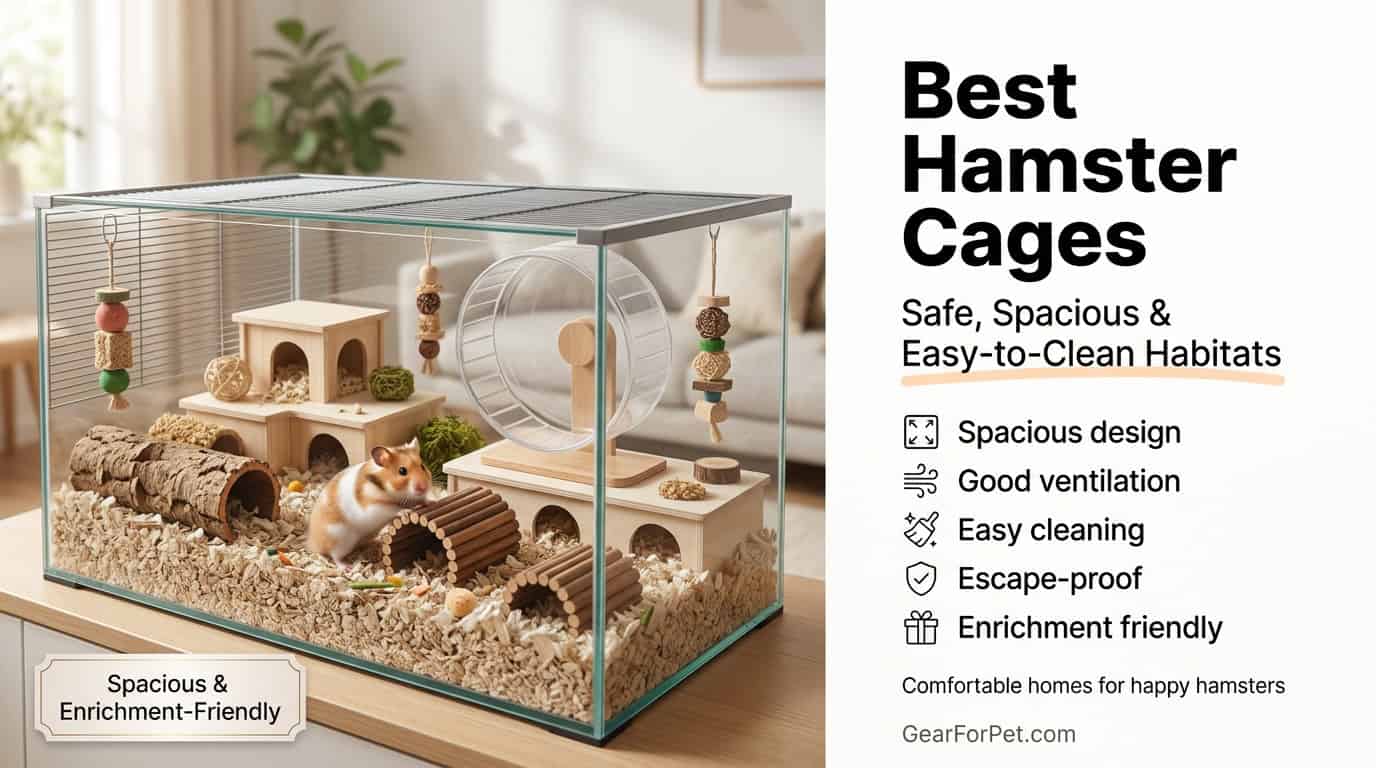
Best Hamster Cages 2026: The Complete Guide to Choosing a Cage
Most hamster cages sold in pet stores — including products from well-known brands, stocked on the shelves of major pet chains, marketed specifically to first-time hamster owners — are too small. Not marginally too small. In many cases, less than half the floor space recommended by veterinary welfare organisations. The German Veterinary Association (TVT), whose cage size guidelines are used by European veterinary practices and hamster welfare organisations internationally, specifies a minimum of 100x50cm (approximately 775 square inches) of unobstructed floor space for all hamster species. The average pet store starter cage provides 360–450 square inches. This guide is built around what hamsters actually need — not what’s convenient to stock on a shelf — and every cage on this list meets or exceeds the size standards that veterinary science supports.
Best Hamster Cage 2026 — Quick Answer
The best hamster cage for most owners is the Niteangel Vista — generous floor space, a deep base for proper burrowing depth, and a front-opening door design that makes daily interaction and cleaning genuinely easy. For the best budget option that still meets minimum size requirements, the Midwest Critterville Brisby provides the floor space hamsters need at the lowest honest price on this list. For dwarf hamsters specifically, the Prevue Pet Products 528 offers correct bar spacing in a proven mid-range cage.
- Best Overall: Niteangel Vista — generous floor space, deep base, front-opening design
- Best Budget: Midwest Critterville Brisby — meets minimum size at lowest price
- Best for Dwarf Hamsters: Prevue Pet Products 528 — correct bar spacing, proven brand
- Best Enrichment / Multi-Level: Savic Hamster Heaven — tubes, platforms, accessories included
- Best Compact Design: Ferplast Favola — European welfare standard, space-efficient footprint
- Best Hybrid Design: Living World Deluxe Habitat — wire top, deep plastic base, versatile
- Best Value Large Cage: Aivituvin Large — maximum floor space at accessible price
Quick Comparison — Best Hamster Cages 2026
| Product | Best For | Species | Floor Space | Base Depth | Bar Spacing | Price Tier | Link |
|---|---|---|---|---|---|---|---|
| Niteangel Vista | Best Overall | Syrian + Dwarf | ~900 sq in | 8″ | ⅜” | Premium | Check price → |
| Midwest Critterville Brisby | Best Budget | Syrian + Dwarf | ~620 sq in | 6″ | ½” | Budget | Check price → |
| Prevue Pet Products 528 | Best Dwarf Hamsters | Dwarf / Robo | ~520 sq in | 5″ | ⅜” | Mid | Check price → |
| Savic Hamster Heaven | Best Enrichment | Syrian + Dwarf | ~700 sq in | 5.5″ | ⅜” | Mid–Premium | Check price → |
| Ferplast Favola | Best Compact | Dwarf | ~580 sq in | 5″ | ⅜” | Mid | Check price → |
| Living World Deluxe Habitat | Best Hybrid Design | Syrian + Dwarf | ~620 sq in | 6″ | ½” | Mid | Check price → |
| Aivituvin Large Hamster Cage | Best Value Large | Syrian + Dwarf | ~800 sq in | 7″ | ⅜” | Budget–Mid | Check price → |
Best Hamster Cages 2026 — Full Reviews
1. Niteangel Vista Hamster Cage — Best Overall

The Niteangel Vista is the cage that the hamster keeping community consistently points to when someone asks what a well-designed hamster enclosure actually looks like. Its floor space exceeds 900 square inches — well above the TVT 775 sq in welfare minimum and nearly double the floor area of typical pet store starter cages. The 8-inch deep base accommodates the 6–8 inches of bedding that Syrian hamsters require for meaningful burrowing behaviour, which is not optional enrichment but a biological drive that, when frustrated, produces the stereotypic bar-chewing and repetitive pacing behaviours that signal chronic cage stress. Most hamster cages on the market cannot simultaneously meet size, bedding depth, and bar spacing requirements — the Niteangel Vista meets all three.

The front-opening door design — why it changes daily ownership: Most hamster cages open from the top — which means every interaction with the hamster, every wheel check, every food refill, and every spot clean requires reaching down from above. For hamsters, a hand descending from above triggers a predator response — the instinct of a small prey animal whose natural predators are birds and other animals attacking from height. The Niteangel Vista’s full-height front door allows interaction at the hamster’s level, which is less threatening, produces faster taming results, and makes daily cage maintenance a more natural and comfortable process for both owner and hamster.

Honest limitation: The Niteangel Vista sits at the premium end of the price range on this list — it is a considered purchase rather than an impulse buy. For owners certain they want to provide genuinely excellent hamster housing from the start, the price reflects genuine design quality and appropriate sizing. For owners who are uncertain about long-term commitment to hamster keeping, the Aivituvin provides similar floor space at a lower price point with slightly less refined design. The Vista is also a large physical footprint — measure your intended placement space carefully before purchase.
Best for: Syrian and dwarf hamsters, owners committed to welfare-standard housing, anyone who has researched proper hamster care before purchasing, long-term hamster keepers.
Not ideal for: Budget-first buyers; owners with very limited surface space; anyone uncertain about long-term commitment.
—
2. Midwest Critterville Brisby — Best Budget Cage
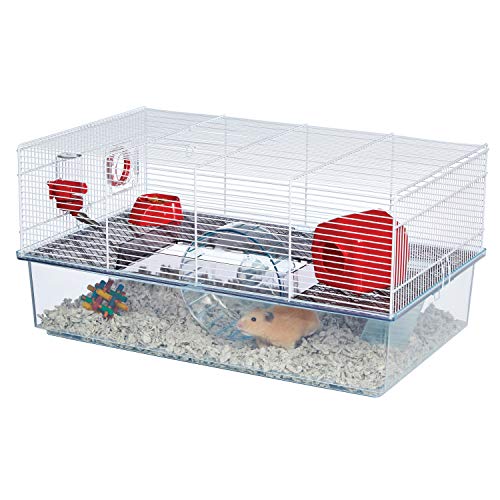
The Midwest Critterville Brisby holds a specific and important position on this list: it is the most affordable cage that comes close to meeting minimum welfare size requirements, making it the honest budget recommendation rather than a smaller cheap cage that looks like a saving but provides inadequate housing. At approximately 620 square inches of floor space, it falls short of the TVT 775 sq in ideal — but it meaningfully exceeds the 360–450 sq in of typical budget starter cages and provides a genuine habitat rather than a stress-inducing enclosure. For first-time hamster owners who need to manage cost while still providing responsible housing, the Brisby is where the budget starts.

What Midwest does well at the budget tier: The Critterville line is built to Midwest Homes’ quality standards — a brand that has produced small animal enclosures for decades with a consistent focus on wire gauge, latch security, and base depth that exceeds what most budget competitors offer at the same price. The 6-inch base depth accommodates meaningful bedding for burrowing, which is the most critical welfare feature after floor space. The wire top provides excellent ventilation — a genuine concern in plastic-heavy budget enclosures where poor airflow causes humidity buildup and respiratory issues in bedding that stays damp longer than it should.
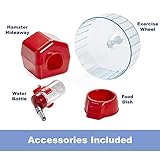
Honest limitation: The ½-inch bar spacing is correct for Syrian hamsters but marginally wide for very small dwarf hamsters — Roborovski dwarfs in particular, which are among the smallest hamster species, can push through ½-inch spacing at the corners where bars meet. For Roborovskis and Chinese hamsters, the Prevue 528 or Ferplast Favola with ⅜-inch spacing is the safer choice. The Brisby’s floor space, while better than most budget alternatives, still falls short of the TVT ideal — owners who can stretch budget slightly should consider the Aivituvin for its closer approach to the welfare minimum.
Best for: Budget-conscious first-time owners, Syrian hamsters, owners who want the best housing their budget allows without compromising on base depth and ventilation.
Not ideal for: Roborovski and Chinese dwarf hamsters (bar spacing); owners who want to fully meet TVT welfare minimums.
—
3. Prevue Pet Products 528 — Best for Dwarf Hamsters
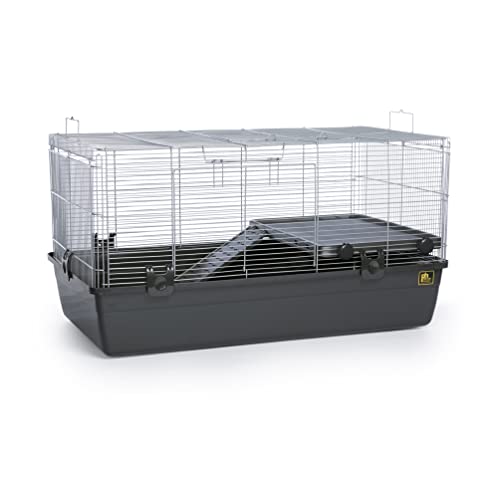
Dwarf hamsters — including Winter White, Campbell’s, and Roborovski species — require ⅜-inch bar spacing rather than the ½-inch spacing adequate for Syrian hamsters. At ⅜ inch, the bars are close enough together that small dwarf bodies cannot push through at corners or flex points, and small heads cannot become wedged in the spacing. This is the bar spacing specification that most budget cages skip — defaulting to ½ inch because it’s cheaper to manufacture — and it’s the reason the Prevue Pet Products 528 earns its place on this list specifically for dwarf species. The ⅜-inch spacing combined with Prevue’s established quality in small animal housing makes it the default recommendation for new dwarf hamster owners.

Prevue’s track record in small animal housing: Prevue Hendryx is the same brand responsible for the best overall bird cage on our bird cage list — a manufacturer with over 140 years of animal housing production. The 528’s construction reflects this: consistent wire gauge across the full enclosure, no flex points at corners where bars meet the base frame, and door latches that hold securely without being difficult to open for cleaning. Replacement parts and accessories are widely stocked — a genuine practical consideration for a cage that will be in daily use for 2–3 years of a hamster’s lifespan.

Honest limitation: The 528’s floor space at approximately 520 square inches falls below the TVT 775 sq in minimum — it is better than typical budget starter cages but not a full welfare-standard enclosure by international guidelines. For owners of dwarf hamsters who want to meet the full TVT minimum, the Niteangel Vista or Aivituvin also offer ⅜-inch spacing at larger floor dimensions. The Prevue 528 is the correct choice when bar spacing is the primary concern and floor space is a secondary consideration — for example, a Roborovski dwarf owner whose priority is escape-proofing over maximum floor area.
Best for: Roborovski, Winter White, Campbell’s, and Chinese dwarf hamsters, owners whose primary safety concern is bar spacing for very small species.
Not ideal for: Syrian hamsters who need wider bar spacing for comfortable climbing; owners prioritising maximum floor space over bar spacing precision.
—
4. Savic Hamster Heaven — Best for Enrichment and Multi-Level Setup
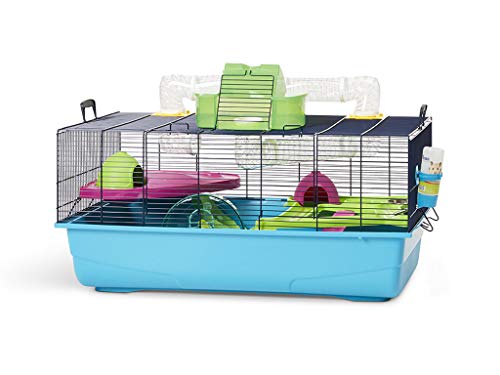
Savic is a European pet housing brand whose products are designed to the stricter welfare standards common in the European market — and the Hamster Heaven reflects this in its out-of-box enrichment provision. Where most cages ship with a basic wheel and food bowl, the Hamster Heaven ships with a full accessories package: running wheel, water bottle, food bowl, hideout, multiple connection tubes, and a second elevated platform. For a first-time hamster owner who doesn’t yet know what enrichment items their hamster needs, the Hamster Heaven provides a functionally complete setup without requiring separate enrichment purchases in the first week.

The enrichment philosophy behind the design: Hamsters in the wild are crepuscular animals that travel 5–8 miles per night foraging across varied terrain. The Hamster Heaven’s multi-level design with connecting tubes, elevated platforms, and multiple activity zones attempts to replicate the varied environmental complexity that wild foraging provides — giving the hamster different areas for different activities (sleeping, eating, exercise, exploration) rather than a single undifferentiated floor space. This functional zoning produces more natural behaviour patterns and reduces the repetitive stereotypies that develop in bare, under-stimulated enclosures.

Honest limitation: The included wheel, while a positive inclusion, is 8 inches in diameter — correct for dwarf hamsters but on the smaller end for Syrian hamsters, who benefit from a 10–11 inch wheel to run without arching their backs unnaturally. Syrian hamster owners should plan to replace the included wheel with a larger Silent Spinner or Niteangel wheel. The tube and platform system, while enriching, reduces the unobstructed floor space available for bedding across the full base — the multi-level design compensates for this but owners seeking maximum continuous burrowing depth should note the platform footings interrupt the bedding layer.
Best for: Owners who want an out-of-box enriched setup without sourcing accessories separately, dwarf hamsters, first-time owners who benefit from the included accessories guidance.
Not ideal for: Syrian hamsters who need a larger wheel; owners prioritising maximum uninterrupted burrowing depth over multi-level enrichment.
—
5. Ferplast Favola — Best Compact Design
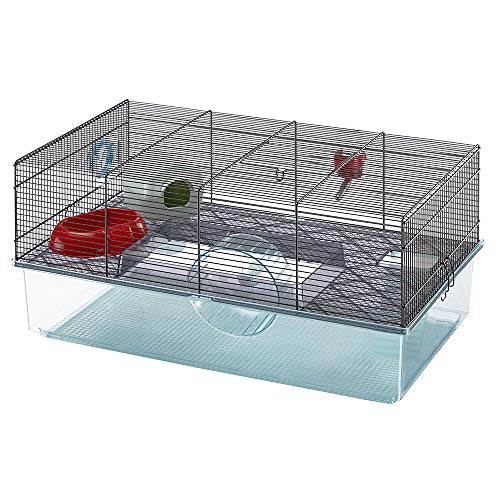
The Ferplast Favola occupies a specific niche: the best cage for owners in genuinely space-constrained situations who still want European-designed, welfare-informed housing for a dwarf hamster. Ferplast is an Italian pet housing manufacturer whose products meet the stricter European welfare standards for small animal enclosures — the Favola’s ⅜-inch bar spacing, adequate base depth, and ventilated roof design reflect this background. For dwarf hamster owners in apartments, student accommodation, or small bedrooms where a large floor-space cage is genuinely impractical, the Favola provides the best welfare outcome within a compact footprint.

Design details that differentiate it from comparable-size competitors: The Favola’s deep blue transparent plastic base is a functional choice — the colour reduces light penetration into the bedding layer, which better replicates the low-light conditions of a natural burrow and encourages hamsters to burrow deeper rather than keeping tunnels close to the visible surface. The wire roof clicks securely into the base with a positive-locking mechanism rather than the friction-fit clips used in lower-quality enclosures that loosen over time. The included accessories (water bottle, food dish, hideout) are proportioned correctly for dwarf species rather than the oversized items that come with larger cages.

Honest limitation: At approximately 580 square inches, the Favola falls below the TVT welfare minimum — it is the pick for constrained situations, not the ideal unrestricted choice. Syrian hamsters should not be housed in the Favola — the floor space is insufficient and the dimensions are designed for dwarf species. For any owner with the space and budget for a larger cage, the Niteangel Vista or Aivituvin provide better welfare outcomes. The Favola is the honest answer to “what is the best cage when I genuinely cannot accommodate a larger footprint and I have a dwarf hamster” — not a general best pick.
Best for: Dwarf hamsters in space-constrained homes, apartments, student accommodation, secondary travel cage use.
Not ideal for: Syrian hamsters (insufficient size); owners with space for a larger cage; anyone who can accommodate the TVT minimum footprint.
—
6. Living World Deluxe Habitat — Best Hybrid Design
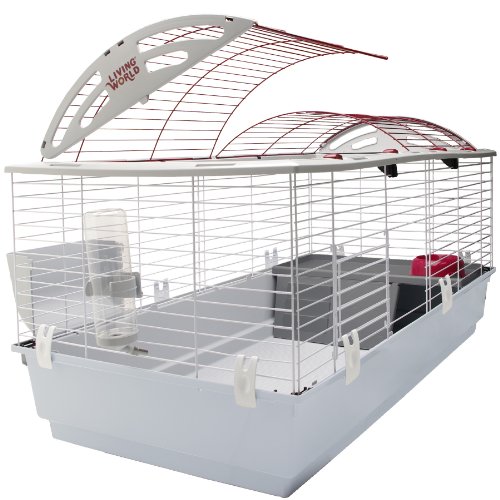
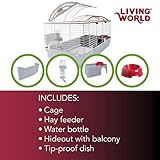
The Living World Deluxe Habitat uses a design approach that solves one of the most practical problems in hamster housing: the conflict between ventilation (which requires wire) and bedding containment (which requires solid walls). The Deluxe Habitat pairs a wire upper section — providing excellent airflow, mounting points for water bottles and accessories, and visibility — with a deep solid plastic base that contains bedding effectively and accommodates the 6-inch minimum depth for meaningful Syrian hamster burrowing. The result is a cage that ventilates like a wire cage and contains bedding like a tank, without the weight and heat-retention problems of a full glass aquarium.

The balcony design — a practical enrichment feature: The Living World Deluxe includes a raised balcony platform accessible via a small ramp — a second level that gives the hamster a defined elevated area separate from the substrate floor. Hamsters naturally use different areas for different activities — sleeping, eating, exercising, and eliminating in separate zones when space allows. The balcony supports this natural zoning behaviour, with most hamsters adopting the elevated area as a distinct activity or feeding zone within the first week of habitation. The ramp also provides incline climbing exercise that flat-floor cages don’t offer.
Honest limitation: The ½-inch bar spacing on the wire upper section is correct for Syrian hamsters but marginally wide for the smallest dwarf species — Roborovski dwarfs should be housed in ⅜-inch spacing enclosures. The floor space at approximately 620 square inches is better than typical budget cages but below the TVT ideal — the hybrid design provides good practical housing for a Syrian hamster without fully meeting the international welfare minimum. For owners who want the hybrid wire-and-base design at closer to the welfare minimum floor area, the Aivituvin provides a larger footprint in a similar format.
Best for: Syrian hamsters, owners who want hybrid ventilation and bedding containment, first-time owners who want a practical all-in-one design.
Not ideal for: Roborovski dwarf hamsters (bar spacing); owners seeking full TVT minimum compliance; owners who want maximum unobstructed floor space.
—
7. Aivituvin Large Hamster Cage — Best Value Large Cage
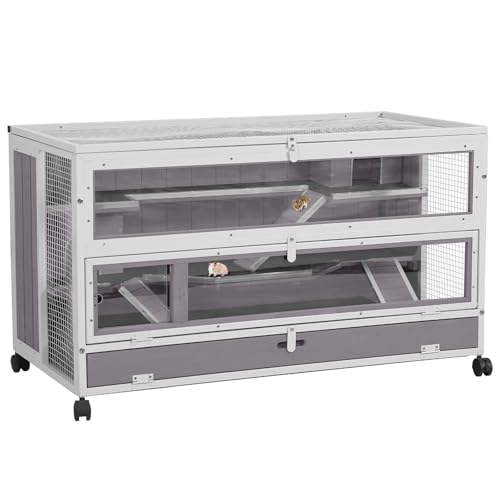
The Aivituvin Large Hamster Cage delivers the closest approach to the TVT 775 sq in welfare minimum at the lowest price point on this list for a large-footprint cage — approximately 800 square inches of floor space with a 7-inch base depth that accommodates proper Syrian hamster burrowing. For owners who have done their research, understand the minimum size requirements, and want to meet those requirements without paying the Niteangel Vista’s premium price, the Aivituvin is the direct answer. The large front-access door works similarly to the Niteangel’s approach — allowing interaction at the hamster’s level rather than descending from above — at a significantly lower price point.

Where the Aivituvin earns its value pick status: The cage provides welfare-standard floor space, adequate bedding depth, correct ⅜-inch bar spacing for both Syrian and dwarf species, and front-access design — the four features that matter most for hamster welfare — at a price that makes the welfare-correct choice accessible rather than a premium decision. For budget-conscious owners who have researched proper hamster housing requirements and refuse to compromise on the fundamentals, the Aivituvin closes the gap between what hamsters need and what budget options typically provide.

Honest limitation: As a newer brand without the decades-long track record of Niteangel, Prevue, or Living World, long-term durability data is more limited — verified owner reviews report good quality in the first 12–18 months of use, but the multi-year performance record of established brands is not yet available. The hardware at hinges and latches is solid for normal use but lighter gauge than the Niteangel Vista at the premium tier. For owners who want maximum confidence in long-term build quality, the Niteangel Vista is the more proven choice. For owners who want welfare-standard floor space at accessible price, the Aivituvin delivers it.
Best for: Syrian and dwarf hamsters, budget-conscious owners who won’t compromise on floor space, owners who have researched TVT minimum requirements and want to meet them affordably.
Not ideal for: Owners who want a decades-proven brand track record; owners seeking the most refined build quality regardless of price.
How Big Should a Hamster Cage Be? — The Truth About Minimum Sizes
The cage size question is where most hamster care guides — and almost all pet store advice — fail new hamster owners. The sizes marketed as appropriate in most retail settings are based on outdated guidelines or commercial convenience, not animal welfare science. Here is what the standards actually say:
| Standard | Floor Space Requirement | Who Uses It |
|---|---|---|
| Typical US pet store starter cage | 360–450 sq in | Retail — not a welfare standard |
| ASPCA general minimum | 450 sq in | Basic US guideline |
| TVT (German Veterinary Association) | 775 sq in (100x50cm) — all species | European veterinary standard — welfare gold standard |
| RSPCA UK | 775 sq in (100x50cm) minimum | UK welfare guidance |
| Recommended by hamster welfare organisations | 900+ sq in for Syrians | Active hamster keeping communities |
Species-Specific Minimum Guide
| Species | Typical Pet Store Cage | TVT Minimum | Recommended | Bar Spacing |
|---|---|---|---|---|
| Syrian Hamster | 360–450 sq in (often sold) | 775 sq in | 900+ sq in | ½” max |
| Dwarf Hamster (Winter White / Campbell’s) | 360 sq in (often sold) | 775 sq in | 700+ sq in | ⅜” max |
| Roborovski Dwarf | 360 sq in (often sold) | 775 sq in | 700+ sq in | ⅜” max |
| Chinese Hamster | 360 sq in (often sold) | 775 sq in | 700+ sq in | ⅜” max |
The practical rule: Your hamster should be able to run, burrow, forage, sleep, and eliminate in separate areas without these zones overlapping. If the cage is too small for behavioural zoning, it’s too small for the hamster. A hamster that bar-chews, runs repetitive patterns along the cage wall, or displays restless pacing is showing you the cage is too small — these are stress stereotypies, not personality quirks.
How Deep Should Hamster Bedding Be? — The Burrowing Guide
Burrowing is not optional enrichment for hamsters — it is a hard-wired biological drive. In the wild, Syrian hamsters create burrow systems 3–4 feet deep with separate chambers for sleeping, food storage, and elimination. When hamsters cannot burrow to a satisfying depth, they express frustration through the same stereotypic behaviours as cage-size deprivation: bar-chewing, repetitive digging at the glass or plastic base, and disturbed sleep patterns. The bedding depth in a hamster cage determines whether the hamster can express its most fundamental natural behaviour.
| Species | Minimum Bedding Depth | Recommended Depth | What Happens Below Minimum |
|---|---|---|---|
| Syrian Hamster | 6 inches (15cm) | 10–12 inches (25–30cm) | Cannot form complete burrow — stress stereotypies develop |
| Dwarf Hamster | 4 inches (10cm) | 6–8 inches (15–20cm) | Surface scraping, disturbed sleep, increased activity stereotypies |
Cages on this list and their base depth adequacy:
- Niteangel Vista (8″): ✅ Meets Syrian minimum, approaches recommended
- Aivituvin Large (7″): ✅ Meets Syrian minimum
- Midwest Brisby (6″): ✅ Meets Syrian minimum at boundary
- Living World Deluxe (6″): ✅ Meets Syrian minimum at boundary
- Savic Hamster Heaven (5.5″): 🟡 Below Syrian minimum — supplement with additional bedding mounded in corners
- Ferplast Favola (5″): 🟡 Adequate for dwarfs, below Syrian minimum
- Prevue 528 (5″): 🟡 Adequate for dwarfs, below Syrian minimum
Wire Cage vs Glass Tank vs Plastic — Which Type Is Best?
| Cage Type | Pros | Cons | Best For |
|---|---|---|---|
| Wire cage with deep plastic base | Excellent ventilation, accessory mounting, visibility, lightweight | Bedding kicks out if base shallow; bar chewing possible | Most owners — best balance of welfare and practicality |
| Glass tank / aquarium | Maximum bedding depth, zero scatter, no bar chewing | Heavy, poor ventilation if lid is solid, difficult to mount accessories | Deep burrowers; owners prioritising maximum bedding depth |
| Plastic modular cage | Visually appealing, tunnel enrichment | Usually too small, poor ventilation, very hard to clean thoroughly | Not recommended for welfare-focused owners |
| Bin cage (DIY) | Maximum size at minimum cost, fully customisable | DIY assembly required, no stand, less aesthetic | Budget owners who want correct size above all else |
Hamster Cage Setup Checklist — Everything You Need Before the Hamster Arrives
A hamster cage is not ready for a hamster when it arrives from the box. These are the items that must be in place before your hamster is introduced:
- Running wheel — 8–10 inch solid surface wheel for Syrians (Silent Spinner, Niteangel wheel); 6.5 inch for dwarfs. Wire mesh wheels cause bumblefoot. No exceptions.
- Hideout / nest box — wooden or cardboard hideout with a single entrance; hamsters sleep in enclosed spaces and will not sleep comfortably in open enclosures
- Sufficient bedding — paper-based bedding (Carefresh, Kaytee Clean & Cozy) at minimum 6 inches for Syrians; avoid cedar and pine which cause respiratory damage from aromatic oils
- Sand bath — a dish of chinchilla sand (not dust) for hamsters to clean their coats; essential for coat health and natural grooming behaviour
- Water bottle or heavy ceramic bowl — water bottle prevents contamination; heavy ceramic bowl if the hamster prefers a bowl (some do)
- Food bowl — heavy ceramic preferred to prevent tipping and bedding contamination
- Scatter feeding area — spread some food in the bedding for foraging enrichment rather than feeding entirely from a bowl
- Chew items — wooden chews, mineral blocks, or hay cubes for dental wear management
What NOT to include:
- Exercise balls — documented risk of injury from ventilation holes, loss of directional control, overheating, and stress from inability to stop or change direction voluntarily
- Wire mesh wheels — feet catch in the mesh causing bumblefoot (foot sores) and toe fractures
- Cedar or pine shavings — aromatic phenols cause liver and respiratory damage; never use regardless of price or availability
- Cotton wool nesting material — strands wrap around hamster limbs causing circulation loss and amputation; use torn paper or paper-based bedding instead
5 Hamster Cage Mistakes to Avoid
-
Buying a cage that’s too small
The most common and most harmful hamster ownership mistake. The pet store starter cage that appears appropriately sized for a small animal is typically less than half the floor space that veterinary welfare standards recommend. A hamster in a too-small cage bar-chews, paces, and displays repetitive stereotypies that signal chronic stress — not character traits. Use the size guide above and purchase the largest cage your space and budget allows, starting from the TVT 775 sq in minimum as your floor, not your ceiling. -
Insufficient bedding depth
A 2–3 inch layer of bedding — common in starter cages with shallow bases — prevents burrowing entirely. Hamsters that cannot burrow show the same stress behaviours as those in undersized cages. Minimum 6 inches for Syrians, minimum 4 inches for dwarfs. If your cage base is too shallow, mound bedding in a corner section to create at least one deep burrowing zone. -
Using a wire mesh wheel
Wire mesh running wheels are widely sold alongside hamster cages and are responsible for a documented welfare problem: bumblefoot (ulcerative pododermatitis), where the feet develop sores from repeated wire contact during running. A hamster runs 5–8 miles per night — every contact with wire mesh during that distance accumulates into foot damage within weeks. Only use solid-surface wheels — Silent Spinner, Wodent Wheel, or Niteangel brand wheels are the most recommended. -
Using cedar or pine bedding
Cedar and pine shavings release aromatic phenols — organic compounds that are acutely toxic to small animal respiratory systems at the concentrations produced inside an enclosed cage. These beddings are widely sold in pet stores in proximity to hamster supplies and are responsible for preventable respiratory disease and liver damage in hamsters. Use only paper-based bedding (Carefresh, Kaytee Clean & Cozy, or similar) or aspen shavings, which do not contain the harmful aromatic compounds. -
Housing two Syrian hamsters together
Syrian hamsters are obligate solitary animals — in the wild, they occupy and defend individual territories and will fight any intruding Syrian hamster. Two Syrian hamsters housed together will fight, causing injuries that escalate to serious wounds and death if not separated. This applies even to hamsters raised together from birth — the territorial drive activates at sexual maturity regardless of prior cohabitation. Syrian hamsters must always be housed alone. Dwarf hamster pair housing is possible in some species under specific conditions but carries risks and requires careful monitoring.
Frequently Asked Questions — Hamster Cages
What is the best hamster cage for a beginner?
The Niteangel Vista is the best overall choice — it meets welfare minimum size requirements, has adequate bedding depth, and the front-opening door makes taming and daily care significantly easier. For beginners on a tighter budget, the Aivituvin Large provides similar floor space at a lower price. Avoid the smallest cages marketed as beginner starter kits — most are below veterinary minimum size standards regardless of how they’re labelled.
What size cage does a Syrian hamster need?
A Syrian hamster needs a minimum of 775 square inches (100x50cm) of unobstructed floor space according to the TVT veterinary welfare standard — the international gold standard for hamster housing. Most hamster owners and welfare organisations recommend 900+ square inches as a genuine welfare-adequate minimum rather than a bare floor. The cage base must also accommodate at least 6 inches of bedding for meaningful burrowing. The Niteangel Vista and Aivituvin Large both meet these requirements.
What size cage does a dwarf hamster need?
Dwarf hamsters require the same TVT minimum of 775 square inches — the smaller body size does not reduce the territorial and behavioural space requirements. The critical additional specification for dwarfs is bar spacing: ⅜ inch maximum, as dwarf hamsters can push through or get stuck in ½-inch spacing. The Prevue Pet Products 528 offers correct bar spacing; the Niteangel Vista and Aivituvin Large combine correct spacing with welfare-minimum floor space.
How deep should hamster bedding be?
At minimum 6 inches (15cm) for Syrian hamsters and 4 inches (10cm) for dwarf hamsters — these are the depths at which hamsters can form complete burrow tunnels rather than surface scratching. Recommended depth for Syrians is 10–12 inches, which allows multi-chamber burrow systems that express the full range of natural burrowing behaviour. If your cage base is only 4–5 inches deep, mound bedding in one section of the cage to create at least one deeper burrowing zone.
Can two hamsters share a cage?
Syrian hamsters: never. They are obligate solitary animals whose territorial drive results in fighting and injury when housed together — this applies regardless of prior cohabitation or sibling relationship. Dwarf hamsters: same-sex pairs are possible in some species (Winter White, Campbell’s) under careful conditions, but fights can develop at any point and must be monitored constantly. When in doubt, house all hamsters individually — a hamster living alone is not lonely; it is living according to its natural social structure.
What type of hamster cage is best — wire, glass, or plastic?
Wire cages with deep plastic bases are the best all-round choice for most owners — excellent ventilation, easy accessory mounting, good visibility, and manageable weight. Glass tanks offer maximum bedding depth and zero scatter but are heavy and ventilate poorly with solid lids. Plastic modular cages are generally too small and too difficult to clean thoroughly — not recommended for welfare-focused owners. Bin cages (DIY from large plastic storage bins with ventilation cut in the lid) offer maximum floor space at minimum cost for budget-conscious owners willing to invest the assembly time.
What should I put in a hamster cage?
Essentials: a solid-surface running wheel (8–10 inch for Syrians, 6.5 inch for dwarfs), a wooden or cardboard hideout, paper-based bedding at minimum 6 inches deep, a sand bath dish with chinchilla sand, a water bottle or heavy ceramic water bowl, and a food bowl. Enrichment additions: wooden chews, cork tunnels, platforms, and scatter-fed food in the bedding. Never include wire mesh wheels, exercise balls, cedar or pine bedding, or cotton wool nesting material.
Are multi-level hamster cages good?
Multi-level cages add enrichment value through varied zones and climbing opportunities — the Savic Hamster Heaven is a good example of this done well. The limitation is that platforms and ramps reduce the unobstructed floor space available for deep bedding, and falls from upper levels can injure hamsters. If choosing a multi-level cage, ensure the floor space remains adequate after accounting for platform footings, and keep platform heights modest — no more than 6–8 inches above the bedding surface to limit fall injury risk.
Final Verdict — Which Hamster Cage Should You Buy?
- Best overall — Syrian or dwarf hamster: Niteangel Vista — welfare-standard size, deep base, front-opening design
- Best budget — welfare-minimum floor space: Midwest Critterville Brisby — better than typical budget cages, honest value
- Best for dwarf hamsters — bar spacing priority: Prevue Pet Products 528 — correct ⅜” spacing, proven build quality
- Best enrichment setup out of the box: Savic Hamster Heaven — accessories included, European welfare standard design
- Best for genuinely constrained spaces — dwarf only: Ferplast Favola — compact footprint, correct dwarf bar spacing
- Best hybrid wire-and-base design: Living World Deluxe Habitat — ventilation plus bedding containment in one design
- Best value large cage — welfare minimum at accessible price: Aivituvin Large — TVT-approaching floor space without premium pricing
The single most important decision is floor space — buy the largest cage your space and budget allows, always starting from 775 square inches as your minimum. Add 6 inches of paper bedding, a solid-surface wheel, and a hideout, and your hamster has what it needs to live well. For the next steps, see our guides on the best hamster wheels, best hamster bedding, and how to set up a hamster cage for the first time.
Affiliate Disclosure: GearForPet.com participates in affiliate programs. We may earn a small commission if you purchase through our links at no extra cost to you. Read our full disclosure.