
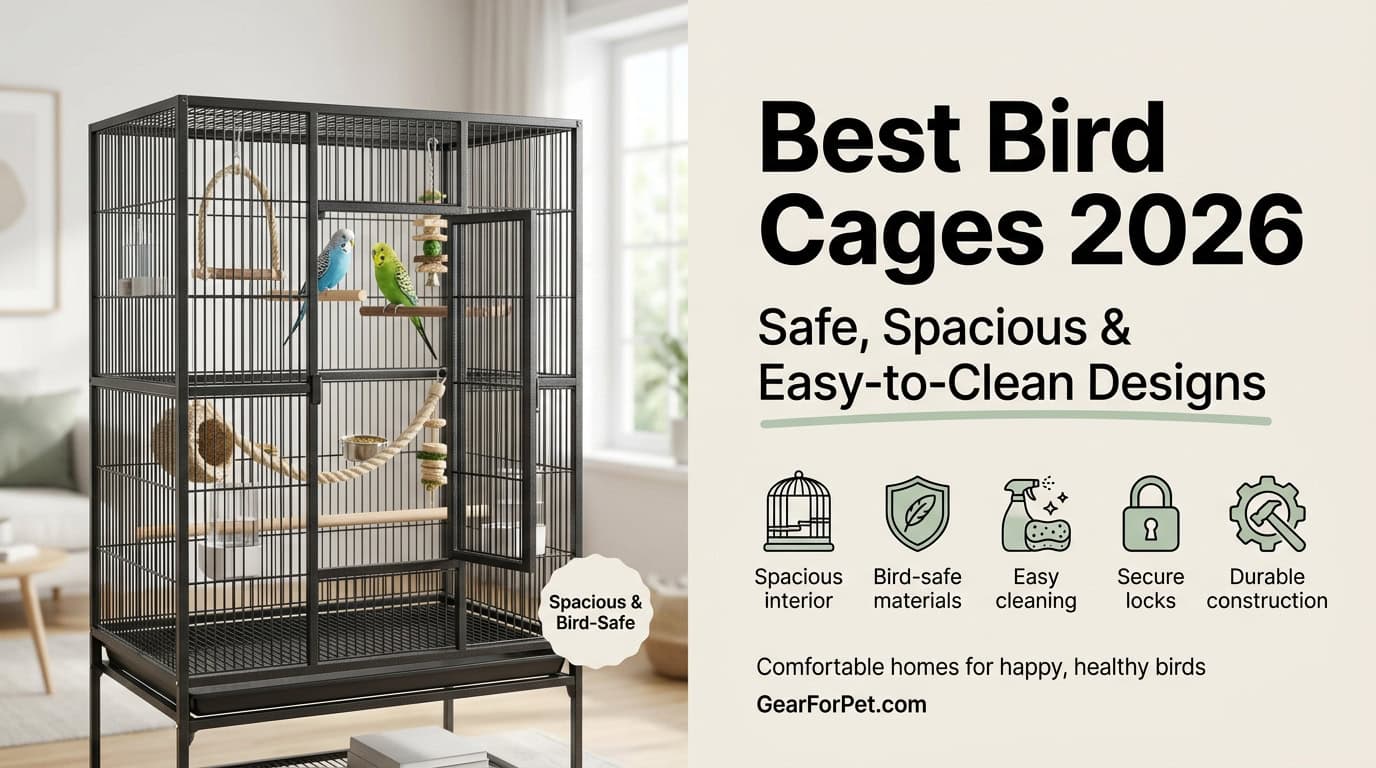
Best Bird Cages 2026: Top Picks for Every Bird & Budget
The most dangerous bird cage mistake isn’t buying something cheap — it’s buying something with the wrong bar spacing. A parakeet pushing its head through ¾-inch bars gets stuck. A cockatiel gripping bars spaced too far apart loses its footing and injures its feet. A small finch slips through wide bars entirely. Bar spacing is not a preference – it’s a safety specification, and it’s the detail pet store staff rarely mention and most product listings bury in the fine print. This guide covers the seven best bird cages of 2026 matched by species, size, and safety standards – plus the cage placement, material safety, and sizing information that separates a bird that thrives from one that suffers in silence.
Best Bird Cage 2026 – Quick Answer
The best bird cage for most owners is the Prevue Hendryx Flight Cage — generously sized, correct bar spacing for small to medium birds, and built with the powder-coated steel that defines long-term cage safety. For parakeets and budgies specifically, the Vision Bird Cage Model M02 is the most functionally well-designed small bird cage available. For cockatiels, conures, and medium parrots needing a tall rolling cage, the Yaheetech 61-inch delivers the space and mobility that daily cleaning requires.
- Best Overall: Prevue Hendryx Flight Cage — most versatile, correct specs for most small-medium birds
- Best for Parakeets / Budgies: Vision Bird Cage Model M02 — seed guard, enclosed base, ideal spacing
- Best for Cockatiels & Conures: Yaheetech 61-inch Rolling Cage — tall, mobile, easy to clean
- Best for Medium Parrots: A&E Cage Company 32×23 — serious construction for African Greys and Amazons
- Best Budget Large Cage: Mcage Large Wrought Iron — maximum space at minimum cost
- Best Premium / Large Parrot: Prevue Pet Products Wrought Iron — the long-term investment cage
- Best for Finches & Canaries: Kaytee EZ Care Flight Cage — flight space, correct fine spacing, easy maintenance
Quick Comparison — Best Bird Cages 2026
| Product | Best For | Bird Size | Bar Spacing | Dimensions | Price Tier | Link |
|---|---|---|---|---|---|---|
| Prevue Hendryx Flight Cage | Best Overall | Small–Medium | ½” | 37″W x 23″D x 60″H | Mid | Check price → |
| Vision Bird Cage M02 | Best Parakeets / Budgies | Small | ½” | 23″W x 15″D x 32″H | Mid | Check price → |
| Yaheetech 61-inch Rolling | Best Cockatiels & Conures | Small–Medium | ⅝” | 28″W x 17″D x 61″H | Budget–Mid | Check price → |
| A&E Cage Company 32×23 | Best Medium Parrots | Medium–Large | ¾” | 32″W x 23″D x 63″H | Premium | Check price → |
| Mcage Large Wrought Iron | Best Budget Large | Medium | ¾” | 32″W x 22″D x 64″H | Budget | Check price → |
| Prevue Pet Products Wrought Iron | Best Premium / Large Parrot | Large | 1″ | 36″W x 28″D x 70″H | Premium | Check price → |
| Kaytee EZ Care Flight Cage | Best Finches & Canaries | Small | ⅜” | 30″W x 18″D x 36″H | Mid | Check price → |
Best Bird Cages 2026 — Full Reviews
1. Prevue Hendryx Flight Cage — Best Overall

The Prevue Hendryx Flight Cage is the most consistently recommended bird cage across avian communities, bird rescue organisations, and verified buyer reviews — and the reason is its combination of generous dimensions, correct bar spacing, and the powder-coated steel finish that defines safe long-term cage construction. At 37 inches wide, 23 inches deep, and 60 inches tall, it provides genuine flight space rather than merely standing room — a distinction that matters enormously for the physical and psychological health of small to medium birds that spend 10–12 hours per day in their primary enclosure. The ½-inch bar spacing is correct for parakeets, cockatiels, lovebirds, and small conures — the widest range of small bird species in one cage specification.

Why the Prevue Hendryx earns consistent long-term recommendations: Prevue Hendryx has manufactured bird cages for over 140 years — a track record that shows in the hardware quality. The door latches are solid and require deliberate manipulation to open, which matters for parakeets and cockatiels who learn to work simple spring latches within days. The removable bottom grate sits above a full-width slide-out tray, making daily cleaning a 2-minute task rather than a cage disassembly. Four cup holders accommodate food, water, and enrichment dishes at correct height positions — above the midline, away from the substrate where droppings accumulate.

Honest limitation: The ½-inch bar spacing, while ideal for parakeets and cockatiels, is too wide for finches and canaries (require ¼–⅜ inch) and too narrow for large parrots (require ¾–1 inch). This is a small-to-medium bird cage — it serves that range excellently and no other. For large parrots, the Prevue Pet Products Wrought Iron or A&E Cage Company picks below are the appropriate choices. The stand is included but some users report it wobbles slightly on uneven floors — a rubber mat under the stand feet corrects this.
Best for: Parakeets, cockatiels, lovebirds, small conures, multi-bird households with small species, owners who want a long-term quality cage at a mid-range price.
Not ideal for: Finches and canaries (bar spacing too wide); large parrots (bar spacing too narrow and insufficient structural strength).
—
2. Vision Bird Cage Model M02 — Best for Parakeets and Budgies
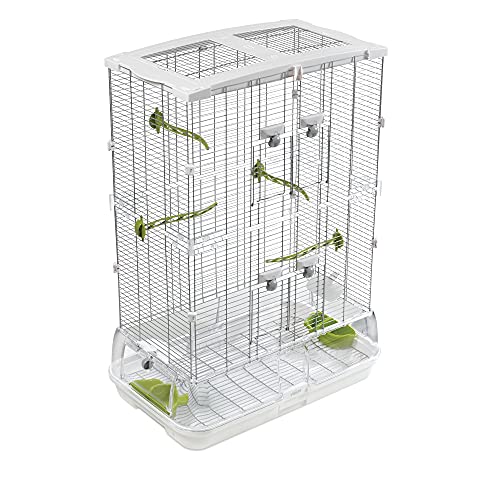
The Vision cage solves the most practical problem parakeet and budgie owners face daily: seed scatter. Parakeets and budgies crack seed hulls constantly throughout the day, flinging debris 12–18 inches in every direction from a standard cage. The Vision’s design wraps the lower third of the cage in a solid plastic hood — the seed guard — that catches hulls, feather dust, and substrate debris before it reaches the floor. For owners whose bird cage sits in a living room, office, or bedroom, this single design decision makes the Vision dramatically more liveable than any standard bar-from-base cage design.
The enclosed base design benefits beyond seed control: The solid lower section also provides a visual barrier that reduces anxiety in birds that are easily startled by floor-level movement — dogs, cats, children, and room activity below the bird’s eye line. Birds in standard cages with bars reaching to the base are exposed to all ambient movement at floor level, which creates chronic low-level stress in prey-species birds that are instinctively alert to ground-level threats. The Vision’s enclosed lower section creates a genuine sense of security that many owners notice in calmer, less flighty bird behaviour within days of the cage introduction.

Honest limitation: The Vision’s enclosed base, while practically excellent, limits airflow compared to full-bar cages — in very warm climates or poorly ventilated rooms, this can affect interior temperature. The cage is also smaller than the Prevue Hendryx Flight Cage — adequate for 1–2 parakeets but crowded for 3 or more. For multi-bird parakeet households, the Prevue Hendryx provides more flight space at a comparable price. The Vision is the right choice for 1–2 birds in a household where seed scatter is a genuine quality-of-life issue.
Best for: 1–2 parakeets or budgies, owners in living rooms or bedrooms where seed scatter is a concern, easily startled birds that benefit from visual security at base level.
Not ideal for: 3+ birds; cockatiels and larger species (size insufficient); warm climates with poor ventilation.
—
3. Yaheetech 61-inch Rolling Cage — Best for Cockatiels and Conures

Cockatiels and conures are active, curious, floor-level foragers as well as climbers — they benefit from a cage that provides vertical height for climbing, horizontal space for wing stretching, and a base that allows natural foraging behaviour. At 61 inches tall with a rolling stand, the Yaheetech provides the vertical dimension cockatiels specifically need: the ability to climb from base to top and back, which they do repeatedly throughout the day as natural exercise. The rolling base is the practical detail that makes daily maintenance realistic — the cage moves away from the wall for full rear access during cleaning without lifting, shifting, or partially disassembling the setup.

Why mobility matters more than most owners anticipate: A heavy bird cage against a wall that cannot be moved easily gets cleaned less frequently — and a cage that isn’t cleaned daily accumulates droppings, food debris, and moisture that creates bacterial and fungal growth within 48 hours. The rolling base isn’t a convenience feature — it’s the detail that determines whether daily cleaning actually happens. The Yaheetech’s four lockable castors allow the cage to be rolled out, cleaned from all sides, and rolled back in under 10 minutes, which is the realistic time budget for daily bird care in a busy household.
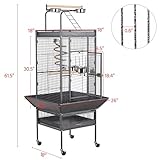
Honest limitation: The Yaheetech’s construction is solid for the price but not at the hardware quality level of the Prevue or A&E Cage Company picks — the door latches are functional but not escape-proof for particularly persistent conures who learn to manipulate standard spring mechanisms. For conure owners with escape-artist birds, adding a small carabiner clip to the main door latch costs $2 and eliminates the issue entirely. The ⅝-inch bar spacing is correct for cockatiels and small conures but too wide for parakeets and budgies (½ inch required) and too narrow for large parrots.
Best for: Cockatiels, small to medium conures, owners who clean cages daily and need rolling mobility, households where the cage moves between rooms seasonally.
Not ideal for: Parakeets and budgies (wrong bar spacing); large parrots; persistent escape-artist birds without latch modification.
—
4. A&E Cage Company 32×23 — Best for Medium Parrots
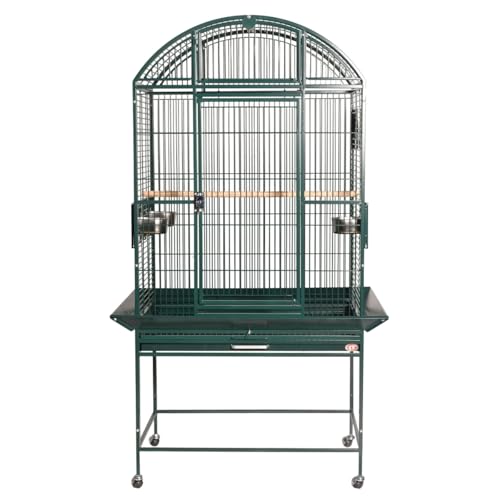
African Greys, Amazon parrots, Eclectus, and medium-large conures require a cage that goes beyond the standard entry-level construction — their beak strength, intelligence, and activity level demands hardware that resists sustained manipulation, doors that cannot be opened by a determined bird working a latch for 20 minutes, and bar gauge thick enough that the cage structure doesn’t flex or develop gaps over years of use. The A&E Cage Company 32×23 is built to this standard: heavy gauge powder-coated wrought iron, stainless steel food cups, and a dual-locking door mechanism that distinguishes it from budget cages that look similar but use thinner wire and weaker hardware.
The dual-lock door system — why it matters for parrots: African Greys and Amazon parrots are among the most dexterous animals on the planet relative to their size — they manipulate objects with precision using both beak and feet simultaneously. Standard spring-latch cage doors are a puzzle that most parrots solve within a week of focused attention. The A&E Cage Company’s dual-lock mechanism requires two separate actions to open — one at the latch, one at a secondary catch — which is beyond the problem-solving approach most parrots apply to escape attempts. For parrot owners who have experienced the anxiety of finding an empty cage, this design feature is worth the premium price alone.
Honest limitation: The premium price is a real consideration — the A&E Cage Company costs significantly more than the Mcage budget alternative for a similar footprint. The investment is justified for owners committed to a medium-to-large parrot long-term — parrots live 20–60 years depending on species, and a quality cage purchased once is more economical than replacing budget cages every 3–5 years. For owners who are uncertain about their long-term commitment to a large parrot, the Mcage provides adequate housing at lower financial risk.
Best for: African Greys, Amazon parrots, Eclectus, medium-large conures, owners committed to long-term parrot keeping, birds that have escaped from standard-latch cages.
Not ideal for: Small birds (oversized); budget-first buyers; owners not yet committed to long-term parrot ownership.
—
5. Mcage Large Wrought Iron — Best Budget Large Cage
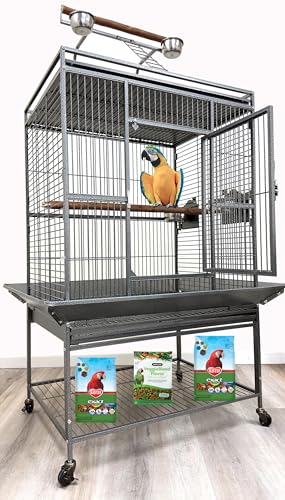
The Mcage delivers the large cage footprint that medium parrots require at the lowest honest price point on this list. At 32 inches wide, 22 inches deep, and 64 inches tall, it provides the minimum recommended dimensions for cockatiels, conures, and small-to-medium parrots — the birds that need significantly more space than a parakeet cage but whose owners aren’t yet ready to commit to A&E Cage Company pricing. The wrought iron construction and powder-coat finish meet the basic material safety standards for bird cages, and the ¾-inch bar spacing covers the cockatiel-through-small-parrot range correctly.

Who the Mcage budget pick genuinely serves: First-time parrot owners who are adopting or rescuing a bird and need appropriate housing immediately without a major investment while they determine long-term setup. Owners whose bird is in a transition period — recently rehomed, being assessed before a permanent cage purchase. Households with a secondary cage for bird-proofed room time where the primary cage is higher quality. In all these scenarios, the Mcage provides correct dimensions and safe materials at a price that makes the purchase decision straightforward.

Honest limitation: The door latches on the Mcage are standard spring mechanisms — not dual-lock. For cockatiels this is adequate. For intelligent parrots (African Greys, Amazons, larger conures) who spend time working latches, adding a carabiner clip to each door is an essential modification. The hardware at hinges and connections is lighter gauge than the A&E Cage Company — adequate for years of normal use with cockatiels and small conures, but showing loosening and flex earlier than premium cages under the sustained beak pressure of larger parrots. For large macaws and cockatoos, the A&E or Prevue Wrought Iron are the appropriate choices.
Best for: First-time parrot owners, transition housing, budget-conscious buyers with cockatiels and small conures, secondary room cages.
Not ideal for: Large parrots (macaws, cockatoos) whose beak strength will stress the lighter hardware; persistent escape-artist birds without latch modification.
—
6. Prevue Pet Products Wrought Iron — Best Premium Cage for Large Parrots
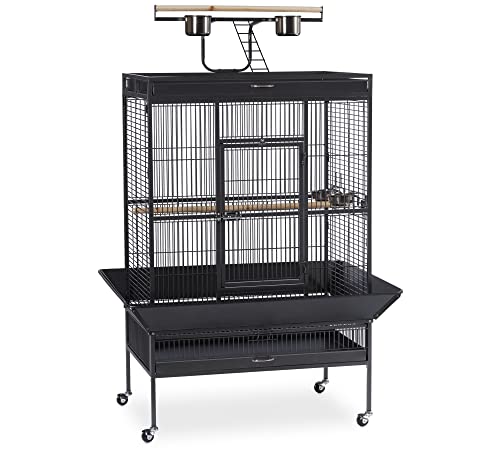
Large parrots — macaws, cockatoos, large Amazons, large African Greys — require a cage that most bird cages on the market are not actually built to handle. Their beak strength can bend or break standard wire gauge. Their intelligence finds and exploits weak latch points within days. Their size requires internal dimensions wide enough for full wing extension without feather contact with bars — a standard that eliminates most “large” cages that are actually sized for medium birds. The Prevue Pet Products Wrought Iron is one of the few commercially available cages built to the actual requirements of large parrots: heavy gauge wrought iron, 1-inch bar spacing, robust door mechanisms, and internal dimensions that give a large macaw genuine living space.

The long-term investment case for large parrots: A Blue and Gold Macaw lives 50–70 years. A Cockatoo lives 40–60 years. A large African Grey lives 40–60 years. The cage you buy for a large parrot is a decades-long piece of equipment — not a purchase to economise on. The Prevue Pet Products Wrought Iron, purchased once, will outlast every budget cage alternative bought in sequence over the same period, and it provides the correct space and structural integrity that large parrot welfare requires throughout that lifespan. For large parrot owners, this is the most economical choice over a 10-year horizon even at its premium price point.
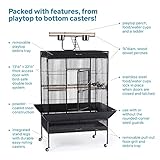
Honest limitation: This cage is heavy — assembly requires two people and relocation after assembly is a significant undertaking. Plan placement carefully before final assembly. The 1-inch bar spacing, correct for large macaws and cockatoos, is too wide for medium parrots (African Greys, Amazons) where ¾-inch is the appropriate specification — for medium parrots, the A&E Cage Company 32×23 is the more appropriate choice. The premium price reflects genuine heavy-duty construction — it is not appropriate for small or medium birds who are better served by correctly-sized cages at lower price points.
Best for: Large macaws, large cockatoos, owners making a long-term investment in large parrot housing, experienced parrot keepers who understand the welfare requirements of large species.
Not ideal for: Medium parrots (bar spacing too wide); small birds; owners who need to move the cage frequently.
—
7. Kaytee EZ Care Flight Cage — Best for Finches and Canaries
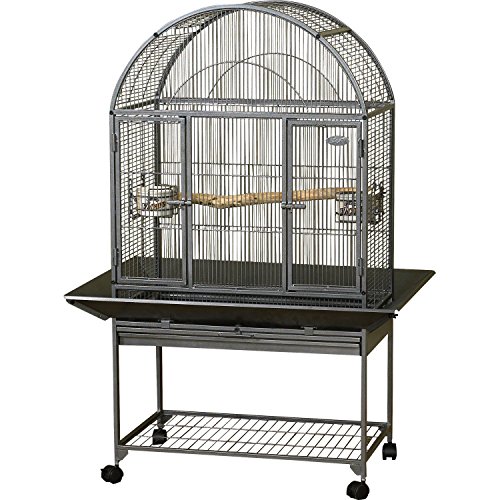
Finches and canaries are flight birds — unlike parrots and parakeets that climb, forage, and interact with their environment using feet and beak, finches and canaries exercise primarily through horizontal flight within the cage. This means cage width is the critical dimension, not height, and bar spacing must be fine enough (⅜ inch or less) that a small finch body cannot push through the bars or get a foot caught in the spacing. The Kaytee EZ Care Flight Cage gets both specifications right: 30 inches wide for meaningful flight distance, ⅜-inch bar spacing that safely houses zebra finches, society finches, and canaries without entrapment risk.

The EZ Care design for finch-specific maintenance: Finches and canaries produce fine seed dust, feather powder, and droppings at a rate that requires frequent cage cleaning — the accumulation in a finch cage is more fine-particulate than a parrot cage and distributes more widely. The Kaytee EZ Care’s slide-out bottom tray and the removable bottom grate make full tray cleaning a 3-minute daily task. The horizontal bar orientation on the sides supports natural finch perching behaviour — finches grip horizontal bars for rest, and cages with only vertical bars force unnatural posture that causes foot fatigue in birds spending 20+ hours per day in the cage.
Honest limitation: The Kaytee EZ Care is designed specifically for finches and canaries — the ⅜-inch bar spacing is too fine for parakeets and larger birds who need ½-inch or wider to avoid bar pressure on their beaks during climbing. The 30-inch width is excellent for 2–4 finches but becomes limiting for larger finch colonies of 6+ where a longer flight cage is required. For serious finch breeding setups or larger colonies, a custom or specialist flight cage at 4+ feet wide is the more appropriate solution.
Best for: Zebra finches, society finches, canaries, gouldian finches, 2–4 bird households, owners who want easy daily cleaning.
Not ideal for: Parakeets and larger birds (bar spacing too fine); finch colonies of 6+; breeding setups requiring maximum flight distance.
Bird Cage Size & Bar Spacing Guide — Every Common Species
Bar spacing and minimum cage dimensions are the two specifications that determine whether a cage is safe and adequate for your bird. Both are non-negotiable — a cage that is the right size but wrong bar spacing is dangerous, and a cage with correct bar spacing but inadequate dimensions causes chronic stress and physical health issues from restricted movement.
| Species | Minimum Cage Size (W x D x H) | Bar Spacing | Key Notes |
|---|---|---|---|
| Finch / Canary | 30″ x 18″ x 18″ | ¼” – ⅜” | Width is critical — flight birds need horizontal distance |
| Budgie / Parakeet | 20″ x 20″ x 24″ | ½” | Width more important than height; horizontal bars support climbing |
| Cockatiel | 24″ x 24″ x 30″ | ½” – ⅝” | Needs wing-stretch space; horizontal bar climbing essential |
| Lovebird | 24″ x 18″ x 24″ | ½” | Escape artists — secure latch mechanisms critical |
| Small Conure | 24″ x 24″ x 36″ | ⅝” – ¾” | Active and destructive — needs sturdy bar gauge |
| Medium Conure | 28″ x 22″ x 40″ | ¾” | Foraging space and enrichment room important |
| African Grey | 36″ x 28″ x 48″ | ¾” – 1″ | Minimum — bigger always better; high intelligence = more enrichment needed |
| Amazon Parrot | 36″ x 28″ x 48″ | ¾” – 1″ | Horizontal bar climbing essential; robust latch required |
| Large Macaw | 48″ x 36″ x 60″ | 1″ – 1¼” | Tail length requires vertical clearance; bar gauge must resist strong beak |
| Cockatoo | 40″ x 30″ x 56″ | 1″ – 1¼” | Destructive — stainless steel preferred; emotional needs require out-of-cage time |
The rule of thumb that matters most: Your bird should be able to fully extend both wings simultaneously without touching the bars on any side. If it cannot, the cage is too small regardless of what the product listing says. Bigger is always better — a bird that has more space than the minimum is healthier and less stressed than one living at the exact minimum dimensions.
Bird Cage Safety — What Can Injure or Kill Your Bird
Bird cage safety failures are responsible for a significant proportion of avoidable pet bird deaths and injuries. The following are the specific risks, how to identify them, and what safe alternatives look like.
Bar Spacing — The Leading Cause of Entrapment Injuries
Bar spacing that is too wide for the species allows birds to push their heads through and become stuck — causing neck injuries, strangulation, or panic-induced injury attempting to free themselves. Bar spacing that is too fine for larger birds causes beak tip injuries and toe entrapment. Always verify bar spacing against the species table above before purchasing. If a cage listing does not specify bar spacing, do not buy it — this specification is non-negotiable and any reputable manufacturer lists it prominently.
Toxic Materials — Zinc and Lead
Galvanised wire cages — wire coated with zinc to prevent rust — are one of the most common sources of zinc toxicity in pet birds. Birds chew cage bars constantly; they ingest zinc oxide from galvanised coating over time, accumulating to toxic levels. Zinc toxicity causes neurological symptoms, liver damage, and death. Safe cage materials: powder-coated steel, stainless steel, wrought iron with non-toxic powder coat. Every pick on this list uses powder-coated or wrought iron construction. Avoid: galvanised wire cages, cages with paint that flakes or chips, cages with decorative coatings of unknown composition.
Door and Latch Safety
Birds — particularly parrots — systematically investigate cage doors and learn standard spring latch mechanisms within days. An escaped bird in a home with ceiling fans, open windows, or other pets faces immediate life-threatening risk. For parakeets and cockatiels, standard spring latches are adequate. For conures, African Greys, Amazons, and macaws, either a dual-lock mechanism (as on the A&E Cage Company) or an added carabiner clip on every door is essential. Check all door hinges monthly — hinges that loosen create gaps that small birds can push through.
Perch Placement — The Hygiene Risk Most Owners Miss
Perches positioned directly above food and water cups contaminate them with droppings within hours of cleaning. Never place a perch above a food or water station. Position perches at different heights with cups mounted at the cage wall away from perch lines. This single positioning decision dramatically reduces the frequency of food and water contamination and the bacterial load birds are exposed to daily.
Cages to Avoid Entirely
- Round cages — no corner for the bird to retreat to; causes chronic psychological stress in prey-species birds that instinctively seek corner security
- Bamboo or wicker cages — cannot be disinfected, harbour bacteria and mites in porous material, destroyed by any parrot species within days
- Decorative painted cages — paint of unknown composition applied to bars is a direct toxicity risk as birds chew and ingest paint daily
- Antique or vintage cages — likely lead-based paint; do not use regardless of aesthetic appeal
Where to Place a Bird Cage — What Most Guides Don’t Tell You
Never Place a Bird Cage In or Near the Kitchen
This is the most important placement rule and the most commonly violated. Non-stick cookware (Teflon, PTFE, and similar coatings) releases polytetrafluoroethylene (PTFE) fumes when overheated — fumes that are odourless and invisible to humans but acutely toxic to birds. A single overheated non-stick pan can kill every bird in a home within minutes. No bird cage should ever be in a kitchen or in any room that shares direct airflow with a kitchen using non-stick cookware. This applies to open-plan living areas where the kitchen is visible from the cage location.
Optimal Placement Guidelines
- Against a wall — one solid side reduces 360° exposure anxiety; prey animals feel more secure with a solid surface at their back
- At eye level — a cage at floor level exposes birds to ground-level threat perception constantly; a cage at ceiling level creates dominance issues in parrots who become harder to handle when positioned above their owners
- Away from air conditioning and heating vents — direct airflow causes respiratory issues and rapid temperature changes that stress and sicken birds
- Away from exterior doors — draft exposure and the panic of repeated opening/closing near the cage causes chronic stress
- Partial natural light — birds benefit from natural light cycles for hormonal regulation; direct sun exposure through glass causes overheating
- Near family activity — social birds (parrots, parakeets, cockatiels) are healthier and better-behaved when their cage is in a room with regular human activity rather than isolated in a spare room
What Bird Cages Include — And What You Still Need to Buy
| Usually Included | Usually NOT Included — Buy Separately |
|---|---|
| Cage structure + stand | Species-appropriate perches ($10–30) |
| Basic plastic food/water cups | Foraging and enrichment toys ($15–40) |
| Removable bottom tray | Cage cover for night ($15–25) |
| Bottom grate (most cages) | Cuttlebone and mineral block ($5–10) |
| Basic swing or perch (some cages) | Species-appropriate food ($15–30) |
| Cage liners / parchment paper ($8–15) | |
| Cage cleaning spray — bird-safe ($8–12) |
The perch detail most new bird owners miss: The plastic or wooden dowel perches included with most cages are the worst perch type for long-term foot health. Uniform diameter dowels cause the foot to grip in exactly the same position for every perch contact, creating pressure sores and arthritis over months and years. Replace included dowels with natural wood perches of varying diameter (manzanita, java wood, dragonwood) that exercise different foot muscles and distribute grip pressure across changing positions. This is one of the highest-impact welfare upgrades available for the cost.
5 Bird Cage Mistakes — And How to Avoid Each One
- Buying a cage that’s too small
The most common and most harmful mistake. A bird that cannot extend its wings, turn freely, or move between perches without navigating obstacles experiences chronic physical stress. Use the species size table above as your minimum — and go larger wherever your space allows. A bird living above its minimum dimensions is visibly healthier and better-behaved than one at the exact minimum. - Wrong bar spacing for the species
Bar spacing too wide causes head entrapment and neck injuries. Bar spacing too fine causes beak and toe injuries. Verify the exact bar spacing specification against the species table before purchasing — not after. If a product listing doesn’t state bar spacing clearly, contact the seller or choose a different product. - Buying a round cage
Round cages are a welfare problem regardless of size. Birds — particularly parrots and parakeets — are prey species that instinctively seek corners for security and retreat. A round cage provides no corner, creating a continuous state of mild anxiety that manifests as feather plucking, excessive vocalisation, and stress behaviours over weeks and months. Always buy a rectangular or square cage. - Placing the cage in or near the kitchen
Non-stick cookware PTFE fumes are odourless, invisible, and lethal to birds at concentrations that cause no symptoms in humans. This placement mistake kills birds every year. Keep the cage in a room with no direct airflow connection to cooking surfaces using non-stick coatings — this is non-negotiable regardless of how convenient the kitchen location is. - Using galvanised wire or unknown-material cages
Galvanised wire cages are a zinc toxicity source — birds that chew bars (which all parrots and many parakeets do constantly) ingest zinc oxide from the galvanised coating over time. Only purchase cages with clearly specified powder-coat, wrought iron, or stainless steel construction from reputable manufacturers. Avoid marketplace cage listings without clear material specifications.
Frequently Asked Questions — Bird Cages
What is the best bird cage for a beginner?
For most first-time bird owners with a parakeet or cockatiel, the Prevue Hendryx Flight Cage is the best starting point — correct bar spacing, generous dimensions, and a brand with a long track record in safe cage construction. For parakeets specifically, the Vision Bird Cage Model M02 solves the seed scatter problem that makes parakeet ownership messier than it needs to be. For finches and canaries, the Kaytee EZ Care Flight Cage provides the horizontal flight space these species require.
What size cage does a cockatiel need?
A cockatiel needs a minimum cage size of 24 inches wide by 24 inches deep by 30 inches tall — and larger wherever space allows. The bar spacing must be ½ to ⅝ inch — wider than this risks head entrapment, narrower causes beak pressure during climbing. The cage should be wide enough for the bird to fully extend both wings simultaneously without touching the bars. The Yaheetech 61-inch Rolling Cage exceeds minimum cockatiel requirements and adds rolling mobility for practical daily cleaning.
What size cage does a parakeet need?
A parakeet needs a minimum cage of 20 inches wide by 20 inches deep by 24 inches tall, with ½-inch bar spacing. Width is more important than height for parakeets — they move horizontally along perches rather than climbing vertically like parrots. The cage should allow the bird to fully spread its wings and have enough length to fly 2–3 wing beats between perches. A single parakeet at the minimum size is adequate; two parakeets require at least 30 inches of width.
What bar spacing is safe for birds?
Bar spacing safety depends entirely on species: finches and canaries require ¼–⅜ inch; parakeets and lovebirds require ½ inch; cockatiels require ½–⅝ inch; small conures require ⅝–¾ inch; African Greys and Amazons require ¾–1 inch; large macaws require 1–1¼ inch. Spacing too wide allows head entrapment; spacing too fine causes beak tip injuries and toe entrapment during climbing. Always verify the exact bar spacing specification before purchasing and match it to the species table above.
Are round bird cages bad for birds?
Yes — round cages are a documented welfare concern for birds. As prey animals, birds instinctively seek corner spaces for security and retreat. Round cages provide no corners, creating continuous low-level anxiety that manifests over time as feather plucking, excessive vocalisation, and chronic stress behaviours. Round cages also provide less usable perching space than rectangular cages of the same footprint. Always choose a rectangular or square cage regardless of the visual appeal of round designs.
What should I put in a bird cage?
Essential cage contents: natural wood perches of varying diameter (replace plastic dowel perches), food and water cups positioned away from perch lines, foraging toys appropriate to the species, a cuttlebone or mineral block for beak maintenance, and a cage liner (parchment paper or newspaper) on the tray for easy daily replacement. For parrots: enrichment toys that can be destroyed are essential for beak and mental health — budget for monthly toy replacement as a normal ownership cost. Rotate toys regularly to prevent boredom habituation.
Where should I place a bird cage at home?
Place the cage in a living area with regular family activity, against one wall at eye level, with partial natural light but no direct sun through glass. Never place near a kitchen with non-stick cookware, near air conditioning or heating vents, or near exterior doors. The cage location should be consistent — birds are highly routine-dependent and frequent cage relocation causes stress. Decide on the final location before assembly where possible.
What materials are toxic in bird cages?
Galvanised wire (zinc toxicity), lead-based paint (any antique or vintage cage), decorative coatings of unknown composition, and certain wood treatments used in cheap imported cages. Safe materials: powder-coated steel with food-grade non-toxic powder coat, wrought iron with non-toxic powder coat, and stainless steel (the safest option — no coating to chip or ingest). When in doubt about a cage’s material safety, contact the manufacturer directly and ask for the powder coat composition specification.
Final Verdict — Which Bird Cage Should You Buy?
- Most first-time bird owners (parakeet or cockatiel): Prevue Hendryx Flight Cage — correct specs, generous space, proven brand
- Parakeets or budgies — seed scatter concern: Vision Bird Cage Model M02 — enclosed base eliminates daily floor cleanup
- Cockatiels and conures — daily cleaning priority: Yaheetech 61-inch Rolling Cage — mobility makes consistent maintenance realistic
- African Greys, Amazons, medium parrots: A&E Cage Company 32×23 — dual-lock doors, heavy gauge, long-term build quality
- Budget large cage for cockatiels/conures: Mcage Large Wrought Iron — correct dimensions at minimum price
- Large macaws and cockatoos: Prevue Pet Products Wrought Iron — the only correct long-term choice for large species
- Finches and canaries: Kaytee EZ Care Flight Cage — correct bar spacing, flight width, easy tray cleaning
Buy the right size for your species, verify the bar spacing before purchase, place it away from the kitchen, and replace the included plastic perches with natural wood. Those four decisions determine whether your bird lives well in its cage — and none of them cost extra once you have the right cage to start with.
Affiliate Disclosure: GearForPet.com participates in affiliate programs. We may earn a small commission if you purchase through our links at no extra cost to you. Read our full disclosure.